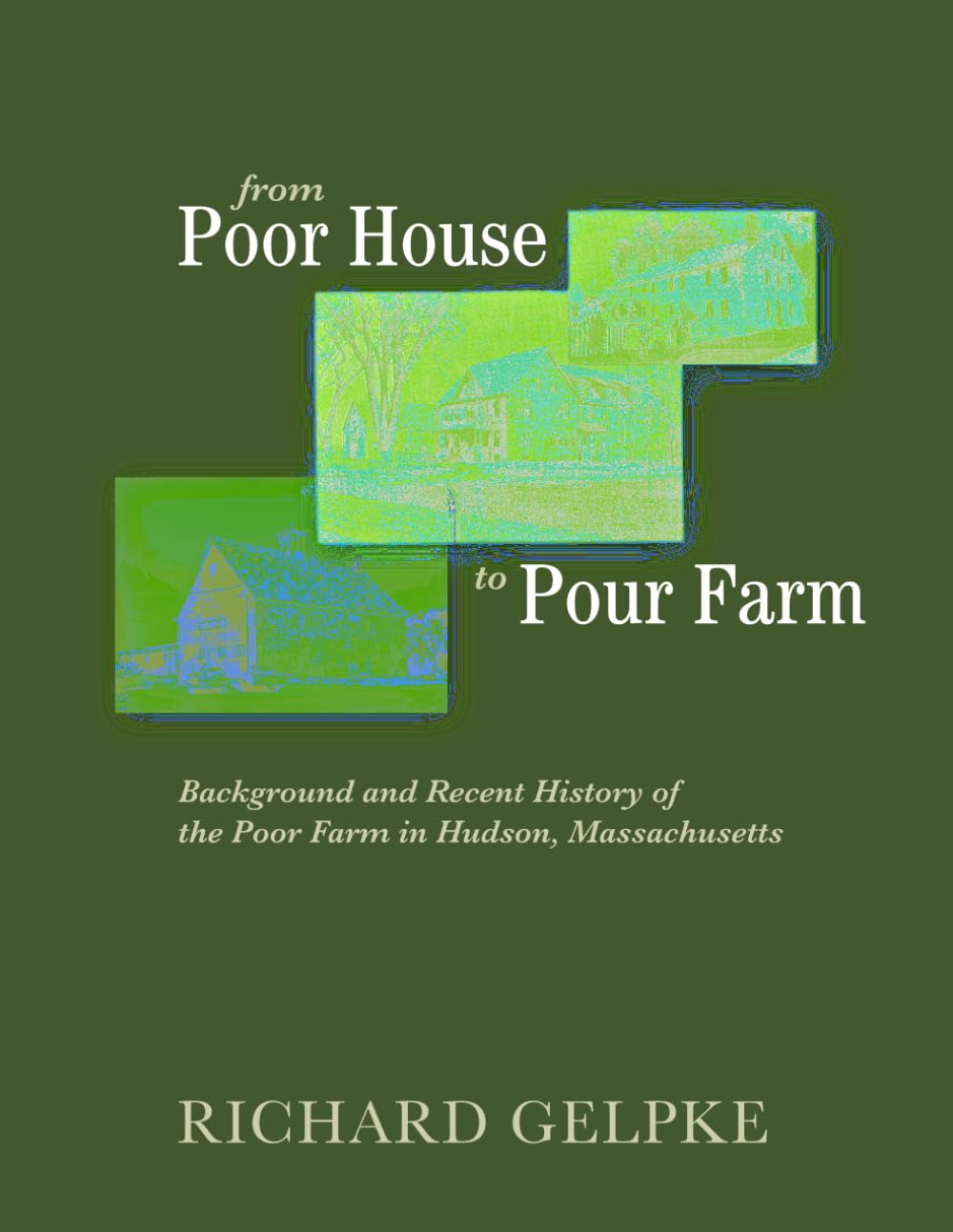
From Poor House to Pour Farm: The Poor Farm in Hudson Massachusetts Background and Recent History
$20.00
by Mr Richard B Gelpke



Hudson, like many towns in Massachusetts and elsewhere in the country, once had a “Poor Farm”. It originally was in Marlboro beginning in the 1820s. The idea was a residence with some farming land surrounding it where the 'inmates' could sustain themselves. The rules of the “establishment” (as it was early known) were quite stringent. The idea of such a place came from Elizabethan England with the early settlers. A brief review of the background of poor farms in the US helps set the stage for how indigent were treated. All citizens desired the least in taxes so a town board (“Overseers of the Poor”) provided minimal accommodations for those individuals “with no visible means of support” in the community. Hudson’s was no exception but with some interesting twists: Two court cases and a major arson add to our story. Existing until early in WWII, the buildings survived for more than 30 years after closure--then perhaps best known as a bar/lounge and an auction house. Currently a Self-Storage facility sits on the site of the old Poor Farm in a small industrial section of town. The only remnant is a tiny cemetery across lower Main Street, and a nearby street name commemorating an early landowner who was party to the court case.