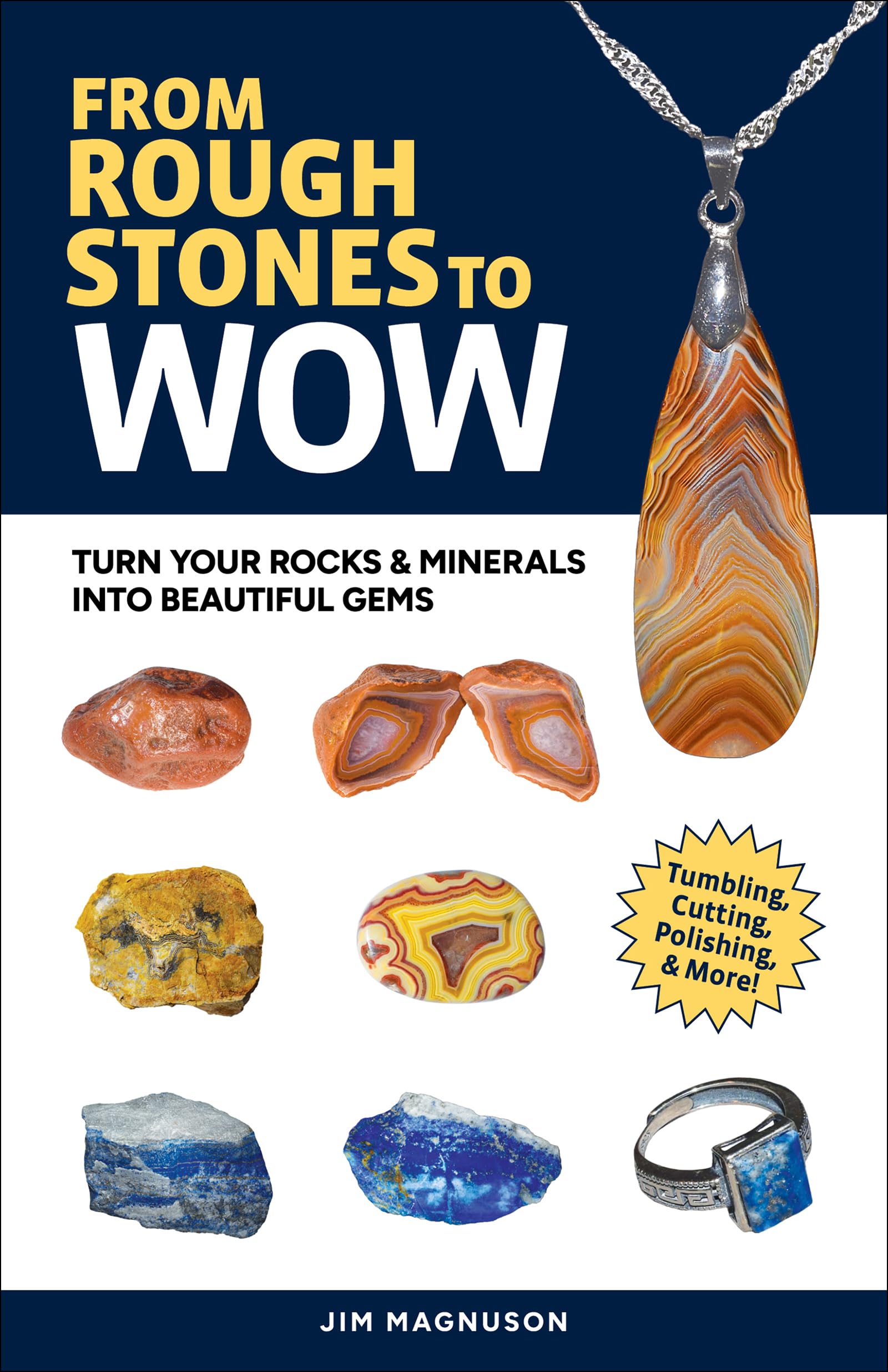
From Rough Stones to Wow: Turn Your Rocks & Minerals into Beautiful Gems
$17.61
by Jim Magnuson



Take rock collecting to the next level: create gemstones that glisten and shine with beginner instructions in this lapidary book that yields professional results. Beautifully cut, polished, and shaped gemstones are marvelous treasures. They can be very expensive to purchase, but have you ever wondered how to create your own? You might be surprised at how quickly you can learn to do it—and how affordable it is, especially when compared with many other popular hobbies. From Rough Stones to Wow is your one-stop shop for beginning your lapidary journey and being successful. Written by Jim Magnuson, this accessible how-to guide keeps things simple while covering a variety of the most popular lapidary arts. The step-by-step instructions—supplemented by easy-to-follow, full-color photographs—can help you produce high-quality gemstone products that you’ll be proud to display, wear, or even sell. Learn about the tools and equipment needed for tasks like tumbling and cutting, as well as types of rocks and minerals you might want to utilize. Then, with Jim’s focused instruction, you can discover the rewarding experience of taking rough stones and making your own creations. There’s even a brief introduction to jewelry making, with six simple jewelry projects. You’ll appreciate these features: Easy-to-follow directions complemented by action-oriented photos - Recommendations on lapidary machines - Tips, charts, and checklists to jump-start your learning - Techniques and tools that take you from start to finish Jim Magnuson has been an avid hunter of various gems, minerals, and fossils since childhood. Because of his in-depth knowledge, he is frequently called upon to present to groups such as rock and mineral clubs, geological societies, and educational institutions that focus on outdoor and environmental interests. He likes to perform various lapidary arts with the stones that he finds, and he has a small business making and selling custom-polished stones and jewelry pieces. Chapter 2: Choosing Gemstones Gemstone Types and Lapidary Uses Now that you’ve gotten a general introduction to the type of gemstone material best suited for beginner and intermediate lapidary hobbyists and artists, we’ll show you which gemstones are best for specific types of lapidary work. Not all gemstones can be used in the same way. For example, some gemstones are too large to be tumble-polished or face-polished as individual stones. If you want to polish such specimens, they must first be cut into slabs and then shaped into jewelry pieces. The table on pages 18–19 provides a guide to the uses each gemstone is best suited for. While this table is by no means exhaustive, the materials we recommend provide a broad cross section of what is readily available and affordable and will enable beginner and intermediate lapidary artists to produce outstanding finished stones and jewelry pieces. Gemstone Prices Most of the stones we recommend in this book can be purchased in bulk and are priced by the pound. The low end of the price range is about $3–$5 per pound; medium-level stones are $8–$15 per pound; and high-priced stones go for more than $20 per pound. As you gain skill and confidence, you may choose stones on the higher end of the range, but you can produce many delightful lapidary products with carefully selected gemstones from the low end as well. Selecting High-Quality Gemstones Once you know which gemstone you want to use and how you want to use it, you’ll need to be able to recognize high-quality specimens to purchase. Just as choosing lousy produce at the grocery store will get you a subpar dinner, lower-quality stones will lead to less than optimal results: Garbage in, shiny garbage out. While it will certainly take time for you to consistently achieve high-quality results, starting with high-quality stones is the best way to avoid frustration. A Visual Guide to Selecting Gemstones To give you an idea of where to start, we’ve selected 12 gemstones from the table on the previous pages to discuss in further detail. These are good stand-ins for a number of others in the table, and the same selection tips apply to them as well. To make things as intuitive as possible, on the following pages we’ve provided photos for each gemstone showing rough stones that are below lapidary grade, rough stones that we consider lapidary grade, cut slabs, and at least one completed lapidary piece, or cabochon, ready for jewelry making. This combination of images will help demystify this part of the process and help you select high-quality materials. As their name suggests, below-grade stones don’t warrant the effort and cost necessary for them to serve as display stones or jewelry pieces (though they are great for learning). In contrast, lapidary-grade (medium- and high-grade) stones represent the sweet spot for most of your lapidary products; these stones would make nice jewelry pieces or tumble-polished stones for display. For stones that contain patterns o