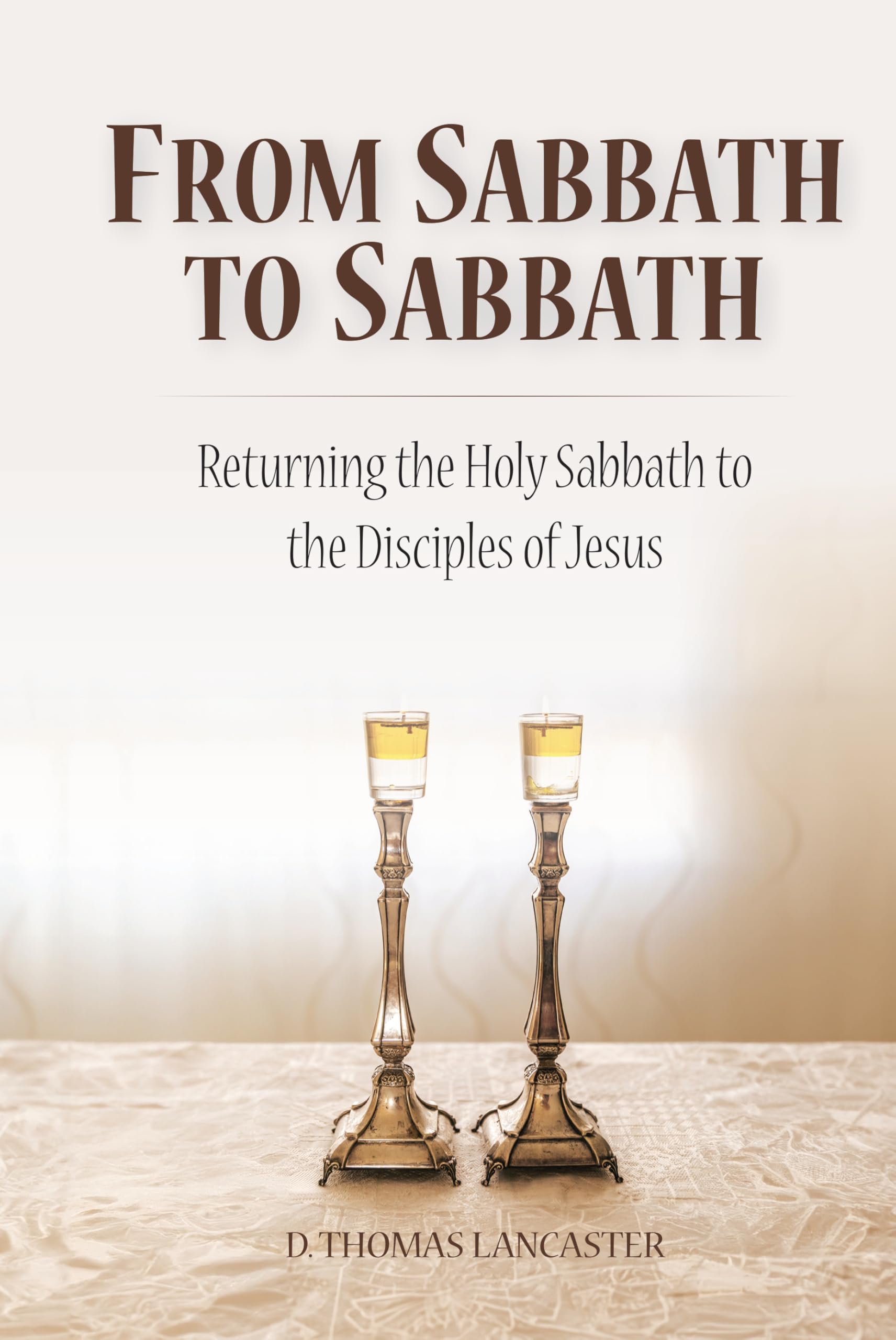
From Sabbath to Sabbath: Returning the Holy Sabbath to the Disciples of Jesus (Restoration Series)
$18.99
by D. Thomas Lancaster



Returning the Holy Sabbath to the Disciples of Jesus. Why don’t Christians in the church today keep the biblical Sabbath? Was the observance of the seventh-day Sabbath done away with, canceled, changed, replaced, fulfilled, made obsolete, suppressed, hijacked, or simply forgotten? You’ll want to read this book even if you already know the answers. From Sabbath to Sabbath approaches the question of the Sabbath from an entirely new Messianic Jewish perspective. Discover the beauty, holiness, and blessing of God’s day. From Sabbath to Sabbath examines all the pertinent New Testament passages and common objections to Sabbath observance, shedding new light on the Bible to reveal the truth about the Sabbath and its relevance to disciples of Jesus today. D. Thomas Lancaster introduces the Sabbath, its observance, and the story of how the church transitioned from Sabbath to Sunday. This theological table-turner is a fun-to-read and inspiring journey into the world of the Bible. For as the new heavens and the new earth that I make shall remain before me, says the Lord, so shall your offspring and your name remain … and from Sabbath to Sabbath, all flesh shall come to worship before me, declares the Lord. — Isaiah 66:22–23 From the Introduction Why would the disciples of Jesus keep the seventh-day biblical Sabbath? The Sabbath is its own reward. The reward for keeping the Sabbath is that we get to keep the Sabbath. The biblical, seventh-day Sabbath creates a weekly cycle of encounters with holiness. Once a week, God beckons us to enter into a sanctuary in time where our souls can find spiritual rest and nourishment in his presence. On the Sabbath, we can set aside the cares and concerns of daily life and focus on the things of the kingdom of heaven. The Sabbath allows us to slow down enough to spend quality time in God’s presence, learning the things of his Word and plugging into extended periods of prayer, study, and worship. On the Sabbath, we spend time with our families and reconnect with fellow believers, fellowshiping under a pervading sense of the holiness of the day. Daniel Thomas Lancaster is a writer, teacher, and the Director of Education for the Messianic ministry First Fruits of Zion, an international organization with offices in Israel, Canada, and the USA, bringing Messianic Jewish teaching to Christians and Jews. He is the author of several books about the Messianic Judaism, the Jewish roots of Christianity, and the Jewishness of the New Testament. He is the author of the Torah Club Bible study program. He also serves as the teaching pastor at Beth Immanuel , a Messianic Jewish synagogue in Hudson, Wisconsin. From the Introduction Why would the disciples of Jesus keep the seventh-day biblical Sabbath? The Sabbath is its own reward. The reward for keeping the Sabbath is that we get to keep the Sabbath. The biblical, seventh-day Sabbath creates a weekly cycle of encounters with holiness. Once a week, God beckons us to enter into a sanctuary in time where our souls can find spiritual rest and nourishment in his presence. On the Sabbath, we can set aside the cares and concerns of daily life and focus on the things of the kingdom of heaven. The Sabbath allows us to slow down enough to spend quality time in God’s presence, learning the things of his Word and plugging into extended periods of prayer, study, and worship. On the Sabbath, we spend time with our families and reconnect with fellow believers, fellowshiping under a pervading sense of the holiness of the day.