From Taptat to Prosser Dam: How Name Changes Affected “Indian Fishing Rights” at Prosser, Washington, and beyond
$20.00
by Gaylord Mink



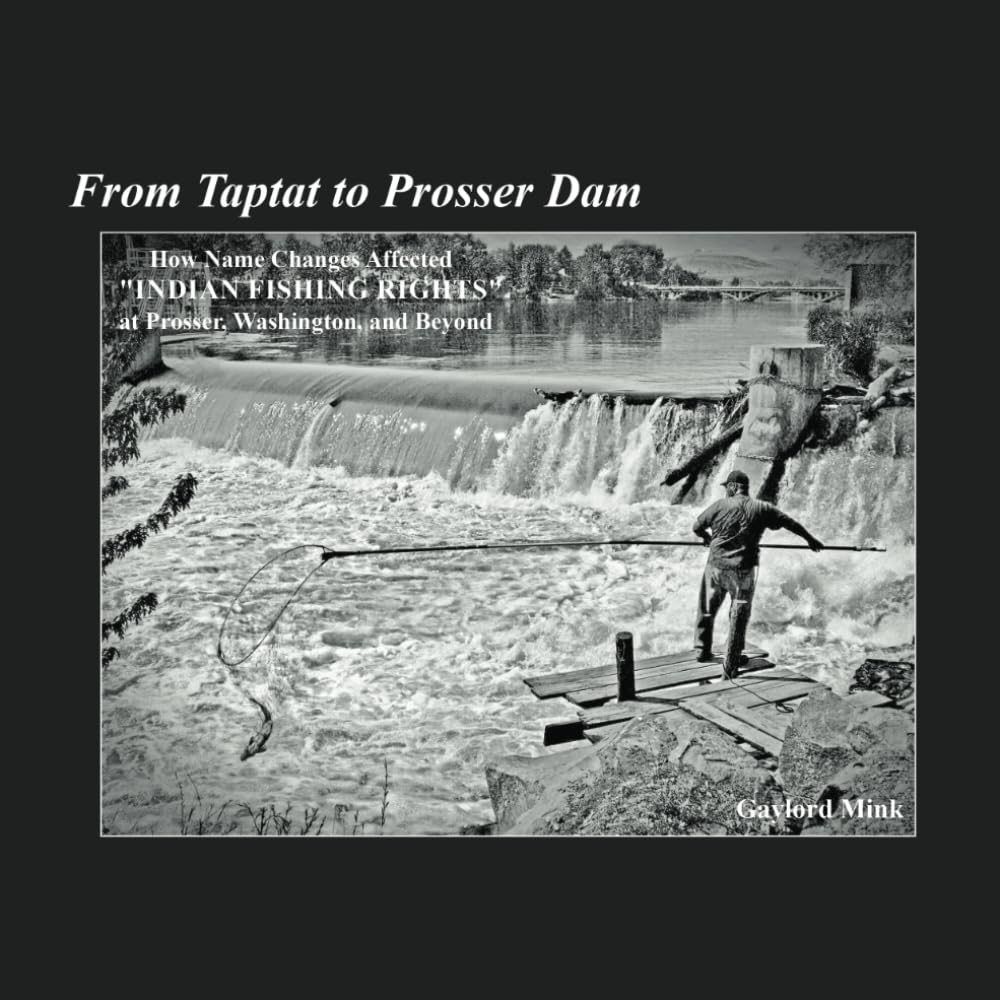
Since time immemorial, Sahaptin-speaking indigenous peoples have fished at a small waterfall in south-central Washington that the natives called Taptat. In the late 1800s, the town of Prosser was established by white settlers near the falls. For decades, Indigenous and white fishermen shared the falls without incident. However, as the white population increased and the town expanded, a sequence of small dams was built to divert Yakima River water for industrial and agricultural uses. When Washington became the 42 nd state, management of the state’s wildlife resources became the state’s responsibility. Under a newly established state law, the mere presence of a dam created legal problems for fishermen of both cultures. The law prohibited fishing by fishermen of any culture within one mile of a dam. The rights of “Indian” fishermen was complicated by a treaty signed in 1855 between the Yakama Nation and the US government which stated that Yakama fishermen would be allowed to fish at their accustomed places forever. This disparity between state law and a federal treaty created interagency confusion that resulted in multiple arrests at Prosser Dam over a period of several years. The arrests resulted in two lawsuits that reached the Washington Supreme Court. Decisions reached in these lawsuits and their aftermath would reverberate through the Washington State Court system for nearly a century. Throughout this period, citizens of Prosser strongly supported the Yakama tribal fishermen in their legal battles with the Washington Department of Fish and Wildlife. Ultimately, the concept of “Indian Fishing Rights” was defined by the Washington courts and tribal fishermen are now free to fish not just at Prosser Dam but elsewhere in the Pacific Northwest without fear of arrest.