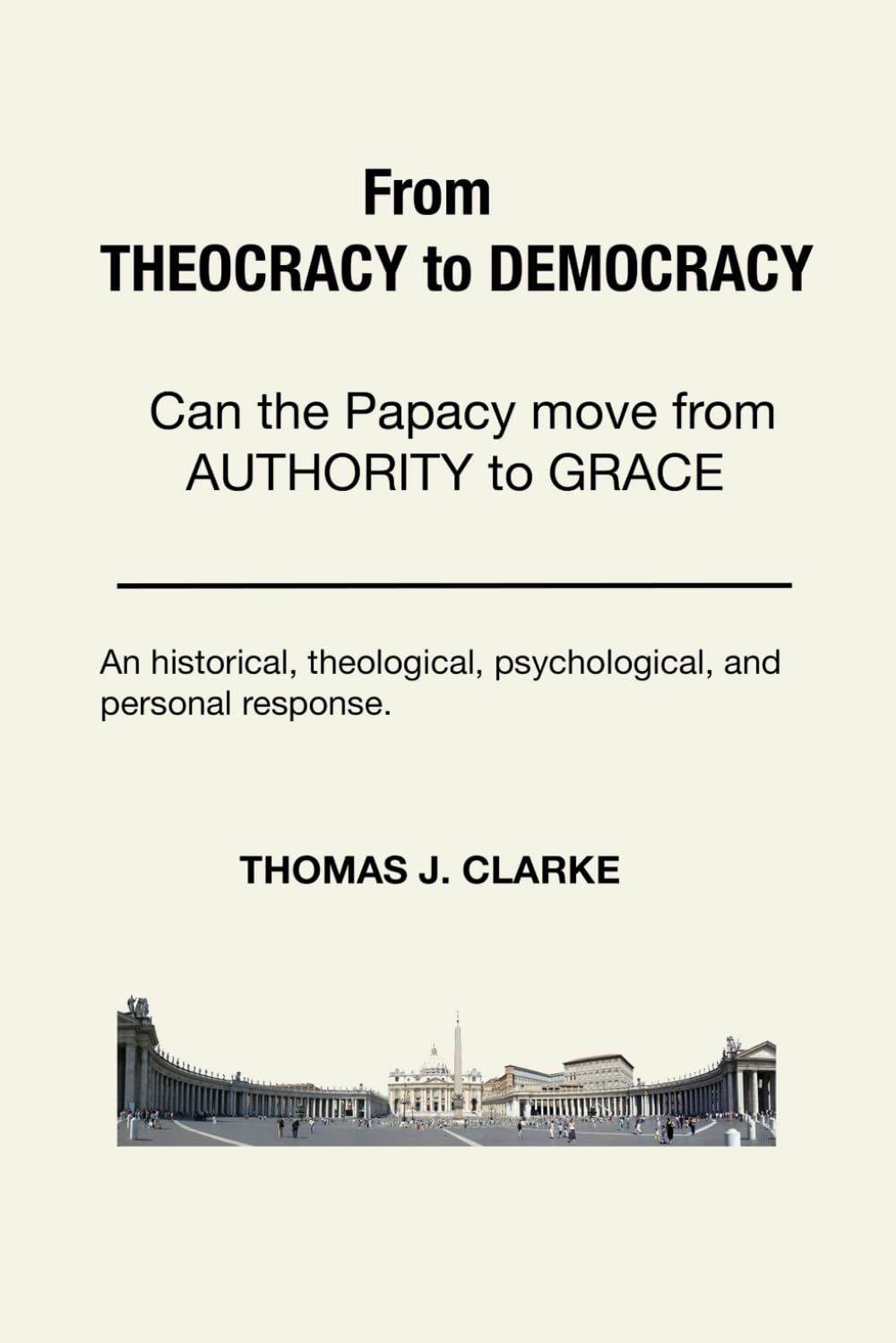
From Theocracy to Democracy: Can the Papacy move from Authority to Grace
$25.00
by Thomas Joseph Clarke



A powerful and panoramic portrait of how theocracy that began in Mesopotamia and triumphed in the Roman Empire contaminated the message of Jesus about living under the democratic freedom of his Father's grace. His Gospel became a fragile, nebulous, and bitterly controversial faith due to the theocratic papacy's abuse of human anxiety about his Father becoming a "Great Avenger" of all those who did not accept papal authority or whose lives failed in some manner due to human weakness or lack of faith. This book blends history, theology, psychology, and personal experience in explaining how the Church developed throughout history and why Pope Franics has been trying to help the Church understand that "It is not that we love God, but that God loves us." The book challenges the Church to support a faith grounded in human experience and creativity by proclaiming an unambiguous message about a love that all of humanity can trust.