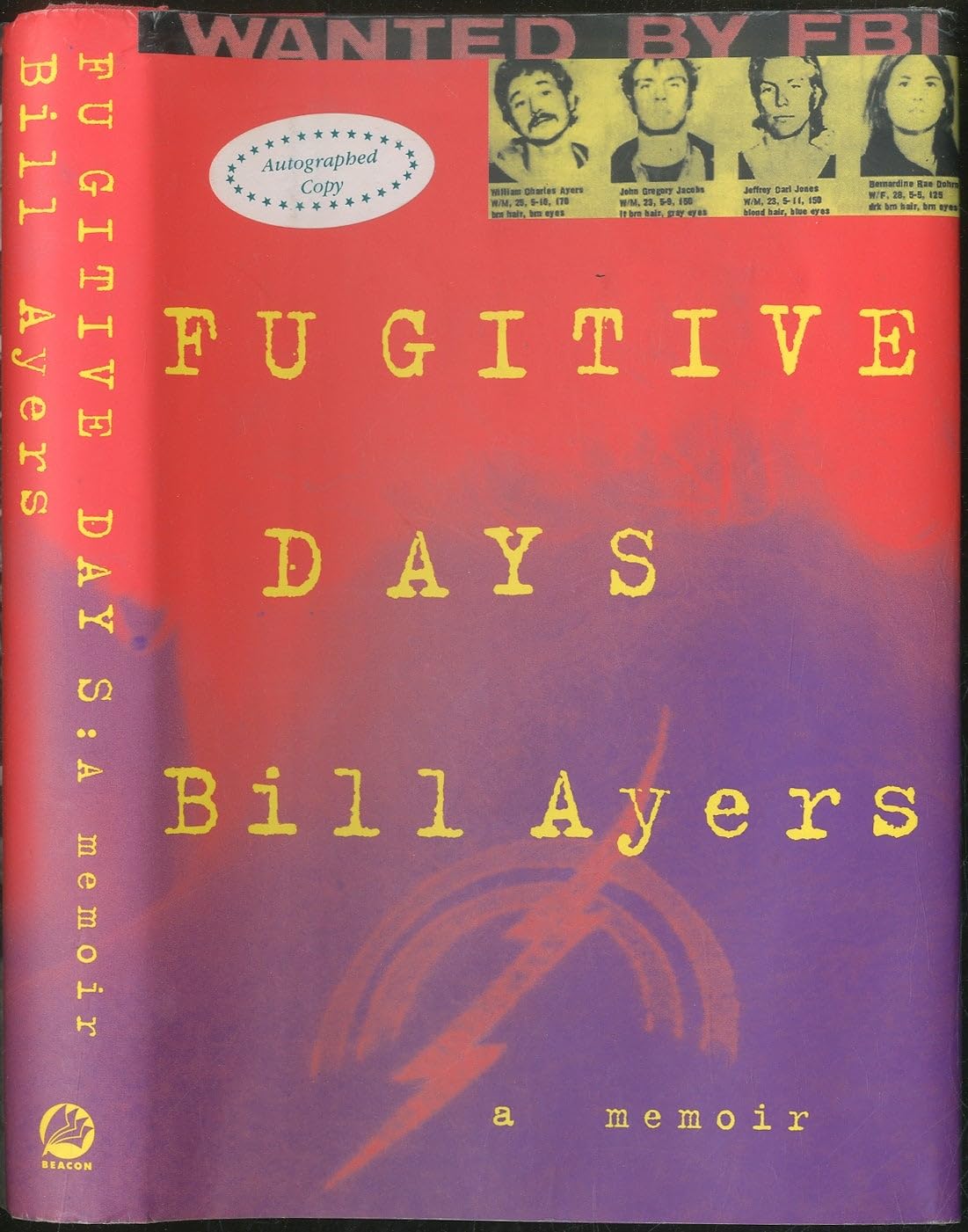



The author--a famous 1960s radical--shares details of a decade spent living underground, from his days on the "ten most wanted list" to his part in breaking Timothy Leary out of jail. "Memory is a motherfucker," writes Ayers (A Kind and Just Parent). In the 1970s, he was a head of the radical Weathermen and one of America's Ten Most Wanted, along with his wife, Bernardine Dohrn, but he is now a distinguished professor of education at the University of Illinois in Chicago. His memoir is a breath of fresh air in this self-absorbed age. Ayers discusses his reservations about the use of violence to achieve an end to violence (reservations he held then as well), but he is unrepentant in believing that America was the aggressor against North Vietnam and that right-minded people have an obligation to resist unjust wars. The book is uneven in tone, alternating fluffy passages about the passage of time with straightforward narration of Ayers's more than ten years on the lam. The sentiments expressed in the book still seem noble, however, regardless of one's opinions of the means used by Ayers's comrades. There are many lessons still to be learned from such narratives. Recommended. David Keymer, California State Univ., Stanislaus Copyright 2001 Reed Business Information, Inc. Today Ayers, author of A Kind and Just Parent (1997), is revered as an educator. Thirty years ago, he was on the FBI's Most Wanted list, considered a terrorist by the establishment and a hero by many in the antiwar movement. Ayers and his wife and fellow radical, Bernardine Dohrn, lived as fugitives for 10 years after the accidental bomb blast in Greenwich Village in March 1970 that killed three of their fellow Weathermen, and now, at long last, he tells his gripping and provocative story. With an undiminished passion for candor and justice, Ayers recounts his early community-based work in support of civil rights and against the war in Vietnam and his radicalization in the face of an inhumane and hypocritical government, a transformation that inspired him to help launch courageous if wildly aggressive forms of protest. His insider's perspective on such epoch-defining events as the 1968 Chicago Democratic Convention and the bombing of the Pentagon and his detailed disclosure of his life underground are electrifying, but what is most remarkable about this dramatic and revelatory personal and social history are the always urgent questions it raises about compassion and freedom, responsibility and community, and the conundrum of how to bring about much-needed change. Donna Seaman Copyright © American Library Association. All rights reserved Ayers' powerful, morally charged account of a life and a society in the political balance is provocative reading -- Chicago Tribune, Sunday, 8/26/01 What s remarkable is just how little self-righteousness and self-justification the memoir indulges in -- The New York Observer, 8/27/01 a knack for capturing the spirit of his times... after the mayhem of 1968 things were rapidly falling apart. . . -- Cleveland Plain Dealer Advance Praise for Bill Ayers - Fugitive Days: A Memoir This is a precious book, not simply because it offers a gripping personal account of the primal American suspense story of life on the run, but, more important, because it re-creates a critical point of view and way of thinking that we seem, even a few decades later, barely able to recall. Scott Turow, author of The Laws of Our Fathers and Personal Injuries A memoir that is, in effect, a deeply moving elegy to all those young dreamers who tried to live decently in an indecent world. Ayers provides a tribute to those better angels of ourselves. Studs Terkel, author of Working and The Good War Finally, here is an irresistibly readable book that answers the question, How did a nice suburban boy go from the ordinary pleasures of his class to the Days of Rage and beyond? Bill Ayers not only makes this exalting and painful journey comprehensible, he peoples it with sympathetic family, friends, and lovers, and moves us with his candor. Rosellen Brown, author of Before and After and Half a Heart With considerable wit, no small amount of remorse, and an anger that smolders still across the decades, Bill Ayers tells the story of his quintessentially American trip through the 1960s. That it is written in a consistently absorbing style with many passages of undiluted brilliance only adds to its appeal. Thomas Frank, author of One Market Under God and The Conquest of Cool A wild and painful ride in the savage years of the late sixties. A very good book about a terrifying time in America. Hunter S. Thompson, author of Fear and Loathing in Las Vegas and Hells Angels What makes Fugitive Days unique is its unsparing detail and its marvelous human coherence and integrity. Bill Ayerss America and his family background, his education, his political awakening, his anger and involvement, his anguished re-emergence from the shad