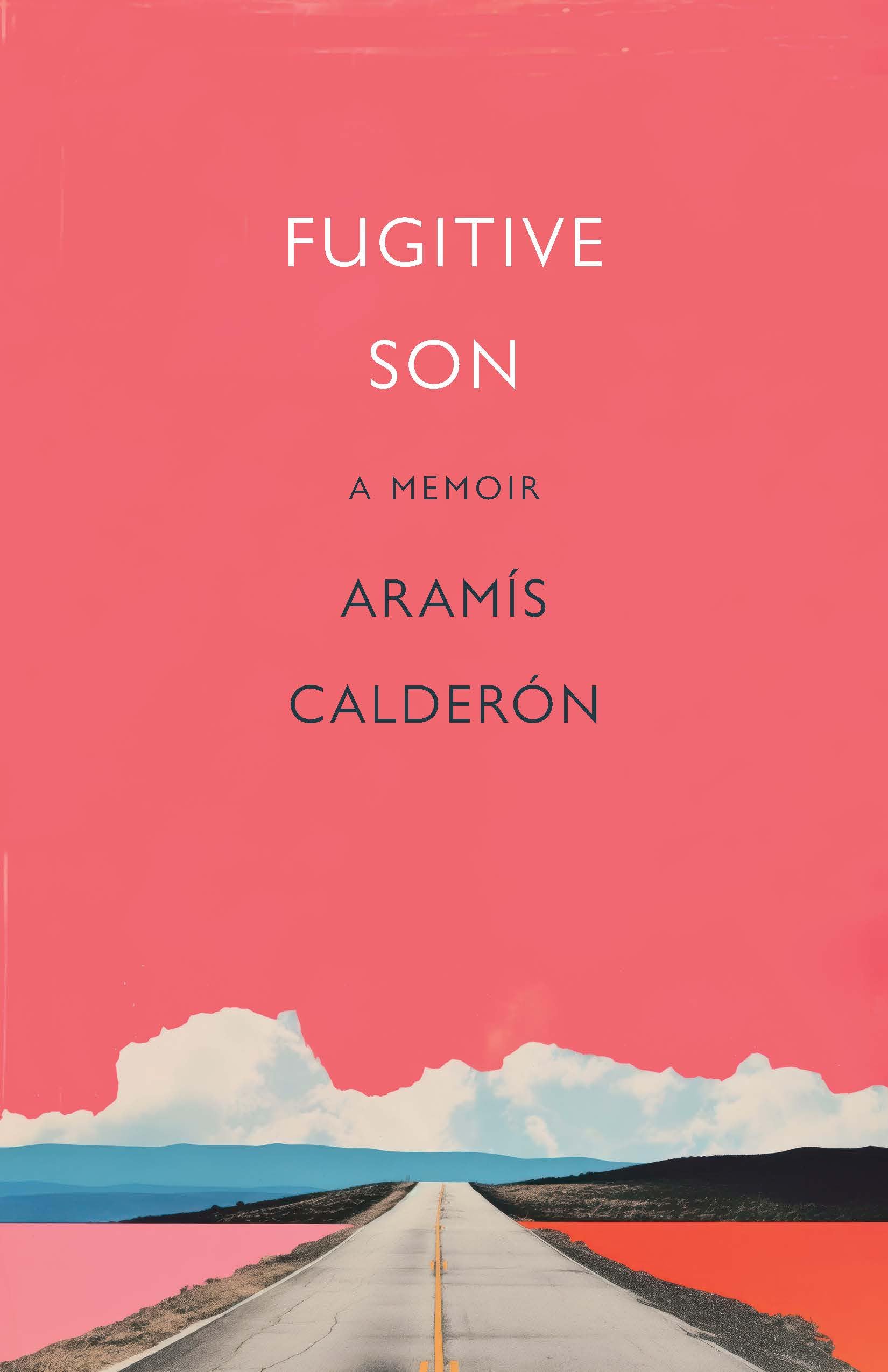



Aramís Calderón was eleven in 1992 when federal marshals conducted a nighttime raid at the Baton Rouge apartment where he lived with his mother and four siblings. They were searching for Aramís’s father, who had escaped from a nearby federal prison. Once satisfied with the answers from Aramís’s mother, the marshals departed. At daybreak, so did Aramís’s family—and drove toward a rendezvous with his father, who had fled to South Florida. Thus began an eight-month ordeal of constant moves, family aliases, and drug deals. As Calderón shares, Fugitive Son is not a love letter to his father, whom he sees even after his death as an unethical, toxic, and incredibly complex man. Rather, Calderón’s memoir explores how his father’s undeniable love for his family despite drug addiction, lawlessness, and toxic masculinity informed Aramís’s rebellious decision to join the Marines, and how all this shaped his determination to become the father he wished his own had been. “Savage and tender. In Fugitive Son Aramís Calderón gives a searing portrait of his drug-dealing, prison-escapee father who evades authorities for a year with his wife and four children in tow. Calderón’s unsentimental memoir pulses with horror and love as his eleven-year-old self wrestles with his father’s Islamic faith and his own uncertain journey toward manhood. Calderón’s prose is spare and unyielding.”—Liam Corley, author of Unwound: Poems from Enduring Wars and Changelings: Insurgence “Intensely personal and extremely well told, Fugitive Son delivers a most unusual and compelling coming-of-age true story that doesn’t pull punches. Fraught with suspense and a brand of strict lawlessness never seen before, the father and son here are like no others. Among the struggles and heartbreak, there is hope, and ultimately a new flavor of redemption. Poignant is an understatement. This book is intriguing, entertaining, and severely moving.”—Jeffery Hess, author of No Salvation , the Beachhead trilogy, and Pascagoula Run “A heartbreaking and eye-opening book. Bold, plainspoken, and cosmopolitan, Fugitive Son tells the story of a boy who wants to know the truth about his mysterious Argentinian father who just happens to be Muslim. Aramís Calderón has crafted a fascinating memoir about family, politics, and religion. I couldn’t put it down.”—M. C. Armstrong, author of The Mysteries of Haditha and American Delphi “A gritty, brutally honest, unflinchingly authentic, finely nuanced, richly detailed, fast-paced, and ultimately deeply moving personal record of hard-won strength and innermost resilience. Fugitive Son is a remarkably talented new writer’s effort to raise a bulwark against despair.”—Mikhail Iossel, author of Love like Water, Love like Fire Aramís Calderón is a data scientist for a defense contractor and a combat veteran of the Iraq War. He enlisted in the Marines in 2002 and received an honorable discharge after twelve years of service. Calderón earned an MFA in creative writing and has published poetry, short stories, and the novel Dismount . 1 We spent our summer Sundays visiting my father in prison. To be closer to him, my mother had moved us from Florida to Baton Rouge, Louisiana, when I was eleven. The long, one-lane road from our apartment to the prison was flanked by swamp, and the stink of an unseen petrochemical plant filled the car even when the windows were rolled up. To pass the time, Mom would crank up the radio volume and sing along to Whitney Houston and Bryan Adams songs about love and loneliness. My siblings napped, and I’d pass the time reading a map we kept stored in the glove box. Our destination on the map was a town named Carville. On August 16, 1992, we were running late as usual. Mom parked in the visitors’ area, a gravel lot with a view of the Mississippi River just beyond a barbed wire fence. She tried walking quickly through the parking lot, but her high heels sank into the ground every other step. I held my little brother’s hand, but Peewee’s little legs struggled to keep up. My sisters, Memé and Chiní, skipped and laughed, happy to be out of the car. As soon as Mom’s heels hit the sidewalk, she took off even faster. I couldn’t understand why. Even the few times we’d been late for visitation hours, Dad’s anger had dropped after a hug and a kiss. The federal corrections facility housed minimum-security inmates with medical conditions. Mom had said they moved Dad here because of his bad knees. Next door to the prison was a leper colony, but I never saw any of the residents. I knew back then my father had committed crimes, but I didn’t understand what “conspiracy drug trafficking” meant. I knew he was a drug smuggler, and I knew what the word smuggler meant because Han Solo in the movie Star Wars was also one. Teachers had taught me drugs were bad, but I’d learned that lesson long before the D.A.R.E. program appeared in my school. Still, I didn’t believe my d