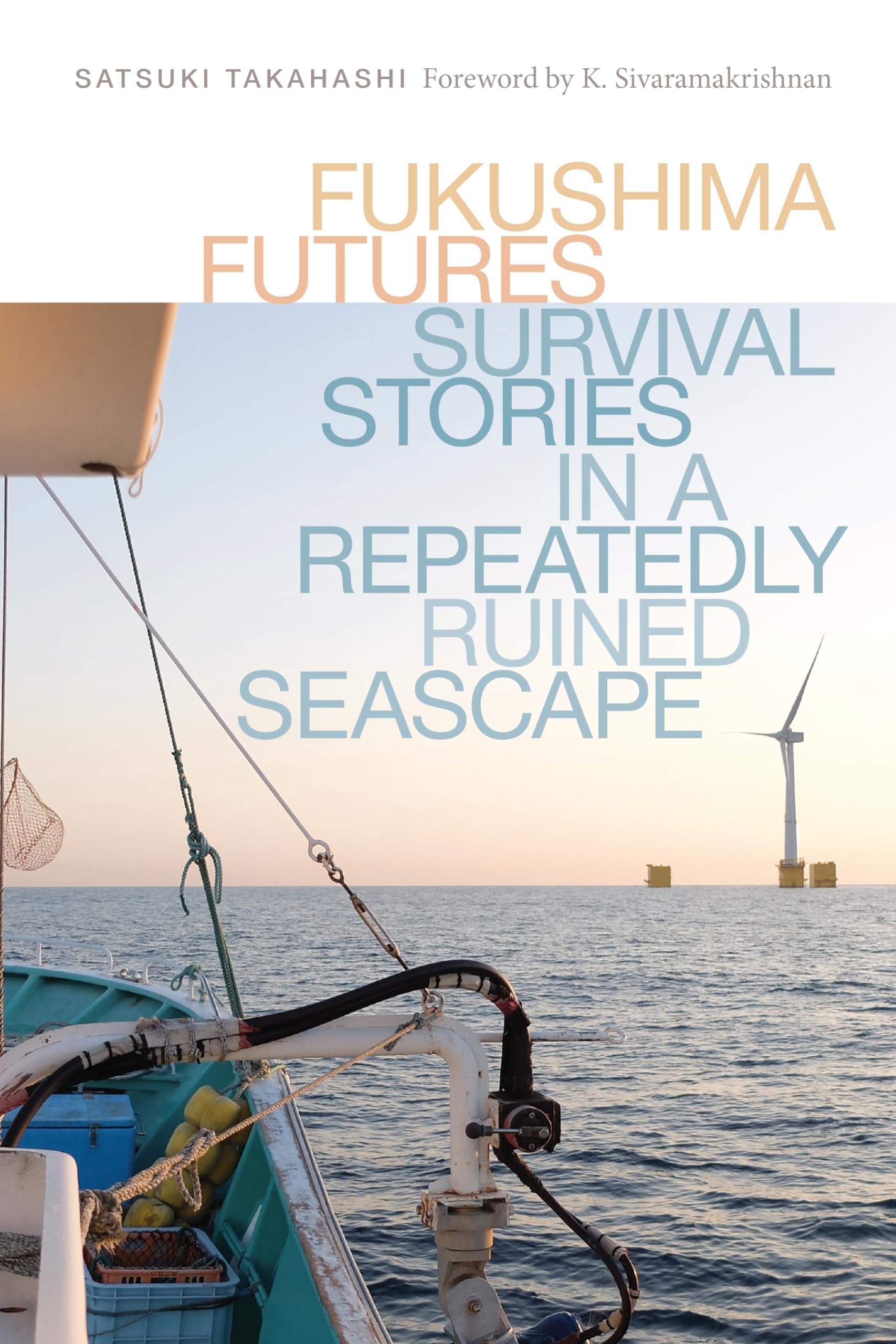
Fukushima Futures: Survival Stories in a Repeatedly Ruined Seascape (Culture, Place, and Nature)
$35.00
by Satsuki Takahashi



A probe of the environmental and sociocultural effects of industrialization and nuclear disaster on coastal livelihoods Both before and after the 2011 "Triple Disaster" of earthquake, tidal wave, and consequent meltdown at the Fukushima Daiichi nuclear power plant, anthropologist Satsuki Takahashi visited nearby communities, collecting accounts of life and livelihoods along the industrialized seascape. The resulting environmental ethnography examines the complex relationship between commercial fishing families and the Joban Sea―once known for premium-quality fish and now notorious as the location of the world's worst nuclear catastrophe. Fukushima Futures follows postwar Japan's maritime modernization from the perspectives of those most entangled with its successes and failures. In response to unrelenting setbacks, including an earlier nuclear accident at neighboring Tokaimura and the oil spills of stranded tankers during typhoons, these communities have developed survival strategies shaped by the precarity they share with their marine ecosystem. The collaborative resilience that emerges against this backdrop of vulnerability and uncertainty challenges the progress-bound logic of futurism, bringing more hopeful possibilities for the future into sharper focus. "A unique contribution to the study of disaster, modernization, and fishing communities."―Nicolas Sternsdorff-Cisterna, author of Food Safety after Fukushima: Scientific Citizenship and the Politics of Risk "In this graceful and insightful ethnography, readers join Joban Sea fishermen as they ricochet between futurist dreams and industrial catastrophe. Projects shift―from hard clams to hatcheries to floating wind farms and back―while stories and fish weave nets of survival. Fukushima Futures shows us living in the midst of ruin: the condition of the Anthropocene."―Anna L. Tsing, coeditor of Feral Atlas: The More-Than-Human Anthropocene "An innovative reflection on disaster, hope, and the unknowable routes to survival, Fukushima Futures is also a testament to Satsuki Takahashi's astonishing capacity to produce elegant and insightful ethnography as the world around her broke, then broke again, and again."―Hugh Raffles, author of The Book of Unconformities: Speculations on Lost Time "[A work] of insight and passion . . . testimony to the invaluable power of inquiry that arises from deep engagement and careful listening in local lifeworlds."― Journal of Asian Studies "[I]nnovative [and] highly enjoyable book . . . Fukushima Futures makes a truly valuable contribution to the histories and anthropologies of coastal communities in Japan, as well as the wider body of the environmental history of ruined spaces and ecologies in Japan and East Asia."― International Journal of Maritime History "An important first-hand account of the hardship and resilience associated with Japanese fishing communities. The sustained ethnographic relationship that Takahashi developed both before and after Fukushima makes for a unique perspective not found within other works. The clear structure and prose and vivid ethnographic description is equally sure to engage an interdisciplinary readership."― Pacific Affairs "Takahashi presents a wonderful ethnography with a bottom-up perspective of eco-futurism and other rapidly shifting modernization agendas. . . . She convincingly suggests that there is hope left for the continued survival of the Fukushima and Ibaraki fishing communities, throughout their evolving and ever-changing relationship with modernization and nature."― H-Net Reviews A probe of the environmental and sociocultural effects of industrialization and nuclear disaster on coastal livelihoods Satsuki Takahashi is professor of anthropology at Hosei University in Tokyo.