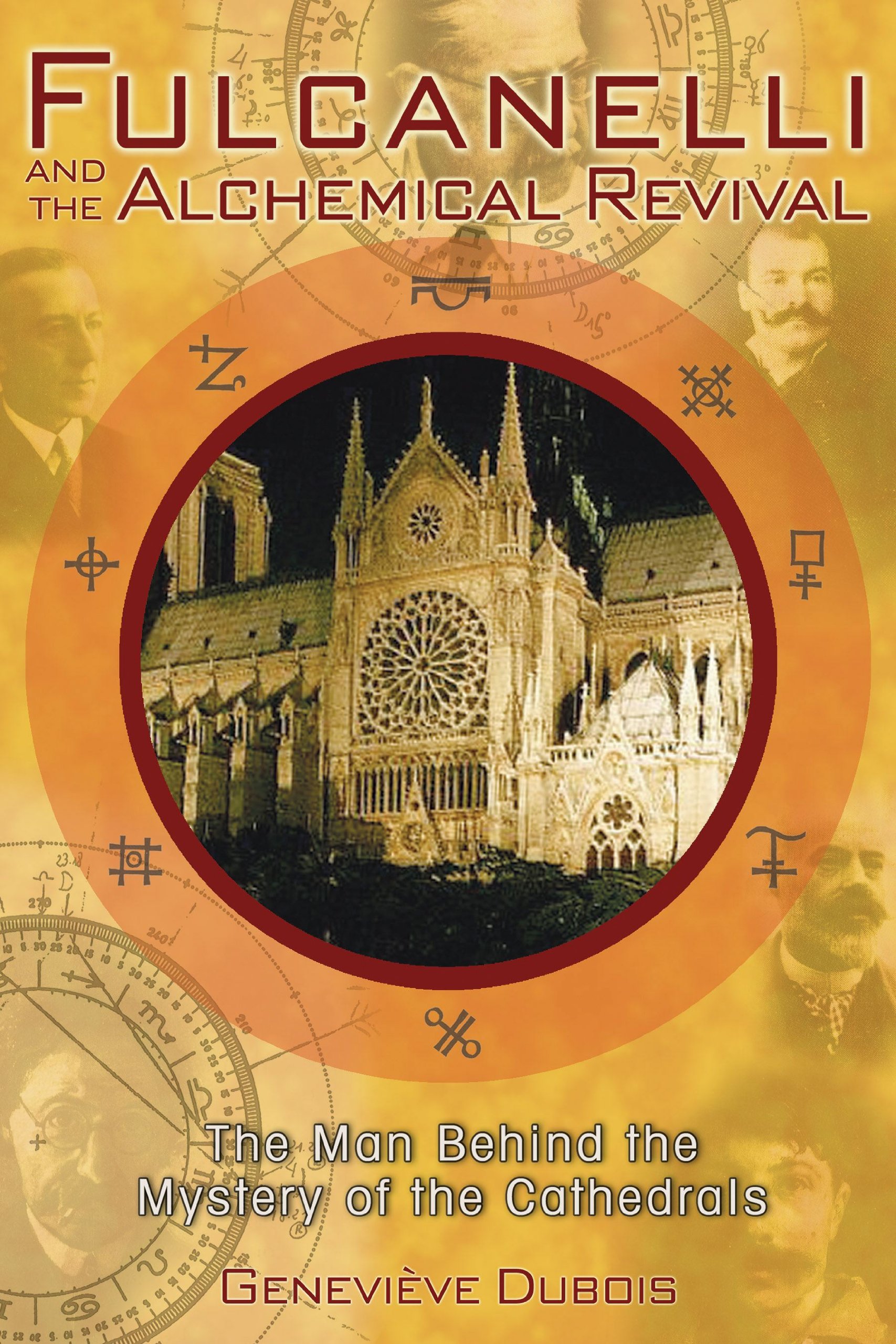
Fulcanelli and the Alchemical Revival: The Man Behind the Mystery of the Cathedrals
$14.95
by Geneviève Dubois



Sheds new light on the identity of the alchemist Fulcanelli • Provides new understanding of the relationships between the most important figures of the esoteric milieu of Paris in the first half of the 20th century • Includes a wealth of rarely seen documents, photos, and letters Fulcanelli, operative alchemist and author of The Mystery of the Cathedrals and The Dwellings of the Philosophers-- two of the most important esoteric works of the twentieth century--remains himself a mystery. The true identity of the man who allegedly succeeded in creating the philosopher’s stone has never been discovered, despite ardent searches by many--even the OSS (the wartime U.S. intelligence agency, later to become the CIA) claimed to have looked for him following the end of World War II. Geneviève Dubois looks at the esoteric milieu of Paris at the turn of the century, a time that witnessed a great revival of the alchemical tradition, and investigates some of its salient personalities. Could one of these have been this enigmatic man, reported to have last appeared in Seville, Spain, in 1952 when he would have been 113 years of age? The trail followed by the author encounters such figures as Papus, René Guénon, Schwaller de Lubicz, Pierre Dujols, Eugene Canseliet, and Jean-Julien Champagne. Working from rare documents, letters, and photos, Dubois suggests that one of these men could have been hiding his activity behind the pseudonym of Fulcanelli or that Fulcanelli may even have been a composite fabricated by several of these individuals working together. Beyond its attempt to reveal the actual identity of Fulcanelli, Fulcanelli and the Alchemical Revival also presents an explanation of the alchemical doctrine and reveals the unsuspected relationships among the important twentieth-century truth seekers it highlights. "If you are of a forensic bent and love to figure out puzzles, this book is ideal for you. It has a wealth of knowledge, with supporting notes and detailed bibliography that are full of references to many areas of further research." ― Jennifer Hoskins, New Dawn, Mar-Apr 2007 HERMETIC STUDIES / ALCHEMY Fulcanelli, operative alchemist and author of The Mystery of the Cathedrals and The Dwellings of the Philosophers--two of the most important esoteric works of the twentieth century--remains himself a mystery. The true identity of the man who allegedly succeeded in creating the philosopher's stone has never been discovered, despite ardent searches by many--even the OSS (the wartime U.S. intelligence agency that later became the CIA) tried to find him following the end of World War II. Genevi趥 Dubois looks at the esoteric milieu of Paris at the end of the nineteenth century and the beginning of the twentieth, a time that witnessed a great revival of the alchemical tradition, and investigates some of its salient personalities. Could one of these have been this enigmatic man, who was reported to have last appeared in Seville, Spain, in 1952, when he would have been 113 years of age? Along the author's trail we encounter such figures as Papus, Ren頇u鮯n, Ren頓chwaller de Lubicz, Pierre Dujols, Eugene Canseliet, and Jean-Julien Champagne. Working from rare documents, letters, and archival photos, Dubois suggests that one of these men could have been hiding his activity behind the pseudonym Fulcanelli, or that Fulcanelli may even have been a composite fabricated by several of these individuals working together. Beyond its attempt to reveal the actual identity of Fulcanelli, Fulcanelli and the Alchemical Revival presents an explanation of the alchemical doctrine and reveals the unsuspected relationships among the important twentieth-century truth seekers it highlights GENEVIȖE DUBOIS, author of several books in French on alchemical and hermetic studies, is a member of the ARK'ALL Foundation devoted to the study of operative alchemy. She lives in France. Geneviève Dubois, author of several books in French on alchemical and Hermetic studies, is a member of the ARK’ALL Foundation devoted to the study of operative alchemy. She lives in France. Part 3 Jean Julien Champagne and René Schwaller de Lubicz Jean Julien Champagne devoted years to maintaining the fiction of Fulcanelli’s vocation as an adept. He had launched this fiction and it was maintained by the whole group around him, all of whom must have promoted the myth: Gaston Sauvage, the Chacornacs, Pierre Dujols, Canseliet, Jules Boucher. They formed this mysterious “Fraternité d’Héliopolis” (F.C. H.). This double name (Hélio = sun; polis = city) had perhaps been borrowed from the Belgian Lodge of the Memphis-Misraïm rite that in 1839 called itself “Les Sages d’Héliopolis.” Eugène Canseliet placed the birth of Fulcanelli in 1839, the year of the establishment of this Lodge. This was a gesture, a reference, a broad wink in the direction of the eminently Free-Masonic circle around Pierre Dujols and Champagne: Thomas, the associate of the bookstore owner and of th