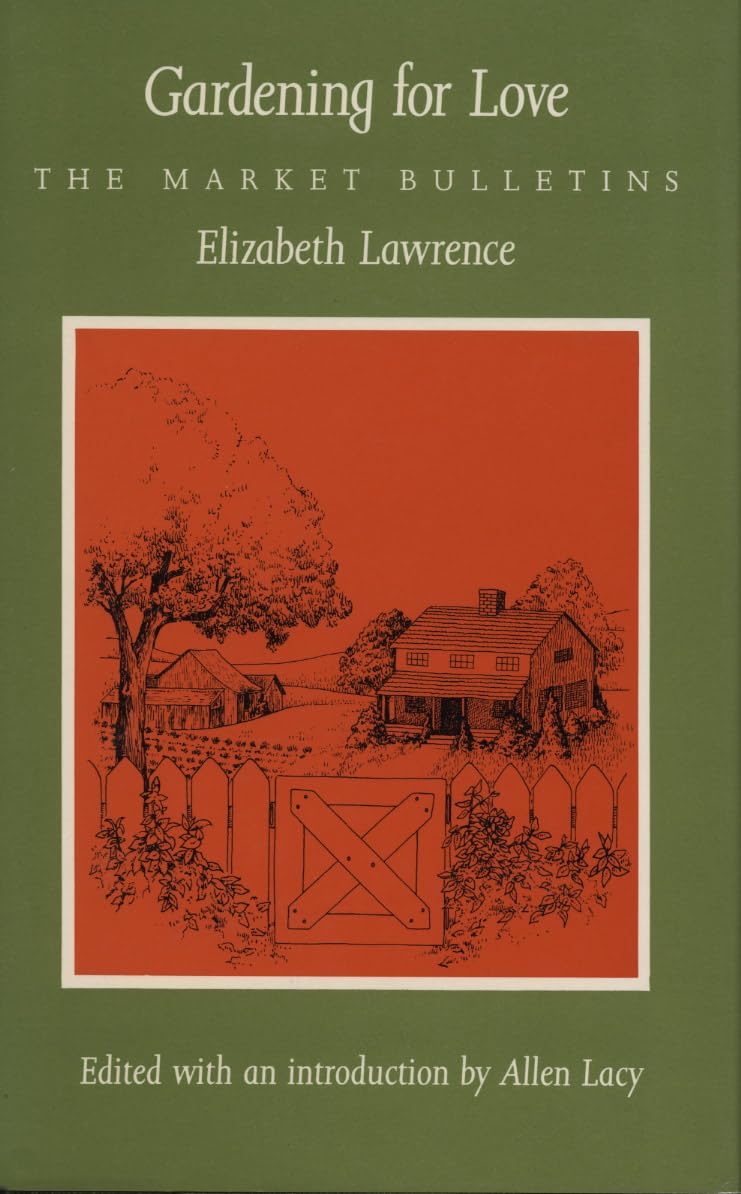



Elizabeth Lawrence occupies a secure place in the pantheon of twentieth-century gardening writers that includes Gertrude Jekyll and Vita Sackville-West of Great Britain and Katherine S. White of the United States. Her books, such as A Southern Garden (1942) and The Little Bulbs (1957), remain in print, continuing to win praise from criticis and to delight an ever-widening circle of readers. In Gardening for Love , Lawrence reveals another world of garden writing, the world of the rural women of the South with whom she corresponded extensively from the late 1950s into the mid-1970s in responce to their advertisements for herbs and ornamental perennials in several market bulletins (published by state departments of agriculture for the benefit of farmers). It was Eudora Welty who awakened Elizabeth Lawrence's interest in this fascinating topic by putting her name on the mailing list of The Mississippi Market Bulletin , a twice-monthly collection of classified advertisements founded in 1928 and still published today. Lawrence soon discovered market bulletins from the Carolinas and other Southern states, as well as similar bulletins published privately in the North. She began ordering plants from the bulletins, and there ensued a lively exchange of letters wit the women who sold them. Gardening for Love is Lawrence's exploration of this little-known side of American horticulture and her affectionate tribute to country people who shared her passion for plants. Drawing on the letters she received, sometimes a great many of them from the same persons over many years, she delves into traditional plant lore, herbal remedies, odd and often highly poetic vernacular plant names peculiar to particular regions of the South, and the herb collectors of the mountains of the Carolinas and Georgia. She focuses primarily on the Southeast and the Deep South, but her wide knowledge of both literature and botany gives Gardening for Love a dimension that transcends the category of regional writing. Here is the last manuscript of gifted gardener and garden writer Lawrence, edited after her death by Lacy. The work is drawn from 30 years' correspondence with those who advertised garden seeds and plants in the state agricultural bulletins, a primarily southern means of marketing farm products by "otherwise ordinary and unrecorded people." These sales earned the farm wives extra income, and Lawrence grew their plants in her North Carolina garden. Their knowledge about the names and uses of native plants provided Lawrence with tremendous amounts of information, but mostly she valued these friendships with those who "garden for love." This material will continue to instruct and inspire working gardeners, who will also appreciate Lacy's lists of common plant names and sources. Recommended. Deci Lowry, Chappaqua, N.Y. Copyright 1987 Reed Business Information, Inc. “For further enjoyment, pick up Lawrence’s Gardening for Love .” -- Katharine White ― Town & Country “Lawrence is one of those garden writers who bring literature, philosophy, landscape design, dirt gardening, and the voices of her friends and neighbors into the garden. Her books— A Southern Garden , The Little Bulb s, Gardens in Winter —are enlivened by her genius for trading both plants and stories, but this one is particularly enriched by the lively notices from the Mississippi Market Bulletin , a biweekly published by the Mississippi Department of Agriculture that advertised everything from hogs to the bulbs and plants that hard-working farm women hoped to sell for ‘mad’ money.” ― Natural History “No American gardening writer has been more admired than the late Elizabeth Lawrence of North Carolina. To have a posthumously published book of hers is now the sort of bonus that makes one think the world is not so bad after all.” -- Henry Mitchell ― Washington Post Book World “An enchanting work, unlike any other gardening book in existence.” -- Stanley Kunitz ― New York Times Book Review “ Gardening for Love is a collection of Elizabeth Lawrence’s writings centered around her 40-year correspondence with the avid gardeners—of rural Mississippi, the Carolinas, Georgia, and other states—who share their seeds and plants by ads in bulletins selling everything from moonvines to puppies. “As garden writer Allen Lacy points out in his eloquent introduction, Lawrence was far more than just a regional writer. Just as Eudora Welty—the friend who first interested Elizabeth Lawrence in the Mississippi Market Bulletin — has the voice and feel of her native Jackson, Mississippi, so Lawrence has an intimate knowledge of her home soil. “But her scope, just like Welty’s, stretches far and deep, reaching into the hearts of not only gardeners, but any reader fascinated with the comings and goings of the human race. . . . There’s a sense of comfort in this book, in the eternity of tending plants that stretch back through the centuries.” -- Anne Raver ― Newsday "No Ameri