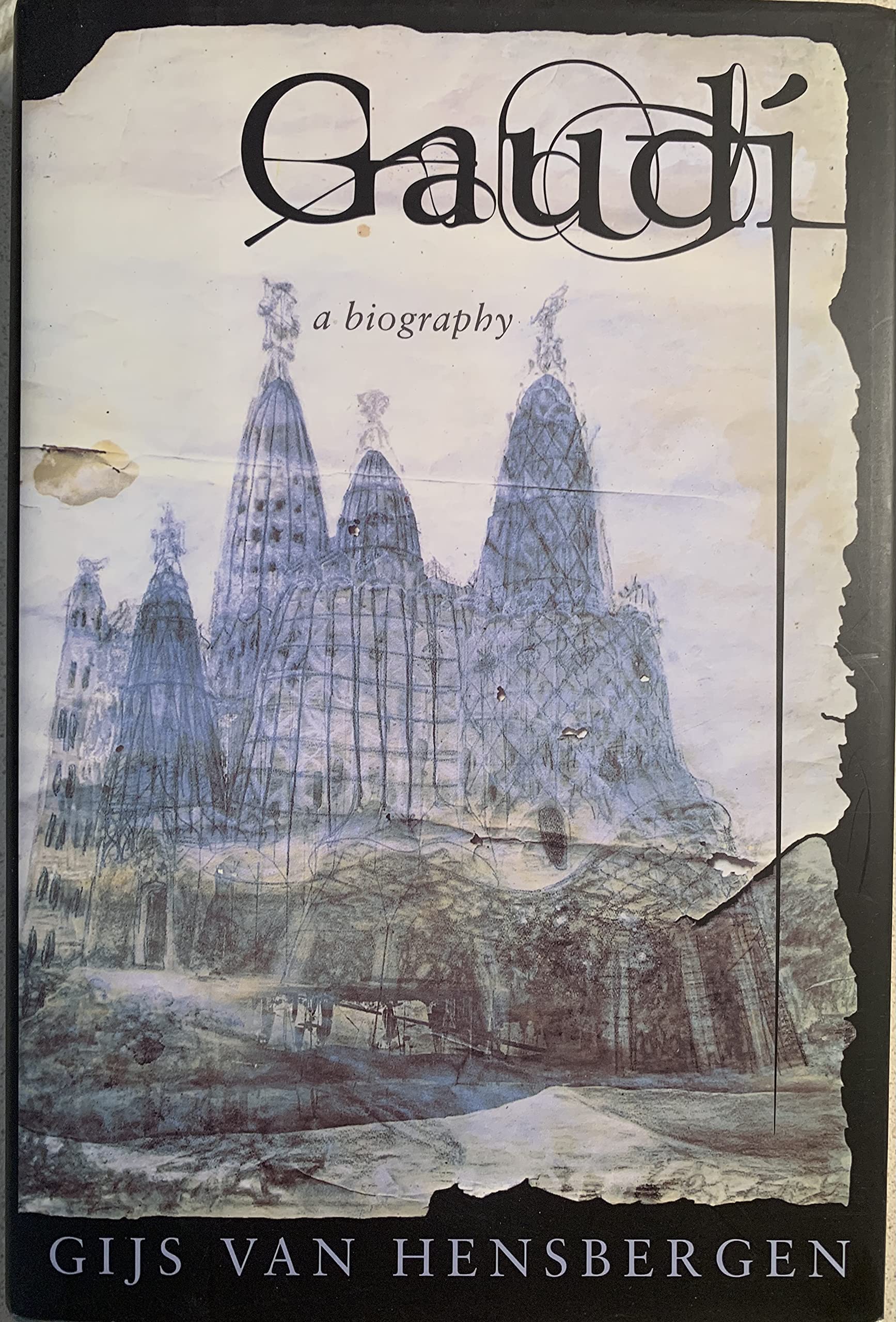



“A soaring biography. . . meticulously researched, elegantly organized, fluidly, lucidly written.” —Chicago Tribune At the time of his death in 1926, Antonio Gaudi was arguably the most famous architect in the world. He had created some of the greatest and most controversial masterpieces of modern architecture that were as exotic as they were outrageous. But little is known about the shadowy figure behind the swirling, vivid buildings that inspired the Surrealists. This masterful biography captures both the power and importance of Gaudi’s work and the unique spirit of Catalan culture. In life and death, Gaudi lived by extravagant gestures and a creativity that bordered on madness. Today, he has become an icon of artistic integrity and genius. The sinuous forms and lavish decorations of Antonio Gaudí (1852-1926) broke the mold in architecture. "His imagination burnt holes through the musty pattern books," writes Gijs van Hensbergen. "His gift was an amazing capacity to imagine a building and then transform it into reality." Gaudí's fantastical creations give Barcelona an appearance unlike any other city in the world. One of the paradoxes that informs his many-layered biography is that this most original of architects was politically conservative and profoundly Catholic, fired by the desire to celebrate the history and culture of his native Catalonia. Hensbergen, author of books on art deco and travel in Spain, devotes a good deal of his book to situating Gaudí's life and thought within the context of Catalonian traditions, particularly the 19th-century Renaixença, which sought to revive the region's language (Catalan) and to affirm its national identity against the Spanish government's desire to absorb it. He surrounds Gaudí, too often depicted as an isolated eccentric, with the friends and patrons who shared his vision, illuminating the architect's impact both within Catalonia and beyond its borders. (Admirers included the surrealists, whose atheism and radicalism were anathema to Gaudí.) Detailed knowledge of Gaudí's leisurely, wickedly expensive working methods and the complex use he made of previous architectural traditions gives us a better understanding of the unique nature of his genius, while Hensbergen's obvious (though not uncritical) affection for his subject as a man helps us appreciate "an extraordinarily creative and religiously charged life." --Wendy Smith Van Hensbergen (A Taste of Castille) states that this is the first English-language biography of the Spanish architect Antonio Gaudi (1852-1926). While this claim may depend on the exact definition of biography, it is certainly true that most existing literature examines the man's architectural achievements rather than his life story. Gaudi was an intensely private person, and all of his personal and working archives were destroyed at the beginning of the Spanish Civil War. Still, van Hensbergen does piece together a detailed yet readable story of the man, his achievements, and his close relationship to Barcelona and Catalonia. What results is not a coffee-table display of Gaudi's work but a scholarly treatment of an important architect. Recommended for large art and architecture collections. Jay Schafer, Univ. of Massachusetts, Amherst Copyright 2001 Reed Business Information, Inc. Antonio Gaudi (1852-1926), certainly one of the best-known, if not the best-known, of Spain's architects, is virtually synonymous with Barcelona. Long after his death, his playful style remains influential throughout the world, and his work continues to be built, for the Sagrada Familia, Barcelona's great cathedral, isn't scheduled to be finished until 150 years from now. Van Hensbergen's vivid and engaging biography, the first in English in many years, presents the eccentric Gaudi as thoroughly as the fact that most of his papers were destroyed at the beginning of the Spanish Civil War allows. Gaudi's origins were humble, and even as a boy he was obsessed with buildings, in particular the ruined monastery near his home. Van Hensbergen also explores Gaudi's reputation for dandyism, from the architect's student years and early commissions on. Eventually, Gaudi embraced celibacy, asceticism, and a pious, eremitical life, dwelling in the basement of the Sagrada Familia, his greatest triumph. Michael Spinella Copyright © American Library Association. All rights reserved “This book is written with immense sympathy and understanding for Gaudí himself and his work, but also for the cultural and political background…the most definitive book on Gaudí which has yet been produced.” - Colm Toibin, author of Homage to Barcelona “Gijs van Hensbergen has managed to recreate in his book that same combination of playfulness and seriousness which characterises Gaudí, and Barcelona. Altogether a delight.” - Paul Preston, biographer of Franco “Gijs van Hensbergen. . . brings Gaudi to life as never before” - Boston Globe "The author’s virtues of balance and good taste are evi