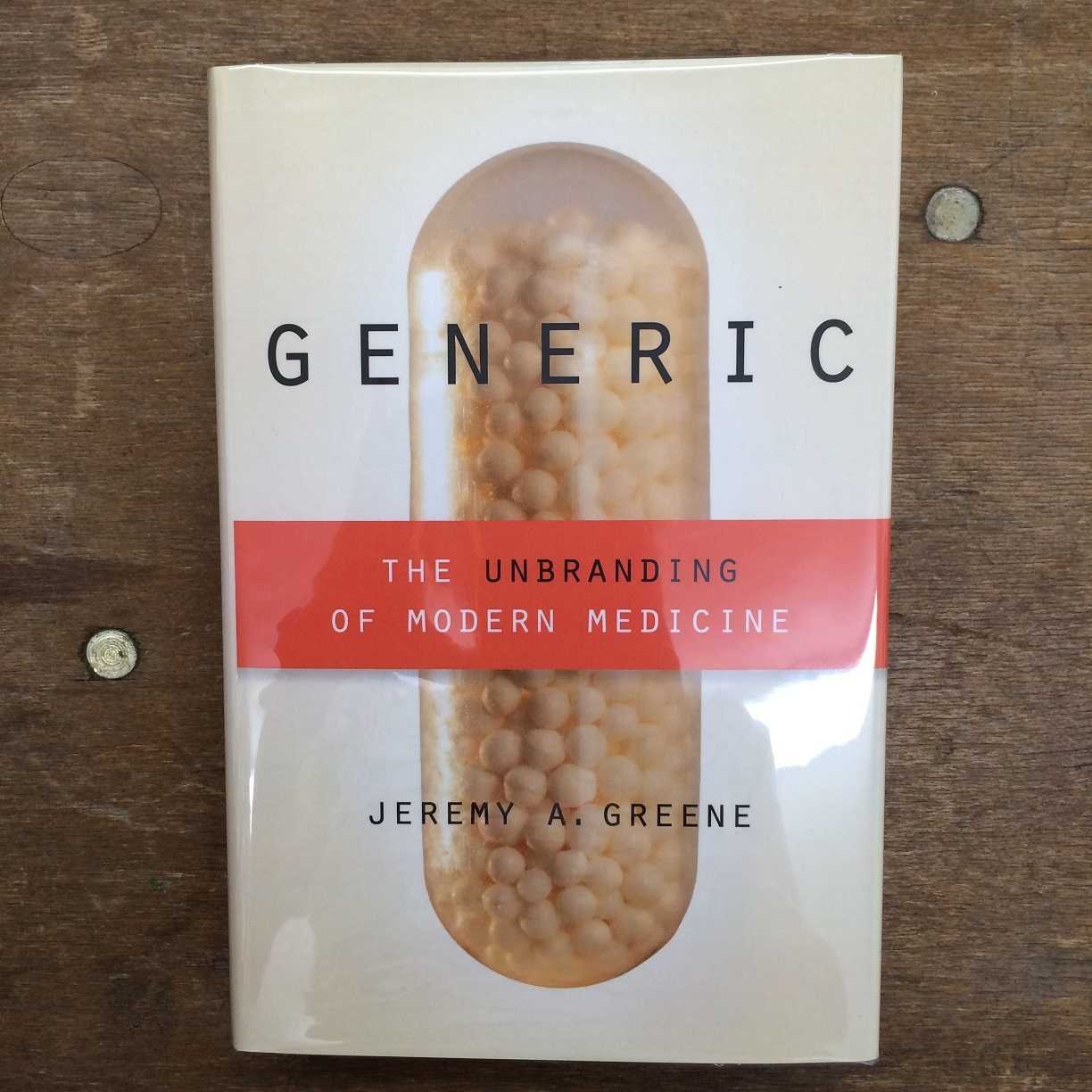



The turbulent history of generic pharmaceuticals raises powerful questions about similarity and difference in modern medicine. Generic drugs are now familiar objects in clinics, drugstores, and households around the world. We like to think of these tablets, capsules, patches, and ointments as interchangeable with their brand-name counterparts: why pay more for the same? And yet they are not quite the same. They differ in price, in place of origin, in color, shape, and size, in the dyes, binders, fillers, and coatings used, and in a host of other ways. Claims of generic equivalence, as physician-historian Jeremy Greene reveals in this gripping narrative, are never based on being identical to the original drug in all respects, but in being the same in all ways that matter. How do we know what parts of a pill really matter? Decisions about which differences are significant and which are trivial in the world of therapeutics are not resolved by simple chemical or biological assays alone. As Greene reveals in this fascinating account, questions of therapeutic similarity and difference are also always questions of pharmacology and physiology, of economics and politics, of morality and belief. Generic is the first book to chronicle the social, political, and cultural history of generic drugs in America. It narrates the evolution of the generic drug industry from a set of mid-twentieth-century "schlock houses" and "counterfeiters" into an agile and surprisingly powerful set of multinational corporations in the early twenty-first century. The substitution of bioequivalent generic drugs for more expensive brand-name products is a rare success story in a field of failed attempts to deliver equivalent value in health care for a lower price. Greene’s history sheds light on the controversies shadowing the success of generics: problems with the generalizability of medical knowledge, the fragile role of science in public policy, and the increasing role of industry, marketing, and consumer logics in late-twentieth-century and early twenty-first century health care. Greene's brilliant book is the first full-length monograph to trace the history of how Americans think about generics, and it is going to be the key reference for many years to come. ― Somatosphere An excellent and recommended history of how the generic drug market came to be. ― Library Journal Fascinating and thought-provoking. ― History Wire: Where the Past Comes Alive Dr. Greene's gripping and eye-opening accounts of the scientific, social, and political debates that happened along the way keep the reader hooked and engaged. . . [He] is both scholar and storyteller, interspersing fascinating historical narratives with complex scientific discussion. ― P&T Community Greene should be congratulated for bringing this subject to life―with a mix of anecdote, scholarship, and elegant prose. ― Lancet As Jeremy Greene lays out in his excellent book, the story of the generic drug industry is is far more complicated―and far more interesting than most of us might guess . . . [Greene] provides readers with a useful framework for understanding how we got to where we are and how we might apply the lessons of the past to the challenges we face today. ― Health Affairs Greene turns the concept of generic as 'ho-hum' on its head with this jam-packed survey of the effects culture, medicine, and politics have exerted on today's ubiquitous generic drugs for the last 50 years. ― Publishers Weekly Jeremy Greene's Generic: The Unbranding of Modern Medicine fascinates because the very meaning of the key term 'generic' is so unstable. Every time the reader thinks they have a handle on its dimensions, another four open up. ―Joseph Dumit, Somatosphere Greene's book is a dizzying historical-political-social-cultural account of the forms generic drugs have taken over past several decades. ― Somatosphere Generic: The Unbranding of Modern Medicine comes from a physician and historian who offers a history of not just the development of generic drugs, but how they differ from the original. Within his examination are important insights on how drugs are made, what parts of a pill really matter, issues of therapeutic similarity and difference, and more. It's a wide-ranging history that embraces ethical, scientific, health, and economic issues and it provides insights on the history of generic drugs in America and the problems associated with scientific and medical changes in the public eye. The result is a survey that belongs in any health collection and many a general-interest holding. ― The Midwest Book Review This fine, stimulating, and entertaining book offers much food for thought. ―Nicolas Rasmussen, Journal of the History of Medicine and Allied Sciences Well written and informative . . . bring[s] to life a tangled web of competing interests. ―Phillip Broadwith, Chemistry World A theoretical and empirical primer that explains the success and failure of generi