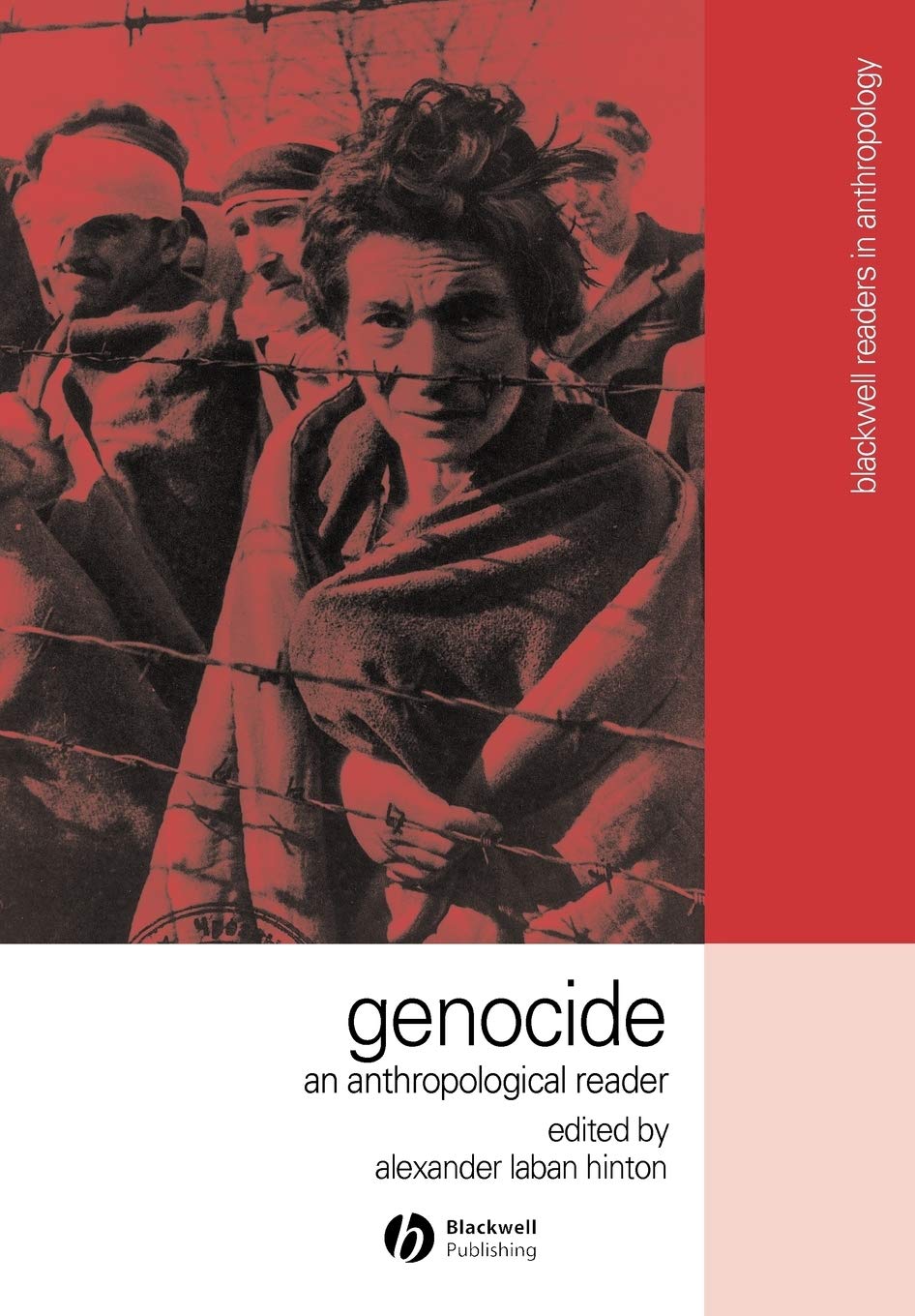
Genocide: An Anthropological Reader (Wiley Blackwell Readers in Anthropology)
$49.45
by Alexander Hinton



Genocide: An Anthropological Reader helps to lay a foundation for a ground-breaking "anthropology of genocide" by gathering together for the first time the seminal texts for learning about and understanding this phenomenon. "An excellent contribution to the field of genocide studies: lucid, wide-ranging, and accessible; should be a core text in any course on genocide." Roger W. Smith, The College of William and Mary "This volume, edited and ably introduced by an important scholar of genocide, is an especially timely and important contribution to a growing field. Essential international documents coupled with an excellent collection of previously published articles attempt to explain genocide and related state violence as the first step towards prevention. This fine book is especially suitable for undergraduate and graduate courses." Carole Nagengast, University of New Mexico "This Reader will be useful for college teachers and novice administrators. Each contribution examines dramatic and controversial issues of immediate concern. While the collection addresses genocidal disasters, its emphasis is on the differences among them, and the varied interpretations that have been made of their causes and their consequences." Journal of the Royal Anthropological Institute During the 20th century tens of millions of people were annihilated by genocidal regimes. As we enter the 21st century, we must look back and attempt to comprehend what has been aptly termed the century of genocide. It is only through such understanding that we can begin to imagine ways of preventing or minimizing future atrocities. Genocide: An Anthropological Reader lays the foundation for a ground-breaking anthropology of genocide by gathering together for the first time the seminal texts for learning about and understanding this phenomenon. While scholars in other fields have conducted excellent analyses of the macrolevel factors facilitating genocide, few have been able to approach genocide from the local perspective. By filling this important niche-pulling together key anthropological and interdisciplinary sources on genocide - Genocide: An Anthropological Reader stands both to make an important contribution to our understanding of genocide and to serve as a valuable resource for readers across a wide variety of fields. During the 20th century tens of millions of people were annihilated by genocidal regimes. As we enter the 21st century, we must look back and attempt to comprehend what has been aptly termed the "century of genocide." It is only through such understanding that we can begin to imagine ways of preventing or minimizing future atrocities. Genocide: An Anthropological Reader lays the foundation for a ground-breaking "anthropology of genocide" by gathering together for the first time the seminal texts for learning about and understanding this phenomenon. While scholars in other fields have conducted excellent analyses of the macrolevel factors facilitating genocide, few have been able to approach genocide from the local perspective. By filling this important niche-pulling together key anthropological and interdisciplinary sources on genocide - Genocide: An Anthropological Reader stands both to make an important contribution to our understanding of genocide and to serve as a valuable resource for readers across a wide variety of fields. Alexander Laban Hinton is Assistant Professor in the Department of Sociology and Anthropology and a faculty fellow in the Center for Global Change and Governance at Rutgers University, Newark. He is the editor of Biocultural Approaches to the Emotions (1999) and Annihilating Difference: The Anthropology of Genocide (2002), an edited collection of new research articles Used Book in Good Condition