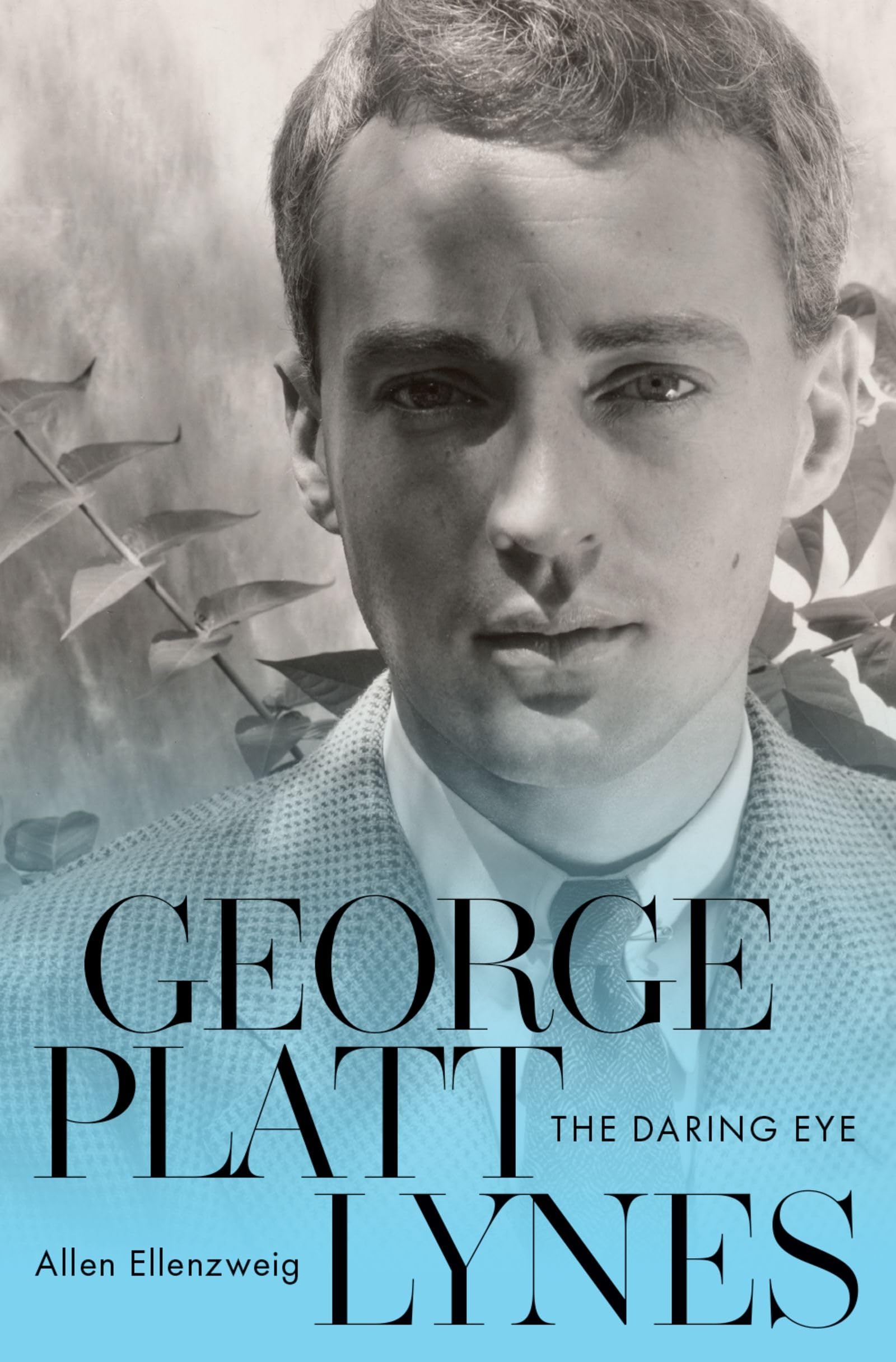



George Platt Lynes: The Daring Eye is a life of the gregarious American portrait, dance, fashion, and male nude photographer whose career spanned the late 1920s to 1955. From age 18, Lynes entered the cosmopolitan world of the American expatriate community in Paris when he became acquainted with the salon of Gertrude Stein and Alice B. Toklas. Intending to pursue a literary and small press publishing career, Lynes also began photographing authors like Stein, Jean Cocteau, André Gide, and Colette. Soon, he turned exclusively to photography, establishing himself as one of the premier fashion photographers in the Condé Nast stable, documenting the early ballets of George Balanchine, and pursuing his private obsession with seductive images of young male nudes almost never published in his time. Lynes's private life was as glamorous and theatrical as his images with their brilliant studio lighting and dramatic Surrealist set-ups. Barely out his teens, he met the publisher Monroe Wheeler who was already in a relationship with the emerging expatriate novelist Glenway Wescott. The peripatetic threesome maintained a polyamorous connection that lasted some 15 years. Their New York apartment became a mecca for elegant cocktail and name-dropping dinner parties. Their ménage-à-trois complicates our understanding of the pre-Stonewall gay "closet." This biography, drawing upon intimate letters and an unpublished memoir of Lynes's life by his brother, writer and editor Russell Lynes, paints a portrait of the emerging influence of gays and lesbians in the visual, literary, and performing arts that defined transatlantic cosmopolitan culture and presaged later gay political activism. "In 1927, Lynes had met a couple, Glenway Wescott and Monroe Wheeler, eventually a writer and an arts administrator (at the Museum of Modern Art in New York) respectively. .... The following year he joined them in the south of France. The relationship became triangular, though not equilaterally: poor Wescott was somewhat edged to one side, even though the three of them lived together for more than a decade. As Ellenzweig rightly comments, 'these three men designed a way of life that appears as inventively bohemian as the roundelay of London's Bloomsbury Group.' ... Both scholarly and gossipy, this book has a cast of hundreds ... but Ellenzweig marshals his material with a steady hand." -- Gregory Woods, Emeritus Professor of Gay & Lesbian Studies, Nottingham Trent University, UK, and author of Homintern: How Gay Culture Liberated the Modern World "This book is rich in details about his life and the world that produced him. It is the sort of book that you can open to a random page and be caught by some detail that will have you racing to Google to learn more... For anybody looking to study or recreate gay life in the mid 20th century, this is a deluxe road map." -- Skot Armstrong, ArtilleryMag.com "Ellenzweig spent many years researching his Lynes book, and his energy and enthusiasm for his subject never flag. He is a tireless scholar, but he is also an insightful critic who can do a close read of any of the Lynes photos printed in the book and make you understand them more intimately. I read George Platt Lynes: The Daring Eye slowly because I didn't want it to end. This is a significant and painstaking and immersive book, shining a light on all aspects of a very flawed man who himself was one of the first artists to shine a light on the beauty of the male form in photographs." -- Dan Callahan, Out In Print "Ellenzweig's splendid biography shows more thoroughly than ever before the full range of his talent." -- Joseph M. Ortiz, The Gay & Lesbian Review Worldwide "One of the great virtues of Ellenzweig's sweeping book... is that it's as much cultural history as personal biography. Lynes was able to photograph so many luminaries because he moved in their circles, and his evident talent made him a likely collaborator on many of their artistic projects. Ellenzweig provides in-depth accounts of these figures and projects as they came into Lynes' orbit, from Paul Cadmus' portrait of Lynes and their friends, to [Lincoln] Kirstein's establishment of the New York City Ballet under [George] Balanchine, and to the dazzling premier of Virgil Thomson and Gertrude Stein's opera Four Saints in Three Acts . In this respect The Daring Eye follows the model of Martin Duberman's The Worlds of Lincoln Kirstein and Jerry Rosco's Glenway Wescott Personally , two biographies of Lynes' friends that show the extent to which 20th-century art was driven by a transatlantic circle of gay friends and lovers." -- Joseph M. Ortiz, Gay & Lesbian Review "Ellenzweig takes on a herculean task of carefully documenting the life of one of the unsung icons of gay imagery as well as that of a master photographer." -- Jeffrey Felner, New York Journal of Books " George Platt Lynes: The Daring Eye bursts with detail about painters, sculptors, writers, photographers, p