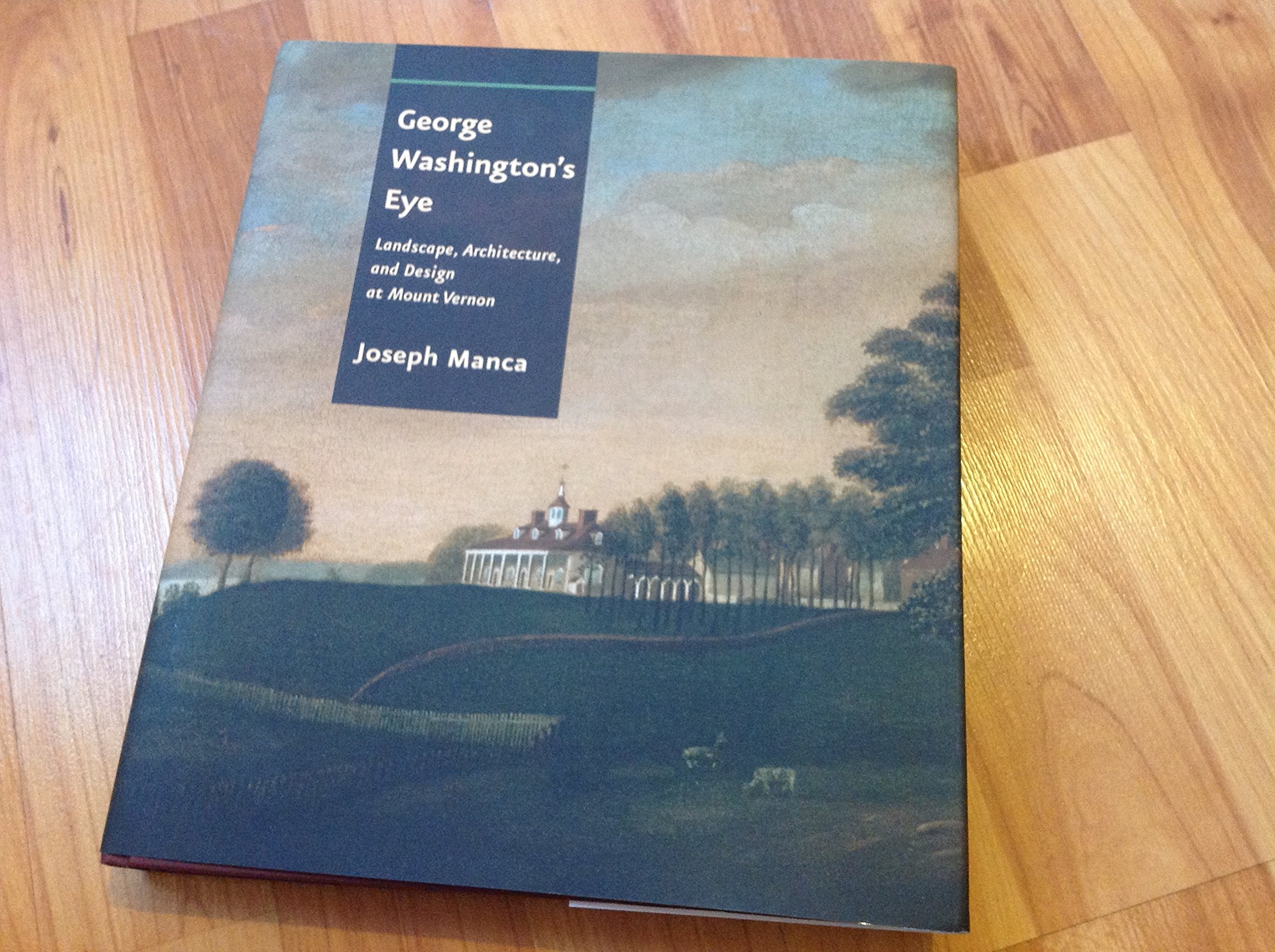
George Washington's Eye: Landscape, Architecture, and Design at Mount Vernon
$55.95
by Joseph Manca



Explore the beauty and history of Mount Vernon―and the inquisitive, independent mind of its famous architect and landscape designer. Winner of the John Brinkerhoff Jackson Book Prize of the Foundation for Landscape Architecture On the banks of the Potomac River, Mount Vernon stands, with its iconic portico boasting breathtaking views and with a landscape to rival the great gardens of Europe, as a monument to George Washington’s artistic and creative efforts. More than one million people visit Mount Vernon each year―drawn to the stature and beauty of Washington’s family estate. Art historian Joseph Manca systematically examines Mount Vernon―its stylistic, moral, and historical dimensions―offering a complete picture of this national treasure and the man behind its enduring design. Manca brings to light a Washington deeply influenced by his wide travels in colonial America, with a broader architectural knowledge than previously suspected, and with a philosophy that informed his aesthetic sensibility. Washington believed that design choices and personal character mesh to form an ethic of virtue and fulfillment and that art is inextricably linked with moral and social concerns. Manca examines how these ideas shaped the material culture of Mount Vernon. Based on careful study of Washington’s personal diaries and correspondence and on the lively accounts of visitors to his estate, this richly illustrated book introduces a George Washington unfamiliar to many readers―an avid art collector, amateur architect, and leading landscape designer of his time. A comprehensive and well-illustrated history of Washington's estate. ―Jay Strafford, Richmond Times-Dispatch Manca convincingly argues that George Washington, the 'indispensable man,' was indispensable to American art, too. ―Bob Duggan, Big Think.com George Washington's Eye not only sheds light on the first president's keen interest in architecture, landscape gardening, and art collecting but also illuminates his learning process . . . Those who seek to understand Washington by exploring Mount Vernon will find this book informative and fascinating. ―Stuart Leibiger, Journal of American History More inclusive than any previous study of Mount Vernon's architecture, decorative arts, or immediate landscape, [ George Washington's Eye ] looks at the physical evidence as well as Washington's writings about art and taste . . . The book is, therefore, a comprehensive study of Washington's aesthetic choices, from their origins to the objects in which they resulted. While other scholars have catalogued the paintings in Mount Vernon, for example, Manca goes further to consider why Washington hung certain pictures in particular rooms or chose not to display others at all. ―Lydia Mattice Brandt, Common-Place This work makes many key contributions to the study of Washington's life and activities. ―Emily Cooperman, Winterthur Portfolio Explore the beauty and history of Mount Vernon―and the inquisitive, independent mind of its famous architect and landscape designer. Joseph Manca is the Nina J. Cullinan Professor in the Department of Art History at Rice University. He is author and editor of a number of books, including The Art of Ercole de' Roberti , Titian 500 , and Andrea Mantegna and the Italian Renaissance . George Washington liked to shape his own circumstances. Over the years he carefully crafted both his inner self and his public persona, as well as many aspects of his aesthetic world. Washington’s life formed a unity, and his morality formed part of the backdrop to his designs at Mount Vernon. His house, gardens, and art collection―and his own writings about them―were a major part of the public face of his virtue. Washington usually acted with conscious moral purpose. “Moral” is meant here in the broadest possible sense, including such ethical matters as maintaining a public reputation, using one’s time wisely, fulfilling one’s duties to society, and living without luxuries. In the eighteenth century, the conception of morality also included the achievement of individual perfection, such as living a rational, tranquil, and harmonious life. Washington was obsessed, perhaps even more keenly than his contemporaries, with matters of honor, appearance, dignity, and duty to society. As a schoolboy, Washington copied down the maxim that “every action one takes should be in consideration of all of those present,” and indeed his lifelong actions as architect, collector, and landscape gardener were done in consideration of the public’s valuation of his moral worth. ―from Chapter 1: George Washington: Morality and the Crafting of Self Used Book in Good Condition