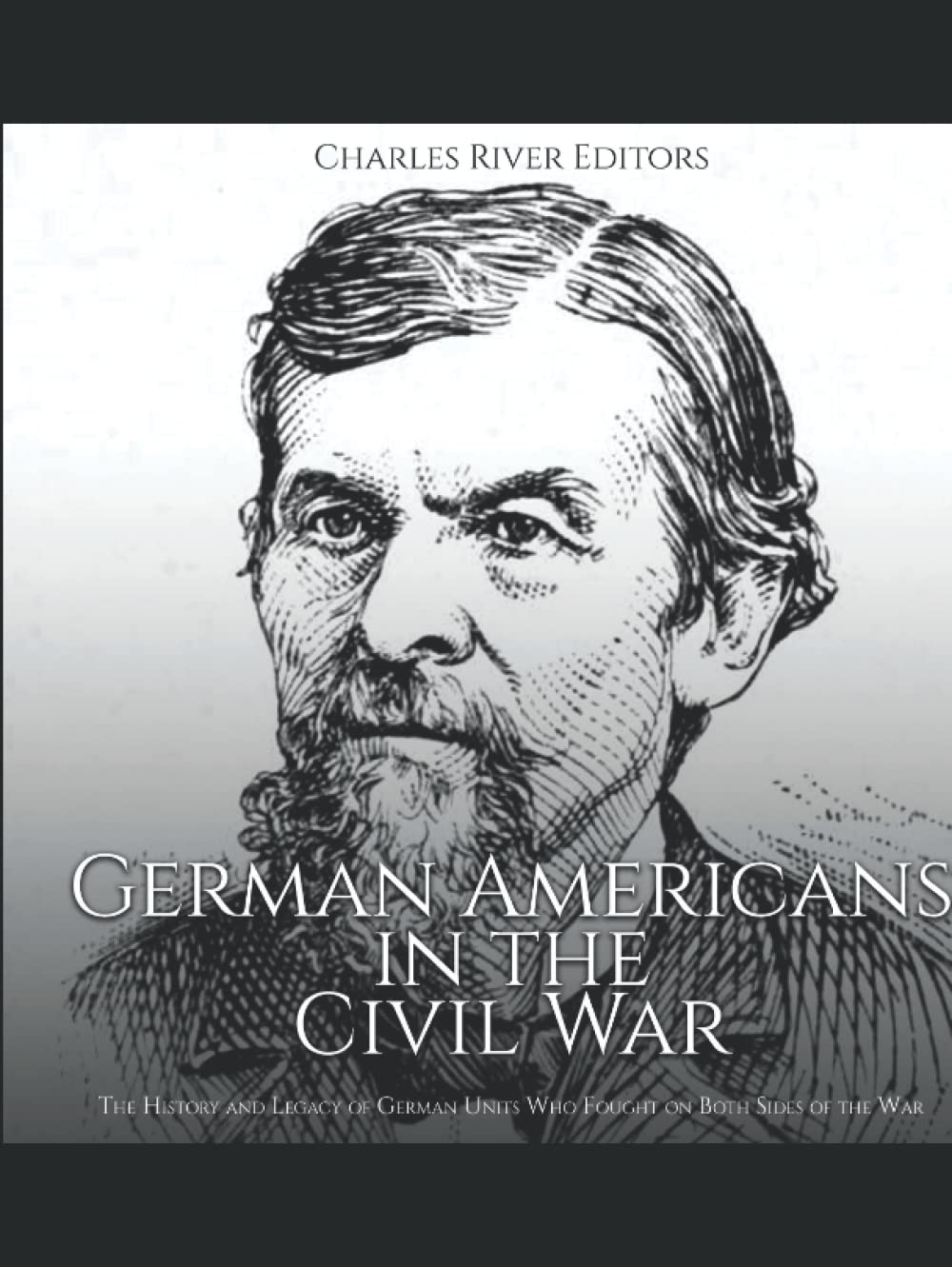
German Americans in the Civil War: The History and Legacy of German Units Who Fought on Both Sides of the War
$14.14
by Charles River Editors



Americans have long been fascinated by the Civil War, marveling at the size of the battles, the leadership of the generals, and the courage of the soldiers. The Civil War was the deadliest conflict in American history, and had the two sides realized it would take four years and inflict over a million casualties, it might not have been fought. Since it did, however, historians and history buffs alike have been studying and analyzing the military and political history of the conflict ever since. Immigration to what is now the United States began long before the country was independent. That early immigration included tens of thousands of Germans, many of them religious dissidents like the Dunkards, Amish and Mennonites, who settled particularly in Pennsylvania and in Virginia’s Shenandoah Valley. However, the steady migration became a flood, with a half million German immigrants coming between 1840 and 1850, and almost a million more between 1850 and 1860. The more recent immigrants tended to settle in cities like New York City, Cincinnati, St. Louis, Milwaukee and Chicago. More than 90% of them settled in states that would remain in the Union, and only a relatively small number settled in what became the Confederacy. Still, there were significant populations of German-born immigrants in the Southern cities of Charleston, Richmond, Wheeling and most notably, New Orleans. In terms of the Civil War, the most important of the German immigrants were the Forty-Eighters, perhaps 5,000 who had been involved in the Europe-wide revolutions of 1848. Their nickname “Forty-Eighters” refers to the year 1848, when revolutions broke out across Europe. The revolutions in the various German states sought to unify Germany into one nation, topple the old aristocratic structure and turn society toward democracy and socialism. When defeated, some escaped and fled to America, some had their way paid by places that wanted to get rid of them, and some were sent into exile in the U.S. if they promised never to return to Europe. The Forty-Eighters came from everywhere in Germany and they tended to be very well educated. Many were trained in German military academies, and many came from academic, administrative and military families. Most of them were highly political, more or less socialist, and had actually been involved in combat as the revolutionary successes in several areas were reconquered by Prussian, Bavarian or other troops. They settled in many places in the U.S., but primarily in the Northern cities. Many became influential leaders in the German communities, and more than a few founded German-language newspapers or served as editors of existing newspapers. The Forty-Eighters’ radicalism predisposed them to oppose slavery, and they were important in Lincoln’s campaign for the presidency. Many of the Forty-Eighters with military training became officers in the Union Army, with a number of them becoming generals. There were very few of these, and no generals, in the Confederate ranks simply because so few settled in the South. Over the course of the war, the Union forces enrolled well over two million men, about a quarter of them immigrants, including something over 200,000 German-born recruits and about 250,000 Irish. Many of the regiments formed in the heavily German areas of the North were almost completely German, from privates to commanders, and German was the language of command in many of them. There were about 30 of these German regiments and the majority of Germans in the war fought in mixed formations, or the German unit. The German regiments were involved in most battles in the war, and acquitted themselves well in combat, but the largely German XI Corps was broken by Stonewall Jackson’s surprise attack at Chancellorsville, and most of the men fled. After Chancellorsville, German units had a difficult time overcoming the label of “Flying Dutchmen.”