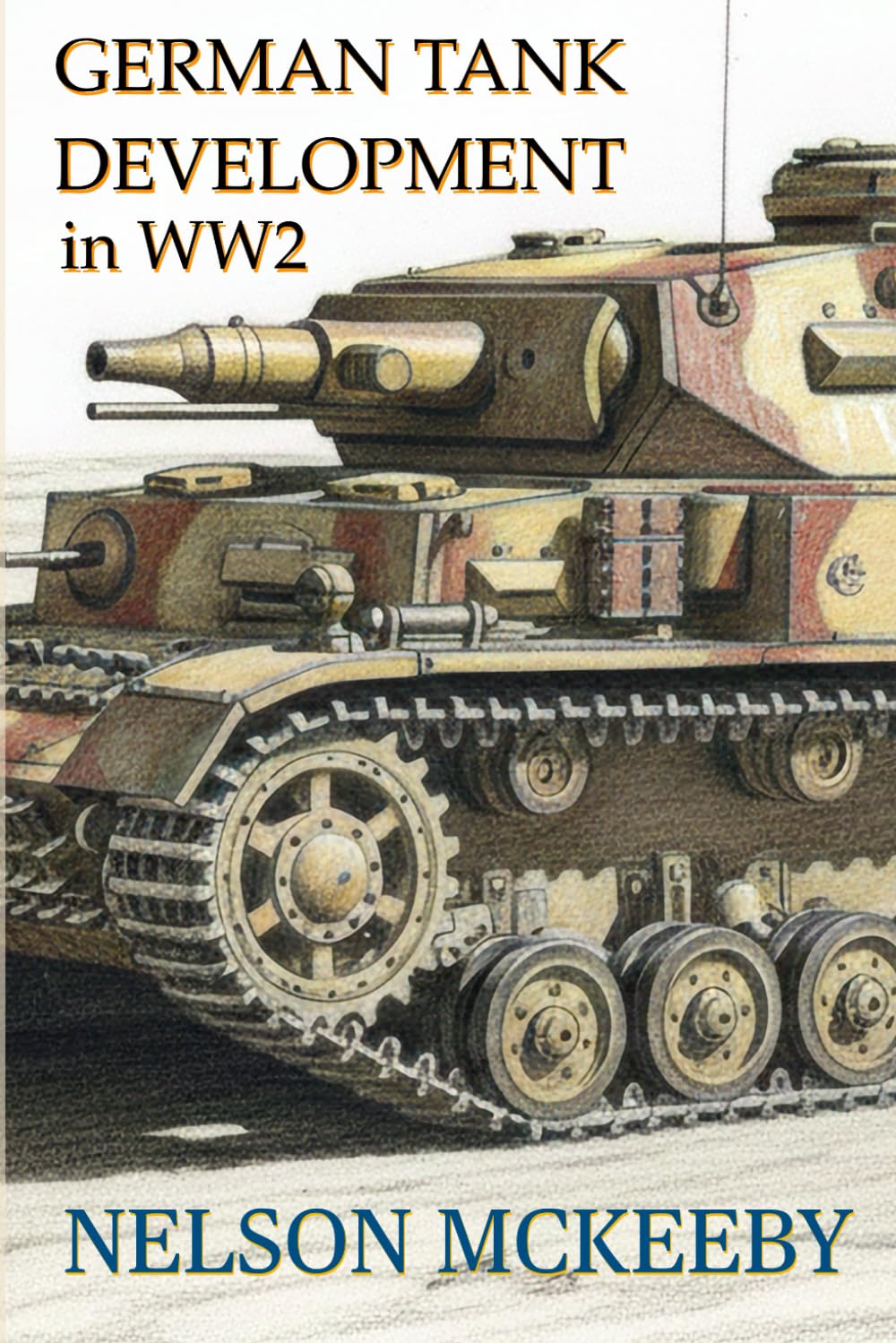



Germany, bound by the Versailles Treaty , could not officially produce or test tanks. But in practice, the Reichswehr used the Soviet Union’s Kama testing ground near Kazan and drew on foreign designs to continue armored experimentation. German ordnance officers and engineers closely studied open information about American and British tank programs. Reports on the M1921 and M1922 circulated in Reichswehr technical bulletins, and their configuration — especially the use of a central turret on a medium-weight chassis — validated the conceptual foundation for what would become the Mittlerer Panzerkampfwagen class. For German officers like Lutz and Guderian, who sought a fast, well-armed vehicle to spearhead mechanized operations, these early American experiments were a proof of concept that a “universal tank” was feasible. Discover the fascinating journey of German armor technology in this compelling book. From its innovative beginnings to its ultimate downfall, explore how Germany squandered its creative and technical advantages, leading to a war it should never have started. Dive into the intricate details of this pivotal era and uncover the lessons learned from a history that reshaped the world.