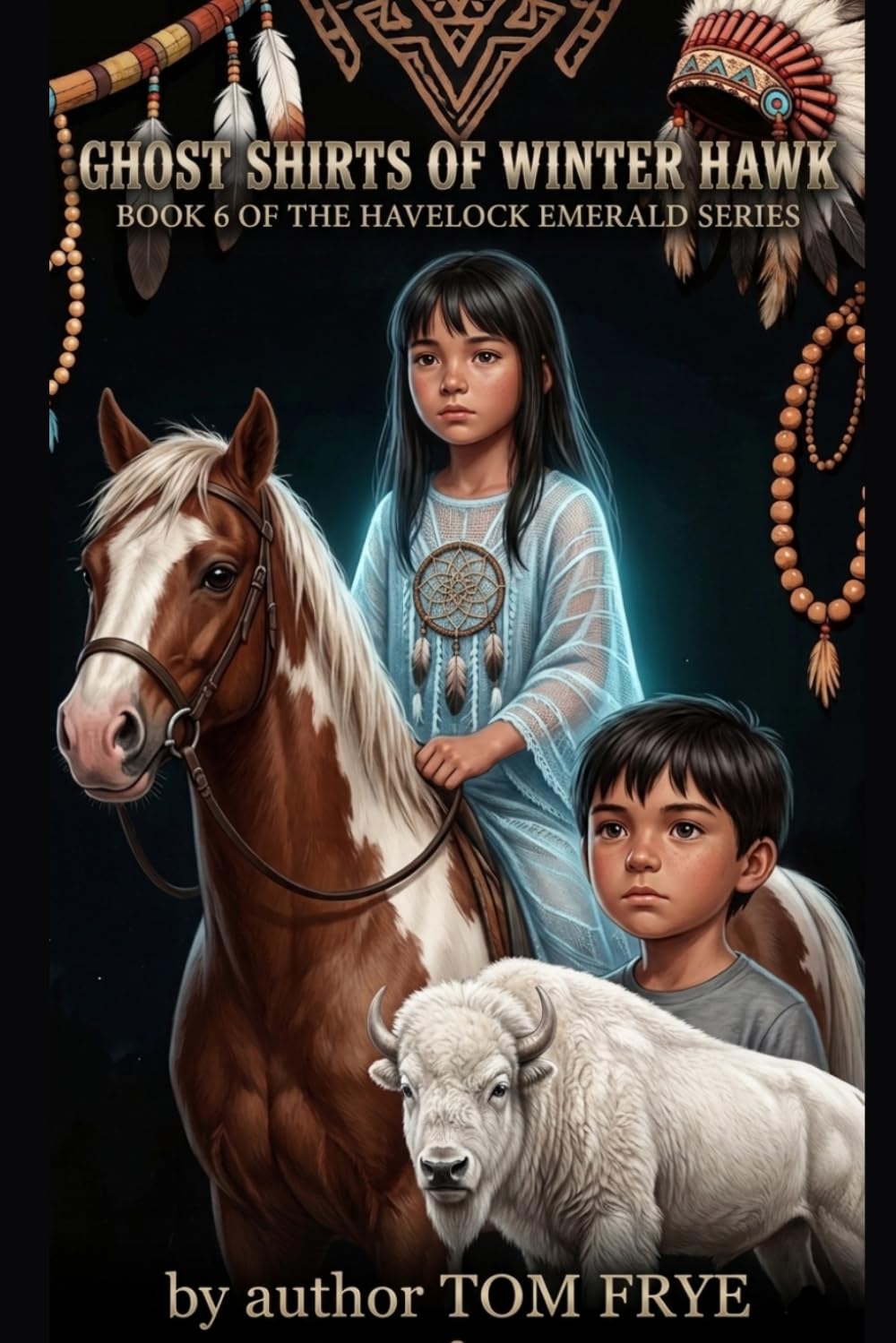



When 10-year-old Kegan Corbin sat at the dinner table that cold Januarynight, his head was filled with tales his mom had been sharing with him about her childhood days spent at a summer camp when she was his age. Kegan’s thoughts were whirling with all her talk about the magic of this camp nearly two-hundred miles to the east of Broken Bow. A homesteader had discovered the ruins in 1882 and one broken long bow rumored to belong to the Pawnee Chief who had lived there. The homesteader filed the name with the U.S. Post Office Department, and Broken Bow became a town in 1884. In her days working as a police officer on Pine Ridge, his mom had shown much respect to the Lakota elders she had to deal with. Many law enforcement officers in the past had been conflicted due to their intolerance of Native ways. But Linley Corbin began her career “asking” instead of “telling” the Elders how things were to be done. When Native relics are stolen from Camp Winter Hawk, Linley tells Kegan, “Native Warshirts were the work of Native women who created them for their husbands and sons. A sacred activity, war shirts endowed the warrior with spiritual power. Crazy Horse had 230 emblems on his. At an auction, Chief Joseph’s war shirt sold for $900,000. The war shirt of Chief Black Bird sold for $2,658,500. The war shirt of Chief Spotted Tail sold for $340,000. Such warriors were called Shirt Wearers. Twelve of these shirts, also known as Ghost Shirts, were stolen.