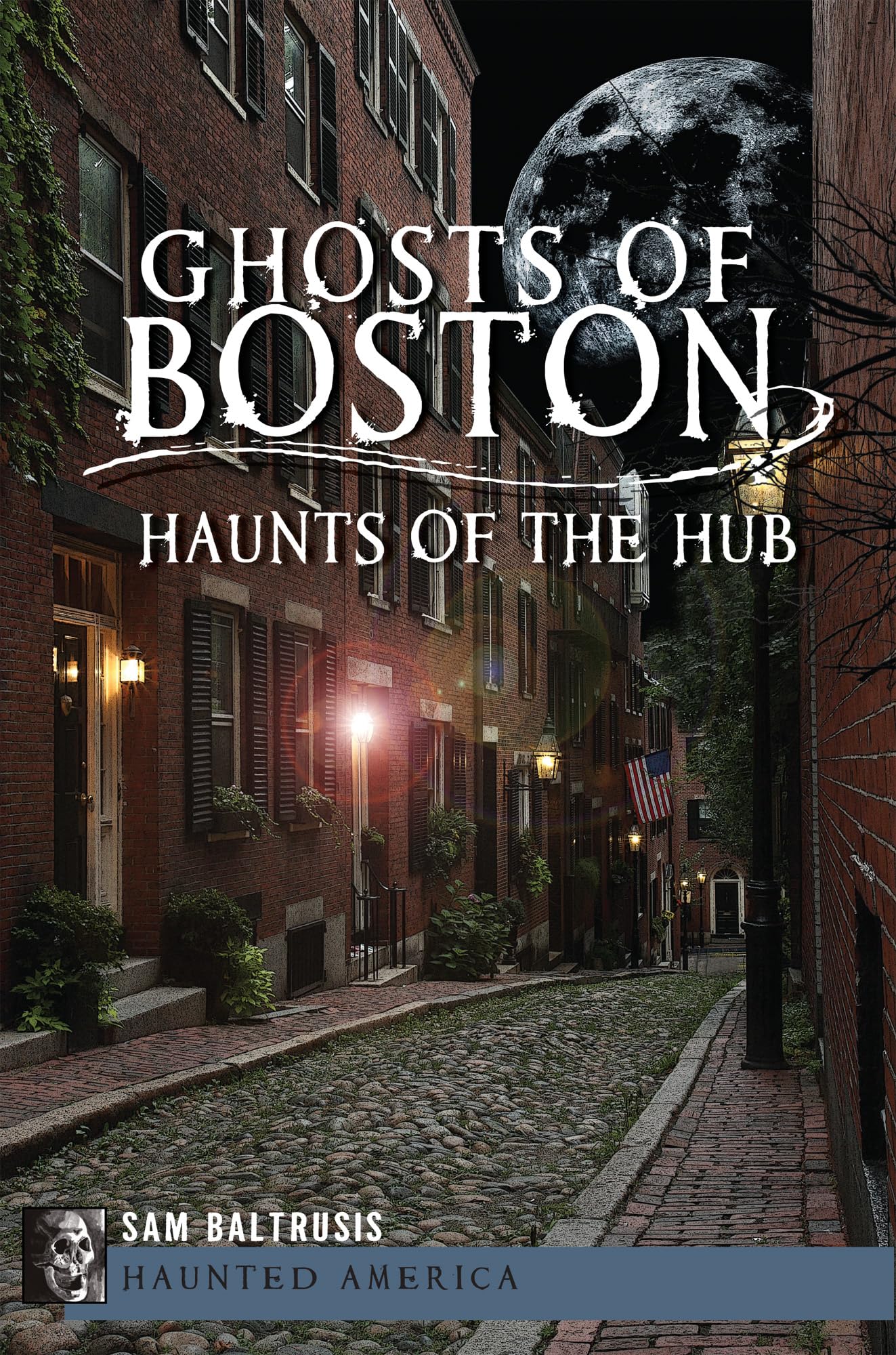



It should come as no surprise that one of the nation's oldest cities brims with spirits of those who lived and died in its hundreds of years of tumultuous history. Boston, Massachusetts, boasts countless stories of the supernatural. Many students at Boston College have encountered an unearthly hound that haunts O'Connell House to this day. Be on the watch for an actor who sits in on rehearsals at Huntington Theatre and restless spirits rumored to haunt Boston Common at night. From the Victorian brownstones of Back Bay to the shores of the Boston Harbor Islands, author Sam Baltrusis makes it clear that there is hardly a corner of the Hub where the paranormal cannot be experienced as he breathes new life into the tales of the long departed. Journalist Sam Baltrusis writes for various publications including Boston Spirit and STUFF. He teaches journalism classes at the Boston Center for Adult Education. He also moonlights as a guide with Haunted Boston, highlighting the city's historical haunts. Baltrusis has worked for VH1, MTV.com, Newsweek, and ABC Radio. Ghosts of Boston Haunts of the Hub By Sam Baltrusis The History Press Copyright © 2012 Sam Baltrusis All rights reserved. ISBN: 978-1-60949-742-2 Contents Acknowledgements, Introduction, Campus Haunts, Common Haunts, Harbor Haunts, Hotel Haunts, Landmark Haunts, Nightlife Haunts, Theater Haunts, Sources, About the Author, CHAPTER 1 Campus Haunts When it comes to school spirits, Boston has more than its fair share of them. Spine-chilling tales of unexplained sounds, flickering lights, residual apparitions and levitating objects have become a rite of passage for the uninitiated college-bound freshman adapting to life in one of the haunted dorms scattered throughout the Boston area. Elizabeth Tucker, a professor of English at Binghamton University and author of Haunted Halls: Ghostlore of American College Campuses, said that collegiate ghost stories are morality plays for the modern era. "They educate freshmen about how to live well in college," she explained in a 2007 interview, adding that the cautionary tales serve as spooky metaphors of fear, disorder and insanity. They also reflect students' interest in their college's historical legacy. Yep, campus ghost lore is a paranormal pep rally of sorts. "You don't find ghost stories at schools without a sense of pride," Tucker continued. "School spirits reflect school spirit." The difference between Boston's specters and other run-of-the-mill ghosts haunting universities throughout the country? Our spirits are wicked smart. Boston University's Shelton Hall, for example, boasts the ghost of a famed American playwright and Nobel laureate in literature, Eugene O'Neill. Harvard's Massachusetts Hall has one respectable-looking student who returns every fall claiming to be a member of the class of 1914. Apparently, the residual apparition of Holbrook Smith never got the memo that he was kicked out of the Ivy League almost a century ago. We got spirits, yes we do. Charlesgate The Charlesgate Hotel, located at 4 Charlesgate East, is Boston's version of New York City's The Dakota building (which served as the creepy location for the film Rosemary's Baby and the spot where John Lennon was murdered). It has been a hotbed of alleged paranormal activity since it was built in 1891 as a fin de siècle hotel replete with glazed porcelain tiles and working elevators. Formerly a Boston University and Emerson College dorm, the ornately designed building is the source of a slew of student reports from the 1970s to the mid-'90s claiming the building was a supernatural vortex of evil. In 1895, author Charles S. Darmell called Charlesgate "one of the most elegant family hotels in the city." The initial structure included thirty apartments and was constructed at a cost of $170,000, an enormous sum at the time. The building was sold in 1923 to Herbert G. Summers, who owned the hotel during the Depression era. Boston University purchased the building, housing four hundred female tenants, in 1947. In 1951, BU asked permission to remove the skylight and cover it with tar and gravel. By 1968, it housed almost five hundred students and had two dining halls. Apparently, students enjoyed living in a textbook example of a haunted house. In fact, the Charlesgate Hall Handbook from 1956–57 described the building as BU's very own "witches castle," alluding to its Gothic-style architecture that was once suitable for Boston's Brahmin elite. There were several elevator-related accidents at the Charlesgate, including a broken hoist cable that rattled four ladies in the '40s. The more severe incident, happening in 1947, involved a female student walking into the elevator shaft and plunging six floors. Apparently, she didn't die from the fall, nor was it confirmed as a suicide attempt. However, the myth surrounding that fateful nose dive has perpetuated an onslaught of paranormal legends that continue t