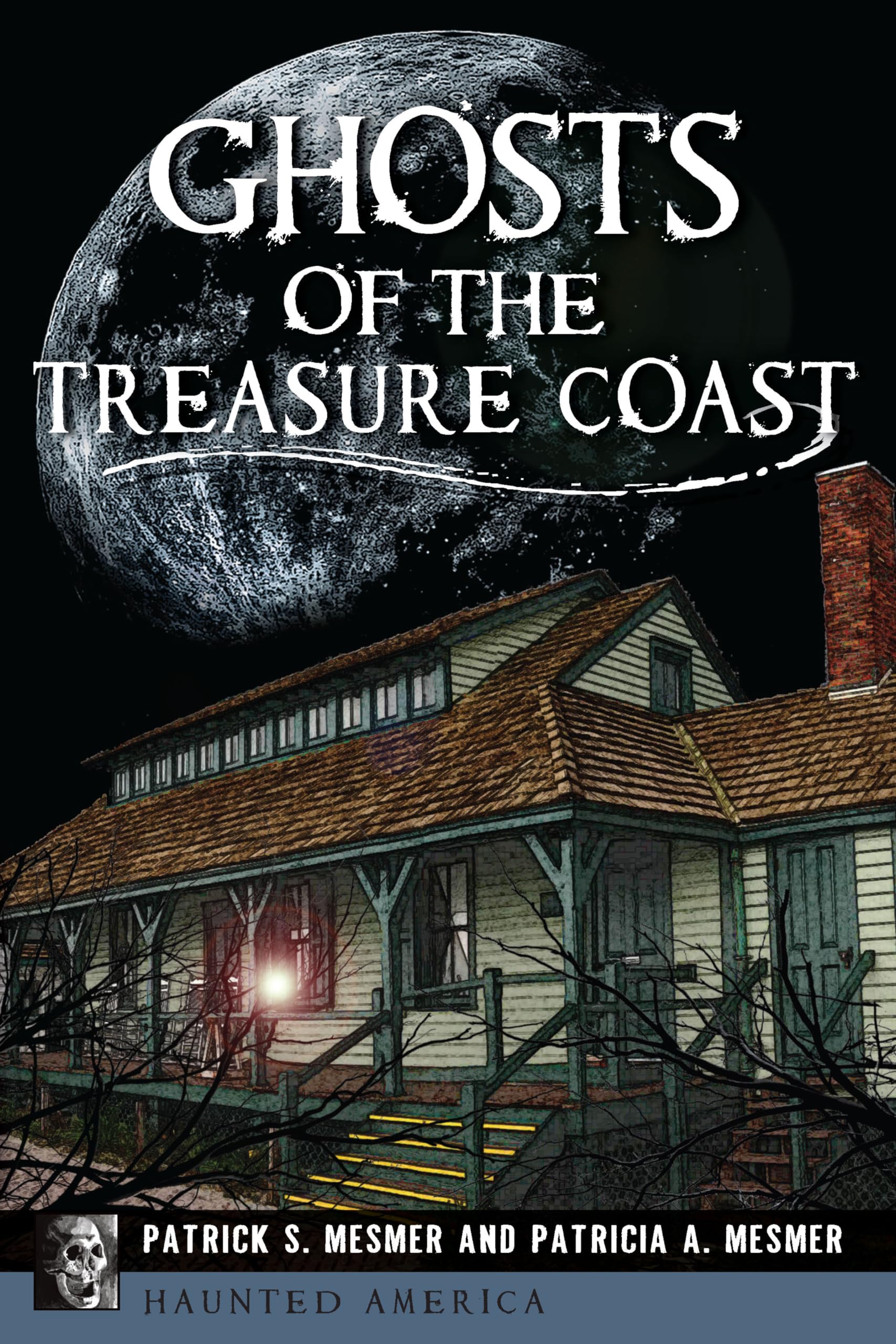



Authors Patrick and Patricia Mesmer navigate through spooky tales of vanished sailors, wandering phantoms and lost treasure scattered across the ocean floor. The Treasure Coast is such a popular destination that some choose to never leave. From the spirits of ancient Indians who once inhabited the beaches to the pirates who spied for passing victims from the safety of the inlets and coves, the region is infused with eerie, tragic history. A phantom widow keeps watch from the Boston House window for men long ago lost at sea. Spirits of the victims of a murderous cop linger at the Devil's Tree, where their bodies were found. The dreaded pirate Black Caesar still steers his ghost ship toward Dead Man's Point in the St. Lucie Inlet. Patrick S. Mesmer is a project manager for a large corporation in South Florida. He also teaches at the local university. His passion is history and music. This is his third published book. Patricia Ann Mesmer has a master's degree in mental health and operates a private counseling business. Her passions are family, helping distressed people and ghost hunting. Patrick and Tricia have been happily married for over twenty-five years. Their company, Mesmerized Paranormal Investigations, has been helping people search for answers to these questions for many years now. They have also been operating a very successful and well-received ghost/ historical tour business, Port Salerno Ghost Tours, in their hometown for the past four seasons. Ghosts of the Treasure Coast By Patrick S. Mesmer, Patricia Mesmer The History Press Copyright © 2017 Patrick S. Mesmer and Patricia Mesmer All rights reserved. ISBN: 978-1-4671-3698-3 Contents Preface, Acknowledgements, Introduction, Sebastian, 1. Home of the Ancient Ones, 2. Spirits of the 1715 Fleet Disaster, Vero Beach, 3. Waldo Sexton and the Driftwood Resort, 4. Waldo's Mountain, 5. The Ocean Grill, Fort Pierce, 6. Sunrise City, 7. The Sunrise Theatre, 8. Emily Lagow Bell, 9. Cresthaven: The Boston House, 10. Old Fort Park, Port St. Lucie, 11. The Devil's Tree, 12. Ghost Ship in the St. Lucie River, Jensen Beach, 13. Tuckahoe: The Leach Mansion, Stuart, 14. Gilbert's Bar House of Refuge, 15. The Ashley Gang: South Florida's Bonnie and Clyde, Port Salerno, 16. Forever Tied to the Sea, 17. Local Spirits and Hauntings, Hobe Sound, 18. The Abandoned Cemetery, 19. Trapper Nelson's Camp, Jupiter, 20. Jupiter Inlet and Lighthouse, 21. 1696: The Jonathan Dickinson Shipwreck, 22. A Beacon in the Darkness, 23. Spirits and Hauntings, Conclusion, Bibliography, About the Authors, CHAPTER 1 Home of the Ancient Ones One cannot talk about the ghosts of the Treasure Coast without discussing the people who lived there for thousands of years before European contact. Today, the land is covered by highways, housing developments, beachside condominiums and strip malls. Many do not realize that before Christopher Columbus "discovered" the New World in the year 1492, the land later called "La Florida" was already heavily populated with native people on both coasts. Comparatively little is known about these ancient residents. The best information we have has been gleaned from two main sources: sparsely written early Spanish accounts and what the native people left in their refuse and burial mounds. As far as the Treasure Coast is concerned, archaeologists know that there was a huge population of people living in the coastal area stretching from Jupiter Inlet to Cape Canaveral. These people were known as the Ais and the Jeaga and lived there as long ago as 800 BCE or possibly even earlier. Where they originated from is not certain, but what is known is that they thrived in the area for thousands of years. In 1565, Spanish explorer Pedro Menendez made his famous landing at present-day St. Augustine, first meeting the northern tribe known as the Timucua. As his exploration moved south to the area now known as the Treasure Coast, he encountered the numerous and aggressive Ais. On old Spanish maps, the coastal areas of Brevard, Indian River, St. Lucie and Martin Counties are referred to as being part of the "Land of Ais." The main water artery that runs almost the entire length of the Treasure Coast was originally named Rio de Ais. Today, it is known as the Indian River. In the late 1500s, there were so many Ais people that the Spanish governor of La Florida commented that he had never seen so many Indians. Who were these people? The Ais were what is known as foragers. They hunted, fished and gathered shellfish from the rivers for subsistence. They did not have to grow food because it was an easy life. It only took about fifteen minutes a day to sustain themselves. They were migratory in the sense that they maintained villages and small settlements on the barrier islands in the wintertime and did the same in the mainland forests and swamps in the summer. They were very acclimated to South Florida's harsh clim