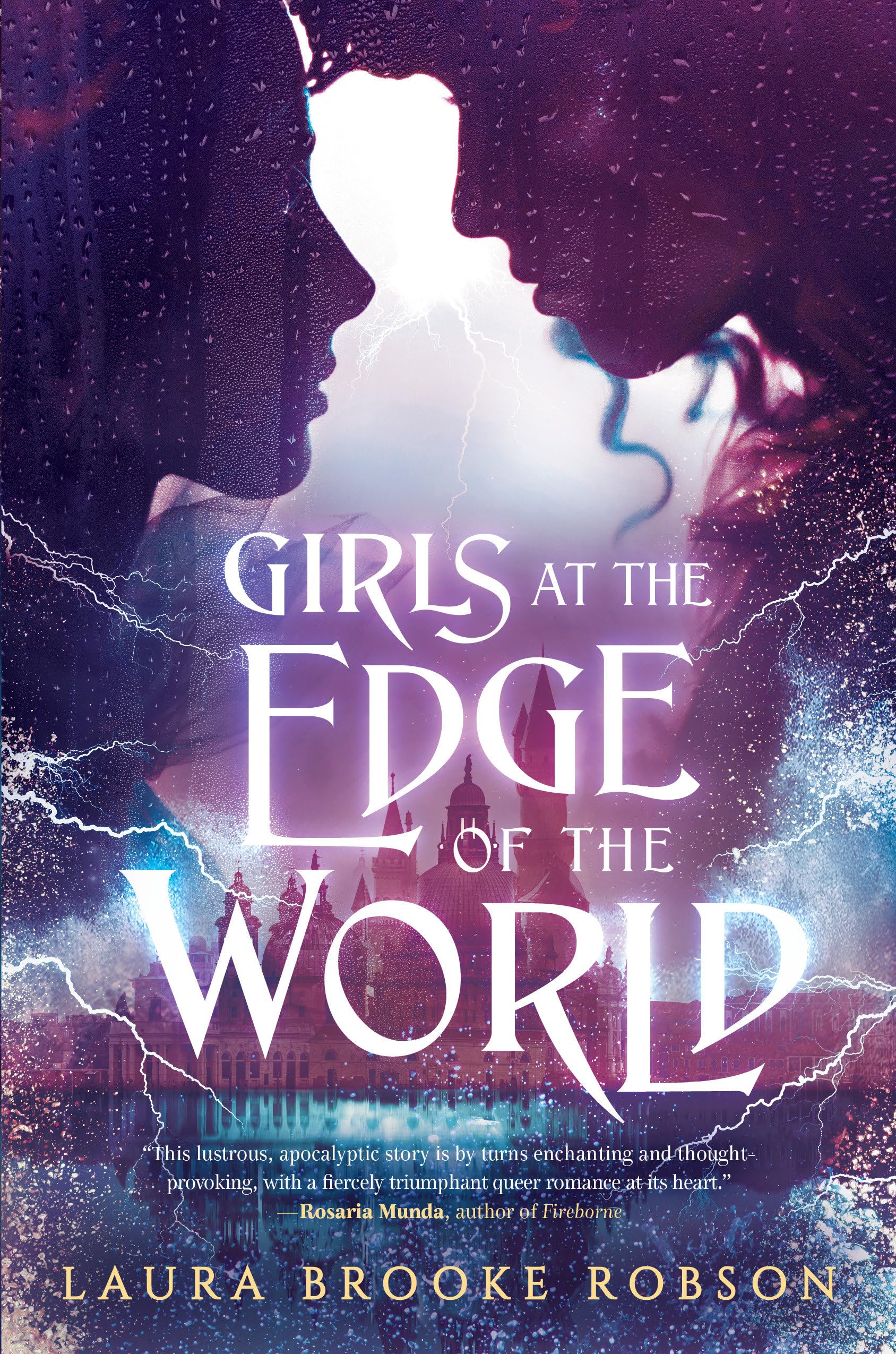



Set in a world on the edge of an apocalyptic flood, this heart-stoppingly romantic fantasy debut is perfect for fans of Rachel Hartman and Rae Carson. In a world bound for an epic flood, only a chosen few are guaranteed safe passage into the new world once the waters recede. The Kostrovian royal court will be saved, of course, along with their guards. But the fate of the court's Royal Flyers, a lauded fleet of aerial silk performers, is less certain. Hell-bent on survival, Principal Flyer, Natasha Koskinen, will do anything to save the flyers, who are the only family she's ever known. Even if "anything" means molding herself into the type of girl who could be courted by Prince Nikolai. But unbeknownst to Natasha, her newest recruit, Ella Neves, is driven less by her desire to survive the floods than her thirst for revenge. And Ella's mission could put everything Natasha has worked for in peril. As the oceans rise, so too does an undeniable spark between the two flyers. With the end of the world looming, and dark secrets about the Kostrovian court coming to light, Ella and Natasha can either give in to despair . . . or find a new reason to live. Gr 8 Up—Natasha is the principal flyer for the Royal Flyers, a silks dancing group that preserves the traditions in her land. Ella is foreign, brought to Kostrov by a thirst for revenge, and joins the Royal Flyers in order to get closer to her target, King Nikolai. Although the Royal Flyers are well-taken care of, their standing among the royals is uncertain. Kostrov faces constant storms, foretold by their religious book Captain's Log, and the world will eventually flood. The kingdom is building a fleet of ships but will not have enough room to save everyone. When Natasha finds out the Royal Flyers are no longer guaranteed a spot on the royal fleet, she makes up her mind to marry Nikolai and bring her friends with her on the fleet when the world ends. But will she be drawn to Nikolai, or to the mysterious new flyer with a hidden mission? This is a charming LGBTQIA+ novel. Ella is marked as a siren, a woman who enjoys the company of other women, and she must endure the negative implications it has for her in Kostrovian society. Natasha grows from an uncertain protagonist into a strong character who makes her own choices. The worldbuilding creates a believable, almost-dystopian background to the rest of the plot, and the novel is fleshed out with a cast of well-rounded characters. Natasha is pale and freckled and Ella has olive-toned skin. VERDICT A recommended purchase for fantasy lovers.—Stacey Shapiro, Cranford P.L., NJ * “An immersive and clever tribute to the natural world and the longevity and power of storytelling, this book is also a subtle yet incisive critique of patriarchal structures and the male gaze… Sobering, complex, unexpected—and wholly un-put-down-able .” – Kirkus , starred review “A swoony sapphic romantic fantasy.” –BuzzFeed "[A] stunning YA debut." – Men's Health Laura Brooke Robson grew up in Bend, Oregon and moved to California to study English at Stanford University. She currently lives in Melbourne, Australia, where she enjoys drinking too much coffee and swimming in places she's probably not supposed to swim. Girls at the Edge of the World is her debut novel. 1 NATASHA Twelve hundred years ago, a man who should’ve drowned didn’t. He was a fisherman, some say. Others claim he was a king. Others keep shaking their heads. He was a god. As the story goes, there was a year of storms, called the Harbinger Year. Ten storms, each with a new horror to accompany it. The last storm brought the Flood. Water, the whole world over, killing every plant and animal and person that didn’t make it to a ship in time, and plenty that did. The Flood lasted a year, and when the waters receded, the world was made anew. There are others who survived, but they didn’t write down their stories. And this was an important story. This was a story that could teach us how to survive a Flood. Survive anything. So we forget the others’ names and stories, and we remember Antinous Kos. Nine years ago, a woman who shouldn’t have drowned did. She was clever and beautiful and in a constant, losing argument with the inside of her head. Before she went, she told me stories. Never Kos’s story. The rest of the world told that one plenty. Instead, she told me fables. Of kind kings and brave princesses. Of ice palaces. Of girls she once called her friends, girls who knew how to fly. When I was four or five, I realized the last kind of story wasn’t a fable. She’d been part of them: The Royal Flyers, the girls who performed high in the air on the silks. When she was a flyer, she met kings and queens, lived in a palace, spun herself up in fabric where the water couldn’t reach her. The other flyers told her to leave when they realized she was pregnant. She never flew again. When I was nine, she drowned in a canal. My mother’s story isn’t one anybody wants to remember, because