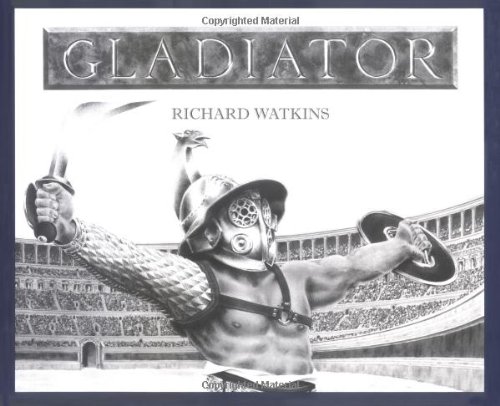



Explores the world of the Roman gladiators, from their beginnings as slaves to their training for the gladiatorial contest, in which they fought to the death for the entertainment of the masses and the glory of their rulers. Grade 6-9. The rectangular picture-book format is perfect for a book that describes the incredibly long history of the Roman games. In Watkins's dramatic and realistic charcoal-and-pencil drawings, placed against stark white pages, readers see the bizarre equipment of the gladiators, the exotic animals brought to the arenas, and the complex architecture and advanced technology involved in the construction of the great amphitheaters of the Roman Empire. The 12 brief chapters nicely balance the pictures with amazing facts about the 7 centuries of official arena shows. The horror of blood sports is not shown in the precisely detailed drawings but lies in the statistical information about the numbers of victims and the long popularity of death-centered entertainments. Watkins's research in recent and scholarly books of history reveals the political uses of the games, the central role of the hundreds of amphitheaters throughout the Empire, and the reluctance of both people and government to give up the games. The glamour of the gladiators as superheroes will draw readers to learn about the contests, the weapons, the bloodshed, and the inhumanity of a culture that for centuries celebrated death as public sport. Watkins handles a difficult subject well, stressing the games as so fixed in the history and politics of the Roman world that reminders of their long duration can be seen today. If any single title can turn sports-minded young people into students of history, this is the book to do it.?Shirley Wilton, Ocean County College, Toms River, NJ Copyright 1997 Reed Business Information, Inc. The heroic and bloody story of the Roman gladiators is retold in Watkins's debut work, a comprehensive and vividly illustrated guide that will impart his obvious passion for the subject to budding historians. Despite their sophistication in government and the arts, Romans had a cruel and crude taste for violence, and Watkins traces the growth of the games from the first combat in 264 b.c., at the funeral of Junius Brutus, to the elaborate spectacles that regularly entranced thousands at the Colosseum. A job that was first thought fit only for prisoners of war, slaves, and criminals, it became an honored profession that, at the height of the empire, was more than half-full of distinguished male volunteers (women gladiators were officially banned in a.d. 200). Watkins meticulously reviews the training of gladiators and also takes readers through an upbeat gallery of the various types of gladiators who played the games. The black-and-white drawings capture the elegance of the Roman Colosseum, and the excitement of the sea battles that were held at terrific expense; the renderings of the gladiators are consistently dramatic. (map, bibliography, further reading, glossary, index) (Nonfiction. 10-15) -- Copyright ©1997, Kirkus Associates, LP. All rights reserved. "A winner for students and browsers alike." — Booklist, starred review -- Review Richard Watkins is a full-time toy designer who loves old monster movies and toys from the sixties. He became fascinated with gladiators at age twelve when his parents traveled to Italy and brought back a book filled with stories of ancient Rome. He lives in West Chester, Ohio, with his wife and two daughters.