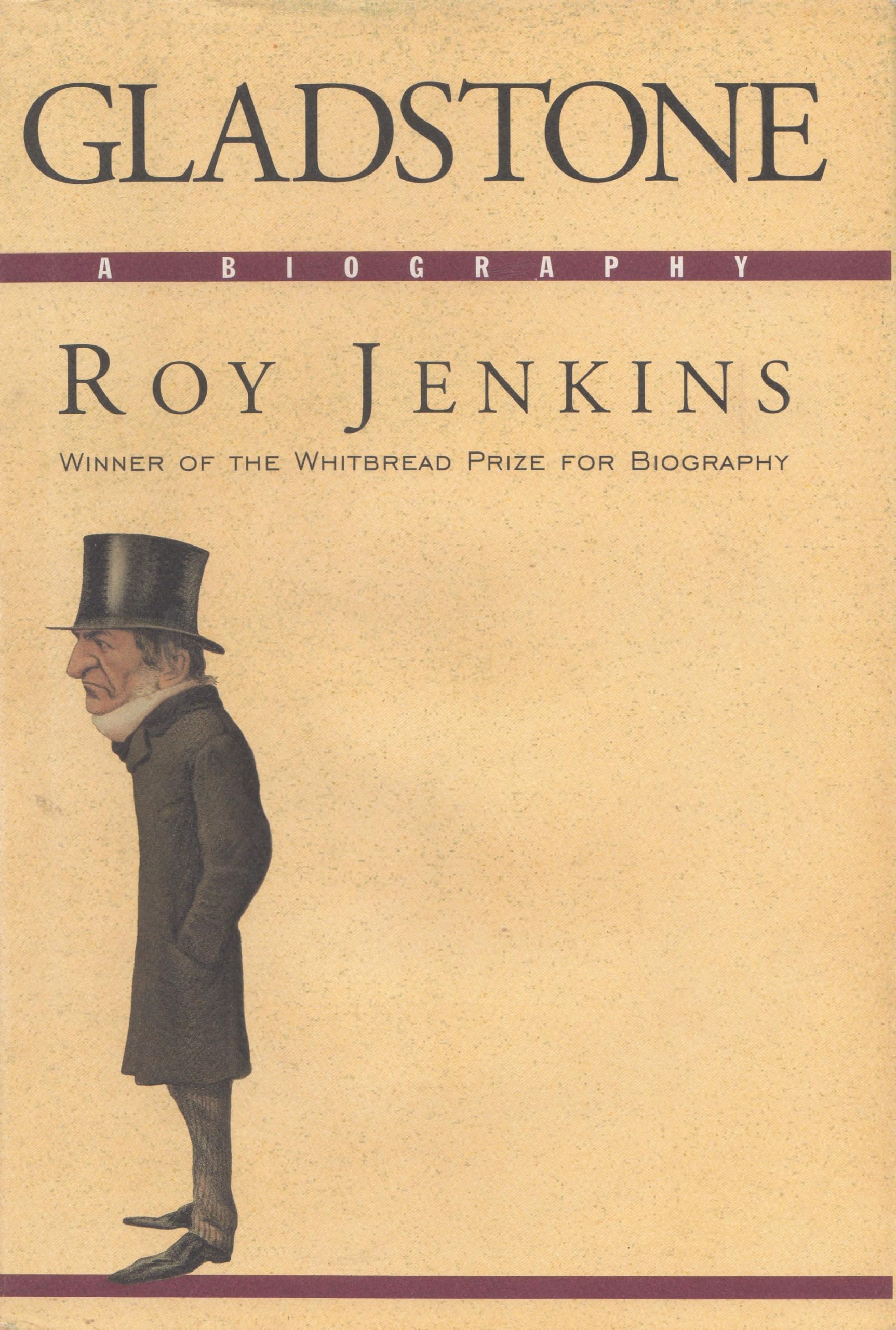



From the New York Times bestselling author of Churchill, a towering historical biography, available for the first time in paperback. William Gladstone was, with Tennyson, Newman, Dickens, Carlyle, and Darwin, one of the stars of nineteenth-century British life. He spent sixty-three of his eighty-nine years in the House of Commons and was prime minister four times, a unique accomplishment. From his critical role in the formation of the Liberal Party to his preoccupation with the cause of Irish Home Rule, he was a commanding politician and statesman nonpareil. But Gladstone the man was much more: a classical scholar, a wide-ranging author, a vociferous participant in all the great theological debates of the day, a voracious reader, and an avid walker who chopped down trees for recreation. He was also a man obsessed with the idea of his own sinfulness, prone to self-flagellation and persistent in the practice of accosting prostitutes on the street and attempting to persuade them of the errors of their ways. This full and deep portrait of a complicated man offers a sweeping picture of a tumultuous century in British history, and is also a brilliant example of the biographer’s art. From the Trade Paperback edition. William E. Gladstone lived to be 89, spanning the 19th century almost as much as his queen, Victoria. As prime minister of Britain four times, he was involved in all the major political travails of the time, including the Crimean War, Irish Home Rule, and the expansion of British imperialism. He was energetic, a prodigious reader, a classicist who also read popular Victorian fiction, and a devoutly religious man who tortured himself with guilt over his taste for pornography. This work was first published in 1995 in England, where it was a best seller and an award-winning biography. Lord Jenkins (Life at the Center, LJ 3/1/93), a leader in the House of Lords and chancellor of Oxford University, has done a fine job of compiling a one-volume biography of a man he obviously admires. For libraries without H.C.G. Matthews's two-volume Gladstone (Oxford Univ., 1995), Jenkins's work will make a nice substitute.?Katherine E. Gillen, Luke AFB Lib., Goodyear, Ariz. Copyright 1997 Reed Business Information, Inc. A solid life of the great Liberal Party reformer of Victorian Britain benefits from the author's own political experience as a key Labour minister in the 1960s. Given the massive accumulation of source material on Gladstone, Jenkins has produced a remarkably compact, readable synthesis, with original insights into Gladstone's political achievements, failures, and personal eccentricities, such as his private crusade to turn prostitutes from their trade. In politics, which an inheritance enabled the young Gladstone to enter in 1839 as a Tory, he was also a complicated but imposing figure. One of the most orotund orators in parliamentary history, Gladstone emerged from the party splits of the 1850s as the chief of the new Liberal Party, which won the 1868 election. Jenkins is at his best tracing the major issues Gladstone attempted to ameliorate in his four premierships--extending the franchise, giving home rule to Ireland, and opposing imperialism. The results were mixed, but Jenkins' narrative of them is an unadulterated success: it will be the general interest biography for a long time. Gilbert Taylor A definitive, celebratory biography of the greatest 19th- century British political leader, by a distinguished 20th-century British politician. Despite living in different centuries, Roy Jenkins (Lord Jenkins of Hillhead) and William Gladstone (180998) share many characteristics. Both men held powerful political positions. (Gladstone served four terms as prime minister of Britain.) Both men used their influence to split their own parties and drive them into the political wilderness. Both men published book after book while active in public life, a feat that appears to be beyond the ability of American politicians. (Imagine our surprise if, say, Bob Dole were to write a major biography of Teddy Roosevelt.) Like Gladstone, Jenkins (A Life at the Center, 1993, etc.) believes in the centrality of politics to the life of the nation. An excellent introduction to the political history of Britain, his biography also contains a judicious examination of Gladstone's deep religious commitments and his complex obsession with prostitutes, pornography, and moral reform. Gladstone recorded the details of his life in a massive diary, dividing every day into quarter-hour intervals, and Jenkins uses this magnificent source--recently edited and published--to delve into the secrets of Gladstone's enormous productivity. The key, it appears, was sheer energy. It drove him to put in 18-hour days and fueled his zealous pursuits. Although very good at political narrative, Jenkins rarely looks beneath the surface of politics to the people who sustained Gladstone's position. He mentions that Gladstone's inherited wealth was gene