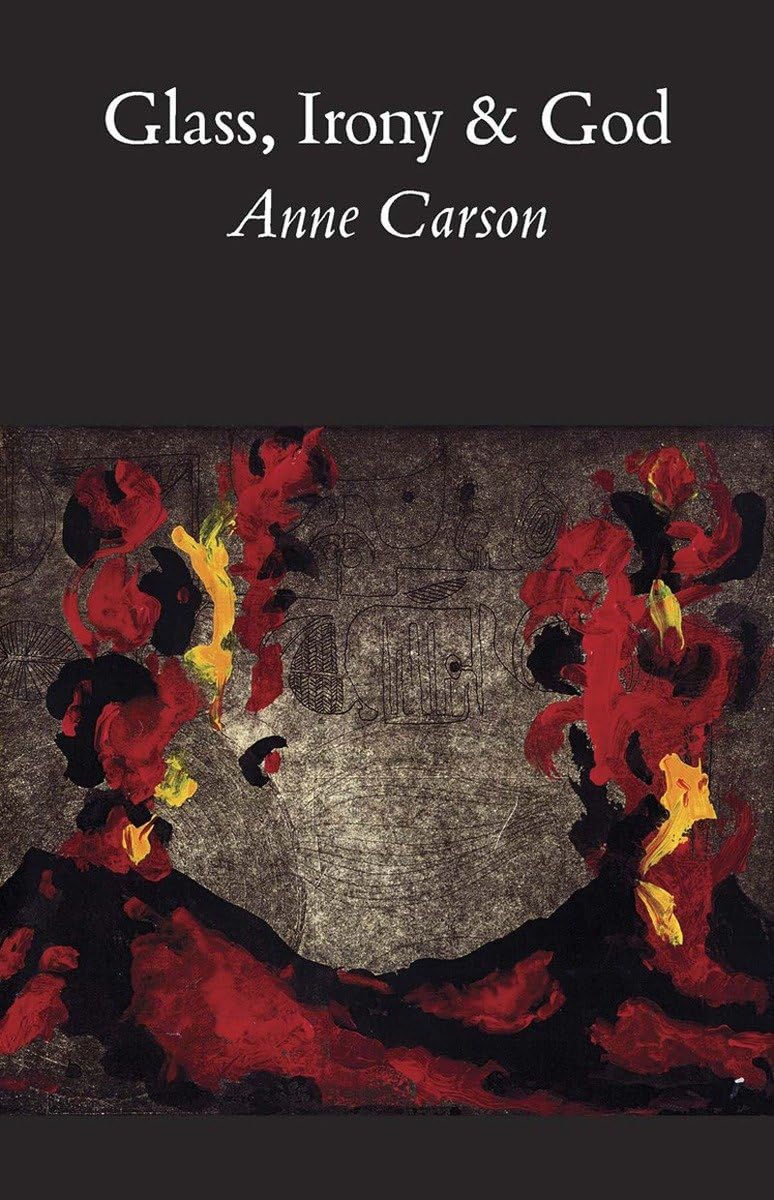



Anne Carson's poetry―characterized by various reviewers as "short talks," "essays," or "verse narratives"―combines the confessional and the critical in a voice all her own. Known as a remarkable classicist, Anne Carson weaves contemporary and ancient poetic strands with stunning style in Glass, Irony and God . This collection includes: "The Glass Essay," a powerful poem about the end of a love affair, told in the context of Carson's reading of the Brontë sisters; "Book of Isaiah," a poem evoking the deeply primitive feel of ancient Judaism; and "The Fall of Rome," about her trip to "find" Rome and her struggle to overcome feelings of a terrible alienation there. Bringing a classical education and a philosophic quest to challenge tradition, Carson seamlessly blends these traits in her poetry and prose. This collection of mostly long poems demonstrates Carson's daring and dramatic approach to writing, especially in "The Glass Essay," where she intertwines repercussions of a failed relationship, encounters and attempts to understand her parents, the theme (recurring almost symphonically) of Emily Bronte's glass-box life and intrigue with darkness and death, and Carson's fear and attraction to Bronte's vision. "The Truth about God" brilliantly characterizes biblical language and stories, recontextualizing them and re-envisioning our beliefs about what we have learned. "The Fall of Rome: A Traveller's Guide" contains brief but recurrent phrases like "A stranger is . . . ," with each ending changing and offering new insight. Readers weary of overtly intellectual poetry will find Carson emotionally accessible, and academics will appreciate her obvious knowledge of history and her mental acuity. But mostly, Carson will appeal to readers who are open minded, willing to ask, seek, and learn, and those wanting to be overcome, in a grand way, by an intense, urgent, new kind of poetry. Janet St. John A striking book. -- New York Review of Books , Charles Simic Book Of Isaiah The Fall Of Rome: A Traveller's Guide The Gender Of Sound The Glass Essay: Hero The Glass Essay: Hot The Glass Essay: I The Glass Essay: Kitchen The Glass Essay: Liberty The Glass Essay: She The Glass Essay: Thou The Glass Essay: Three The Glass Essay: Whacher The Truth About God: By God The Truth About God: Deflect The Truth About God: God Stiff The Truth About God: God's Beloveds Remain True The Truth About God: God's Bouquet Of Undying Love The Truth About God: God's Christ Theory The Truth About God: God's Justice The Truth About God: God's List Of Liquids The Truth About God: God's Mother The Truth About God: God's Name The Truth About God: God's Woman The Truth About God: God's Work The Truth About God: My Religion The Truth About God: Teresa Of God The Truth About God: The God Coup The Truth About God: The God Fit The Truth About God: The Grace That Comes By Violence The Truth About God: The Wolf God Tv Men: Artaud Tv Men: Sappho Tv Men: Sokrates Tv Men: The Sleeper -- Table of Poems from Poem Finder® Anne Carson's poetry - characterized by various reviewers as "short talks", "essays", or "verse narratives" - combines the confessional and the critical in a voice all her own. Known as a remarkable classicist, Anne Carson in Glass, Irony and God weaves contemporary and ancient poetic strands with stunning style. This collection includes: "The Glass Essay", a powerful poem about the end of a love affair, told in the context of Carson's reading of the Bronte sisters; "Book of Isaiah", a poem evoking the deeply primitive feel of ancient Judaism; and "The Fall of Rome", about her trip to "find" Rome and her struggle to overcome feelings of a terrible alienation there. Anne Carson was born in Canada and teaches ancient Greek for a living.