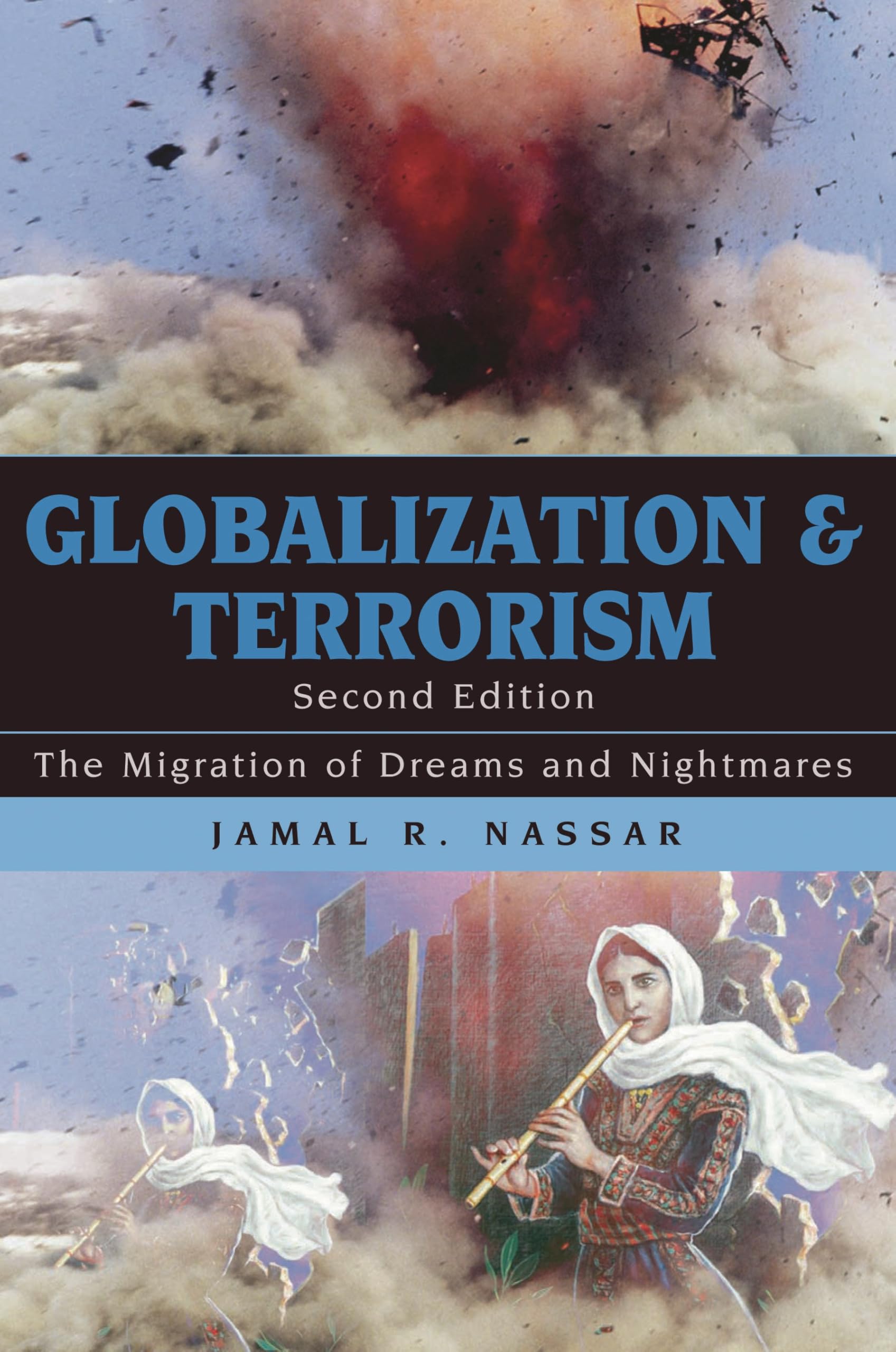
Globalization and Terrorism: The Migration of Dreams and Nightmares
$44.95
by Jamal R. Nassar



Courageously stepping into charged terrain, this book casts a clear light on globalization and terrorism for what they are, not what some may wish them to be. Jamal R. Nassar carefully defines these twin concepts, placing them in historical as well as political context. Woven throughout the book is his central theme of the migration of dreams and nightmares. As some are able to take advantage of the opportunities of globalization, leaving others behind, they leave behind a legacy of unrealistic dreams. These unfulfilled hopes of the poor and oppressed often transform themselves into nightmares for the wealthy and powerful. This vicious cycle, the author argues, is often enhanced by globalization and effected by terrorism. Focusing on the key case studies of Palestine and Northern Ireland, Nassar applies their lessons to other examples of conflict including Iraq, Afghanistan, the Congo, Chechnya, and Colombia in order to internationalize our understanding of how globalization and terrorism operate in a range of situations. He also devotes a chapter to Islamist terrorism in a tour de force of incisiveness and balance. This book considers globalization and terrorism not only from the perspective of the major powers, but also introduces the views of those dominated by forces beyond their control. Yet even as the author offers a profound critique of Western hegemony, he conveys respect and hope for an enlightened global interdependence-embracing the power of the dream over the nightmare. “In this [book], Nassar connects international terrorism with globalization, seeing them as linked through what he calls the migration of dreams and the migration of nightmares. His study, based on secondary sources as well as his own experiences growing up in Jerusalem in pre-1948 Palestine, offers details often missing in similar studies.” ― Journal of Palestine Studies “The book was written not only from the perspective of the dominant powers, but also from that of the dominated. Therefore, it has a more balanced perspective than books of this genre usually offer. Summing Up: Highly recommended.” ― Choice Reviews “This book represents an ambitious attempt to explore the relationship linking two of the most prominent, yet contested, concepts within contemporary international politics: globalization and terrorism.” ― Political Studies Review “Globalization and Terrorism is a difficult book, and a challenging and important one. It takes categories we are comfortable with and shows us their weaknesses and limitations, as well as the unexpected links between them: it provides a rich and reflective contribution to our understanding of both.” ―Rashid Khalidi, Edward Said Professor of Arab Studies, Columbia University “To connect globalization and terrorism so convincingly and imaginatively gives this book its originality. Globalization and Terrorism is invaluable as a check against unacceptable American innocence about the United States' role in the world. Readers will also gain insight into the rise of political violence in the Islamic world and elsewhere. Highly recommended.” ―Richard A. Falk, Albert G. Milbank Professor of International Law Emeritus, Princeton University “In this exceptionally well-written work, Jamal Nassar has offered a humane meditation on some of the most important issues and enduring conflicts of our epoch. His insights will undoubtedly be of value to students and scholars alike.” ―Stephen Eric Bronner, Rutgers University Jamal R. Nassar is dean of the College of Social and Behavioral Sciences, California State University, San Bernardino. Used Book in Good Condition