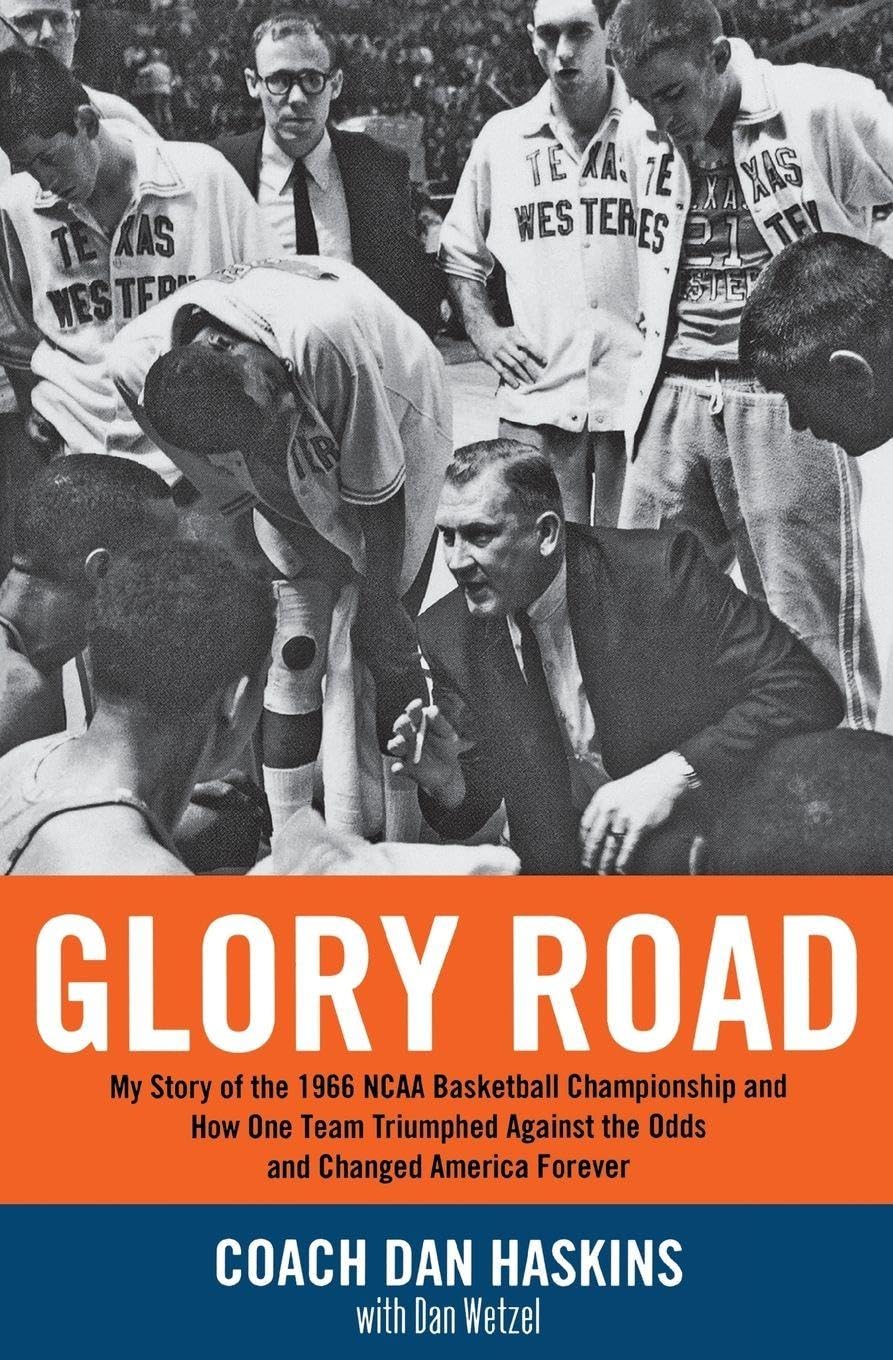
Glory Road: My Story of the 1966 NCAA Basketball Championship and How One Team Triumphed Against the Odds and Changed America Forever
$13.80
by Don Haskins



Timed to the release of Jerry Bruckheimer's movie, the moving autobiography of Hall of Fame basketball coach Don Haskins and his storied team of players, the Texas Western Miners In 1966, college basketball was almost completely segregated. In the championship game for the NCAA title that year, Don Haskins, coach of the then little-known Texas Western College, did something that had never been done before in the history of college basketball. He started five black players, and in the now legendary game, unseated the nationally top-ranked University of Kentucky. Broadcast on television throughout the country, the Miners victory became the impetus for the desegregation of all college teams in the South during the next few years. Now, for the first time, Hall of Fame coach Don Haskins tell his story. Beginning as a small-town high school basketball coach, Haskins was known for his tough coaching methods and larger-than-life personality. As a child growing up during the Dust Bowl in Oklahoma, he developed a strong set of values and discipline that he would instill in his players throughout his coaching career. With recollections from his former players, including those of the 1966 team, along with Haskins's own Seven Principles for Success, Glory Road is the inspiring story of a living legend and one of the most respected coaches of all time. With a foreword by basketball legend Bobby Knight, and coinciding with the release of the film Glory Road , the story of Don Haskins and his championship team is sure to become a classic for sports fans and historians. *Starred Review* Don Haskins was 34 years old when he coached the Texas Western Miners to the NCAA basketball championship in a game that most sports historians agree fundamentally altered college athletics. Haskins' starters and top-two reserves were black--the first time in history that had happened. The Miners defeated all-white Kentucky and its legendarily racist coach, Adolph Rupp, in the finals. In this mesmerizing autobiography, Haskins rejects such labels as trailblazer or social pioneer. He says instead he was simply an obsessed coach who recruited the best players he could get--despite unofficial quotas on black players--and drove them mercilessly. He also says that his university--now known as the University of Texas at El Paso--had integrated its basketball team almost a decade earlier, and the ethnic diversity of the town mitigated most of the racial tension one might have expected in another setting. That's not to say that he and his players didn't undergo plenty of trials. The author's modesty aside, what makes this book such compelling reading is that Haskins is a one-of-a-kind character--a man who chose never to leave his relatively obscure post, preferring smoky small-town Texas cantinas to, well, just about anyplace. There will be a major film this winter based on Texas Western's 1966 season, so expect significant demand for Haskins' book. But no matter the quality of the movie, this is one of the best sports autobiographies in many years. Wes Lukowsky Copyright © American Library Association. All rights reserved "The book isn't just the story of an improbable basketball season, but an improbable basketball life." -- ESPN.com Don Haskins was the head coach at Texas Western College (later renamed the University of Texas, El Paso), where he won 719 games, 14 Western Athletic Conference championships, and the 1966 national championship. He is a member of the Naismith Basketball Hall of Fame and lives in El Paso with his wife, Mary. Dan Wetzel is the award-winning national columnist for Yahoo! Sports and the coauthor of the critically acclaimed books Sole Influence and Runnin' Rebel . He lives in Berkley, Michigan, with his wife, Jan, and daughter, Allie.