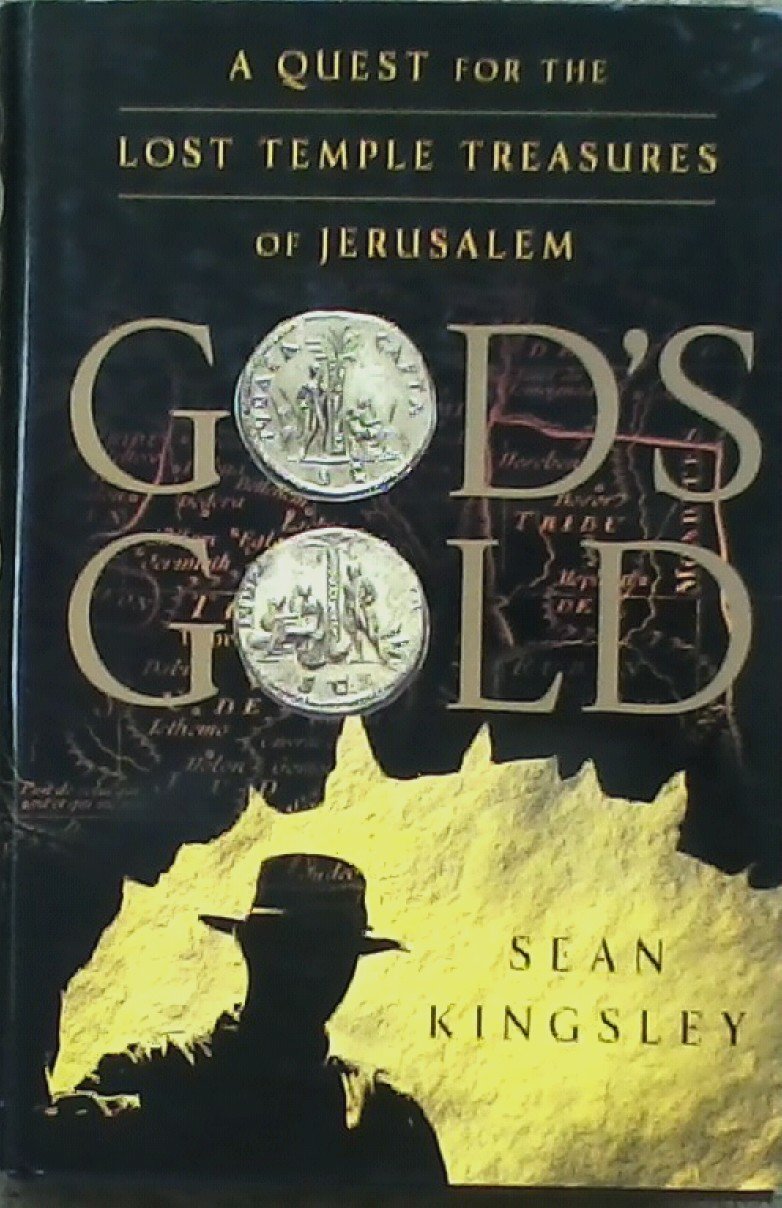



God's Gold explores the fate of the greatest biblical treasure in history, the central icons of the Jewish faith looted from the Temple of Jerusalem. The golden candelabrum, silver trumpets, and the bejeweled Table of the Divine Presence were plundered by the Roman emperor Vespasian and his son Titus in AD 70. These biblical treasures are cast adrift in Mediterranean lands and exposed to 550 years of turbulent history and the rule of four different civilizations; only an intriguing trail of clues betrays their ever-changing destiny. The Temple treasure is a priceless hoard, but it has yet greater significance as the ultimate symbol of man's communication with God. The gold's recovery is central to Israel's broken dreams of messianic redemption by building a new House of God on the Temple Mount and its hopes for a return to an age of biblical sacrifice. Using untapped historical texts and new archaeological sources, Sean Kingsley unravels the incredible history of this treasure; its character; and religious, political, and financial meaning across the ages. Unexpected discoveries send him on a physical journey to expose the treasure's destiny. From the Vatican to the Vandal palace of Carthage, Constantinople's hippodrome, and the wilderness of Judea, his remarkable quest reveals facts more astonishing than fiction. Indiana Jones would tip his hat to Kingsley, an intrepid archaeologist who has spent 15 years pursuing a very real treasure that surpasses Hollywood's fantasies. Estimated at 50 tons of gold, the treasure of Herod's Temple fell into Roman hands when Vespasian besieged Jerusalem two millennia ago. Roman leaders lavished much of their temple plunder on the Colosseum and other projects. But Kingsley uncovers exciting evidence that a still sizable amount of the sacred troveincluding the great golden candelabrum and the Table of Divine Presenceremained intact. Worth at least $1 billion today, this hoard passed through turbulent centuries under the vigilant care of powerful guardians who protected it by repeatedly moving it. It will probably disappoint some readers that, in the end, Kingsley cannot breach the suspiciously locked gates of those he identifies as the treasure's current keepers. (Only a killjoy would reveal the identity and location of these keepers.) But many readers will find that the thrill of tracing long-buried clues to those tantalizing locked gates is itself a great prize. Christensen, Bryce “Fascinating . . . an excellent book that entertains from cover to cover.” - The Leader-Post (Regina, Canada) God's Gold explores the fate of the greatest biblical treasure in history, the central icons of the Jewish faith looted from the Temple of Jerusalem. The golden candelabrum, silver trumpets, and the bejeweled Table of the Divine Presence were plundered by the Roman emperor Vespasian and his son Titus in AD 70. These biblical treasures are cast adrift in Mediterranean lands and exposed to 550 years of turbulent history and the rule of four different civilizations; only an intriguing trail of clues betrays their ever-changing destiny. The Temple treasure is a priceless hoard, but it has yet greater significance as the ultimate symbol of man's communication with God. The gold's recovery is central to Israel's broken dreams of messianic redemption by building a new House of God on the Temple Mount and its hopes for a return to an age of biblical sacrifice. Using untapped historical texts and new archaeological sources, Sean Kingsley unravels the incredible history of this treasure; its character; and religious, political, and financial meaning across the ages. Unexpected discoveries send him on a physical journey to expose the treasure's destiny. From the Vatican to the Vandal palace of Carthage, Constantinople's hippodrome, and the wilderness of Judea, his remarkable quest reveals facts more astonishing than fiction. Sean Kingsley is a London-based archaeologist with fifteen years' experience running excavations and surveys, from Montenegro to Israel. He is the author of six books, the managing editor of Minerva: The International Review of Ancient Art and Archaeology , and a visiting fellow at the Research Center for Late Antique and Byzantine Studies at Reading University.