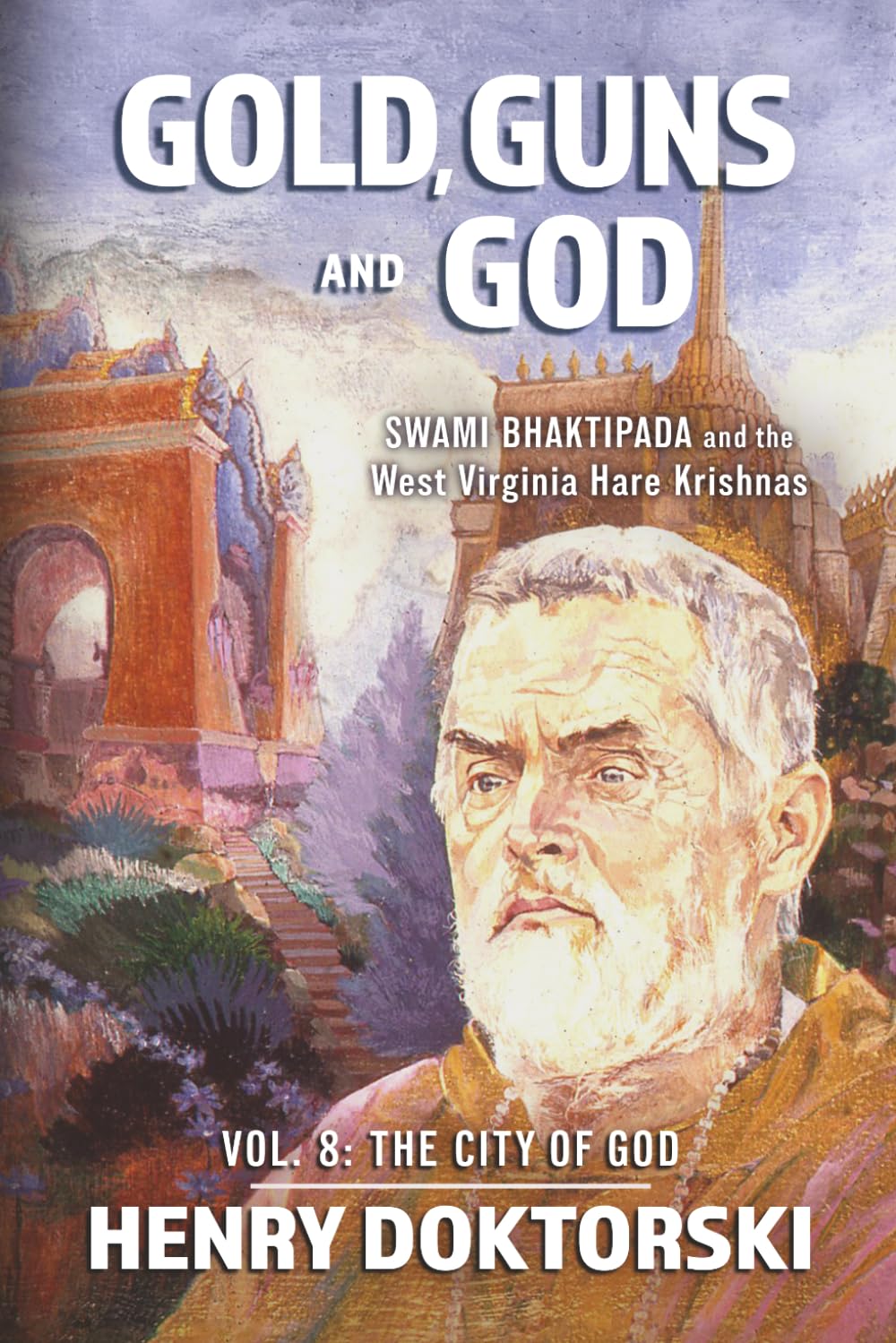
Gold, Guns and God: Swami Bhaktipada and the West Virginia Hare Krishnas: Vol. 8: The City of God
$19.99
by Henry Doktorski



Volume eight of Gold, Guns and God tells the story of Swami Bhaktipada and his vision to de-Indianize, or Westernize, Krishna consciousness in an effort to make it more palatable to westerners. He incorporated various aspects of western and Christian culture into the temple liturgies and daily life of New Vrindaban residents, such as translating the Sanskrit and Bengali prayers into English for temple services, and asking disciples and followers to wear unisex orange-colored garments, something like Franciscan monks’ robes, not shaving the head nor beard for men. He also commissioned new tunes in a Western classical style for the English Vaishnava prayers, which were sung daily at temple services. A pipe organ was purchased, and a choir and temple orchestra was created, as well as a children’s choir, Gospel band, folk music ensembles, and even a rock band. Bhaktipada advocated chanting the mahamantra in English and chanting silently in the dark. Women were initiated into the renounced order of sannyasa, an honor and responsibility previously only accorded to men. A life-size statue of Jesus Christ sitting in a lotus posture was commissioned and installed next to the murti of Bhaktivedanta Swami Prabhupada in the temple on Christmas Day 1988. Bhaktipada also envisioned an interfaith City of God at New Vrindaban, and at eleven other locations around the world, in which all religions would be recognized and respected. For a few years New Vrindaban included about a dozen interfaith residents: Marion Catholics, a Unitarian minister, and others, who wanted to help build a City of God in West Virginia. The design of the Temple of Understanding also changed from a traditional South-Indian Dravidian style (1985) to a modernistic edifice with Native American influences (1990). In November 1990, a giant forty-foot tall statue of Bhaktivedanta Swami Prabhupada wearing a turban and sitting in the lotus position was constructed in the proposed “Garden of the Spiritual Masters” behind the Palace. Bhaktipada’s liturgical reforms and emphasis on interfaith preaching attracted some people to come and live at New Vrindaban, but they also alienated some residents and visitors who were attached to the Bengali-style which Bhaktivedanta Swami Prabhupada advocated. The Interfaith Era at New Vrindaban lasted about eight years, from 1986 to 1994. The reasons for its dissolution will be described in detail in Gold, Guns and God, Vol. 9.