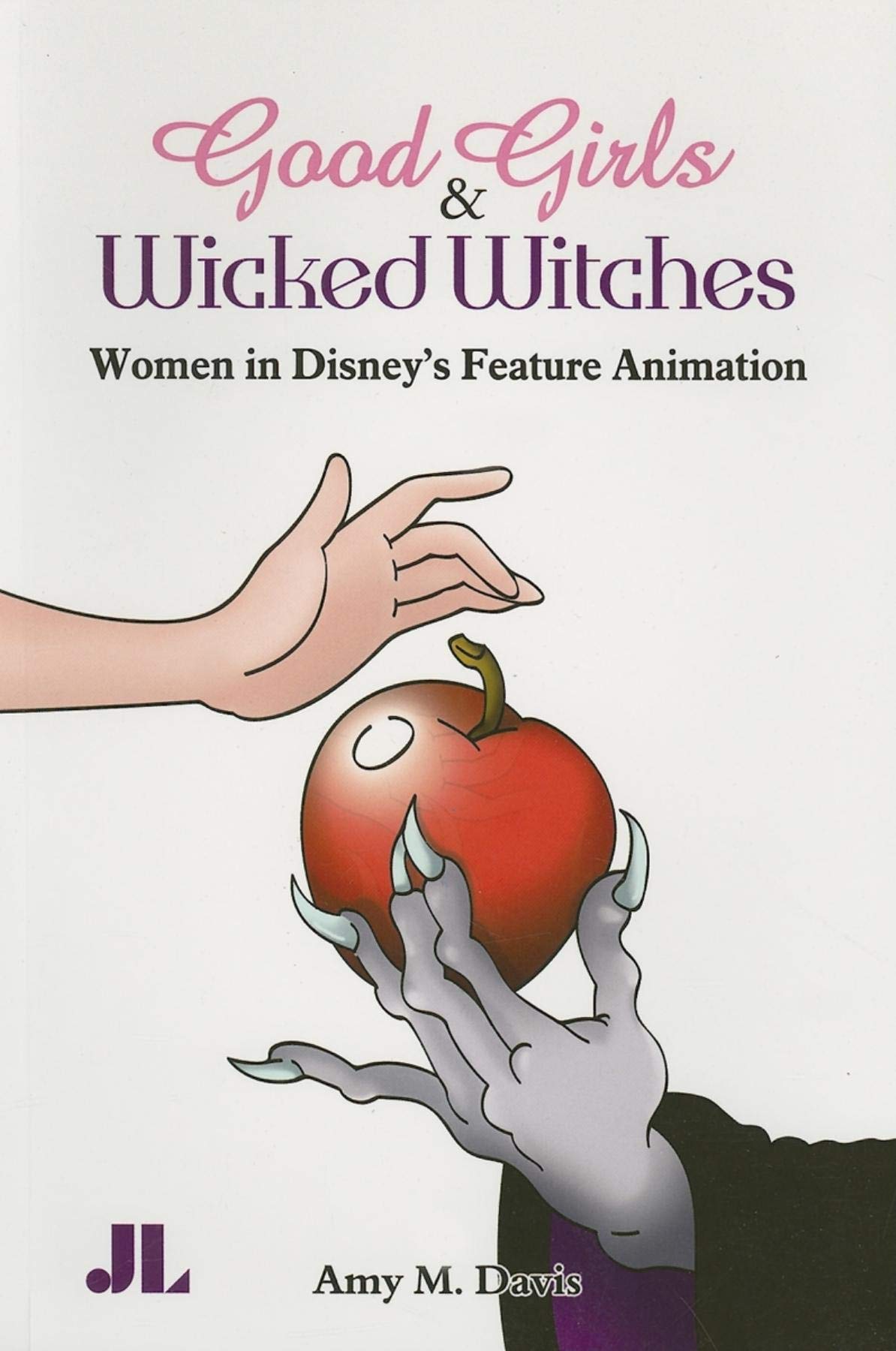



In Good Girls and Wicked Witches , Amy M. Davis re-examines the notion that Disney heroines are rewarded for passivity. Davis proceeds from the assumption that, in their representations of femininity, Disney films both reflected and helped shape the attitudes of the wider society, both at the time of their first release and subsequently. Analyzing the construction of (mainly human) female characters in the animated films of the Walt Disney Studio between 1937 and 2001, she attempts to establish the extent to which these characterizations were shaped by wider popular stereotypes. Davis argues that it is within the most constructed of all moving images of the female form―the heroine of the animated film―that the most telling aspects of Woman as the subject of Hollywood iconography and cultural ideas of American womanhood are to be found. American womanhood as seen through the eyes of Disney. Amy M. Davis is a lecturer in the School of Media and Performing Arts and a course director for Film Studies at the University of Ulster, Coleraine. She is author of several articles on the subject of Disney feature animation. Good Girls and Wicked Witches Women in Disney's Feature Animation By Amy M. Davis John Libbey Publishing Ltd Copyright © 2006 John Libbey Publishing Ltd. All rights reserved. ISBN: 978-0-86196-673-8 Contents Acknowledgements, vi, Introduction, 1, Chapter 1 Film as a Cultural Mirror, 17, Chapter 2 A Brief History of Animation, 33, Chapter 3 The Early Life of Walt Disney and the Beginnings of the Disney Studio, 1901–1937, 63, Chapter 4 Disney Films 1937–1967: The "Classic" Years, 83, Chapter 5 Disney Films 1967–1988: The "Middle" Era, 137, Chapter 6 Disney Films 1989–2005: The "Eisner" Era, 169, Conclusion, 221, Appendix 1 Disney's full-length animated feature films, 237, Appendix 2 Disney films analysed in this study, with plot summaries, 239, Appendix 3 Bibliography, 253, Appendix 4 Filmography, 263, Index, 67, CHAPTER 1 Film as a Cultural Mirror In Hollywood, both in the past and in the present, what decides whether or not a film will be made, ultimately, is whether or not it is believed that the film will make money. If a film is to make money, it must appeal to a mass audience. If it is to do this, it must contain ideas, themes, characters, stories, and perceptions to which it can relate. It must, in other words, be relevant to the audience's world view if it is to be successful. Why does a film like Thelma and Louise (1991), ostensibly a road movie about two redneck women trying to escape to Mexico, strike such a chord – and stir up such controversy – amongst audiences around the world? The simple answer to this is that Thelma and Louise touches upon certain issues – mainly women's roles, rights and positions in what is still very much a male-dominated society – which are relevant not only to the lives of women of the same basic background as the title characters, but also to women as a whole, nearly all of whom have experienced some form of gender-related harassment and/or discrimination. More recently, the phenomenon of the success of the film Bridget Jones's Diary (2001), as well as the attendant criticism of the way it depicts thirty-somethings at the turn of the twenty-first century, has enjoyed great success. This far-reaching popularity comes from the fact that, like it or not, Bridget Jones's Diary mirrors back to a great many women the conflicting roles they are expected to fill, and their confusion as to how to navigate the difficulties and contradictions to be found within the era's complex and evolving understanding of the ways in which marriage, career, and family are/should be prioritised amongst middle-class Western women. Likewise, there are within Disney's films certain ideas, perceptions, themes and stereotypes which are relevant to the daily lives of those who made these films successful, namely the audiences, who paid to see these films in the cinema, bought the related merchandise, went to the theme parks and rented or purchased the videos and DVDs. Had these films not "spoken" in some way to contemporary audiences, or at least if the studio had not believed that these films had this potential, then the films themselves would never have been made. Or, if they had been made regardless (which, owing to the expense of their production, is doubtful), then they would – like the many films which have failed to gain a favourable reception with audiences – have disappeared not long after their release. Likewise, had the films been successful in their day, but the ideas and themes they contain ceased to resonate with the public (or, in extreme cases, jarred hatefully with modern values), they would have become rare, controversial cinematic relics along the lines of films such as D.W. Griffith's The Birth of a Nation (1915): watched out of scholarly curiosity, at best saluted for their technical innovations, but used – ultimatel