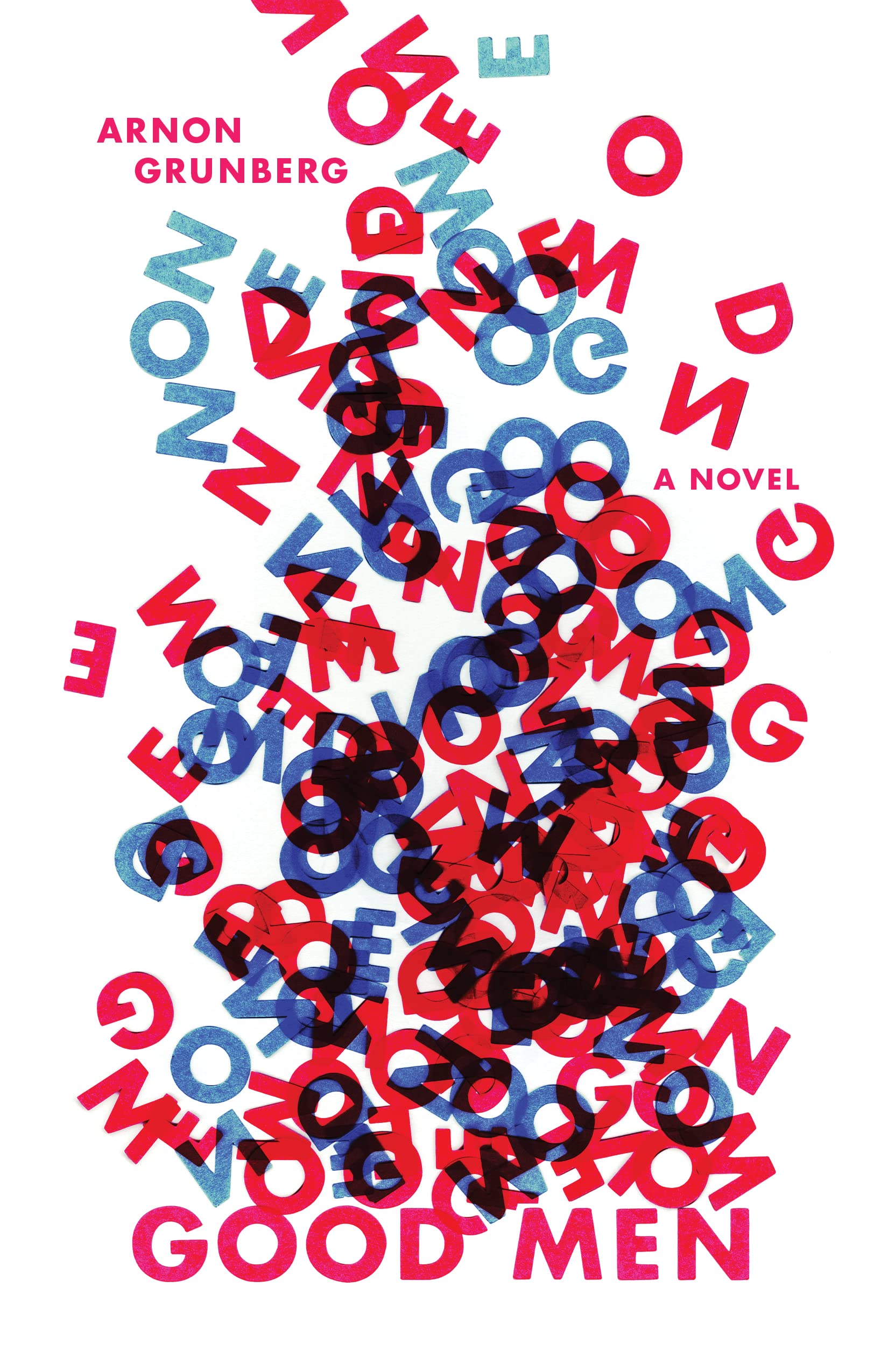



Brilliant absurdist chronicle of a hapless outsider’s struggle to do the right thing. Arnon Grunberg’s fourteenth novel charts the downfall of Geniek Janowski, a Polish-German firefighter doing his best to be a good father, husband, lover and colleague, only to fail on all fronts. Geniek leads a seemingly unremarkable life with his wife, Wen, and their son, Jurek, in the sleepy Dutch province of Limburg, where everyone simply calls him “The Pole” because they can’t pronounce his real name. He is the only foreigner and the only vegetarian at the fire station, yet to him the crew feels like a band of brothers. When he discovers that the wife of his colleague, Beckers, is dying, The Pole is reminded of the role she played in his own life following the death of his eldest son, Borys—namely, by providing consolation in the form of unorthodox sexual acts. Racked by guilt, The Pole confessed the affair to his wife, and the retreated to a monastery for a year, where he ended up living in the henhouse. On his return, he is allowed to rejoin the fire brigade, though everyone in town has their doubts. Grunberg has lost none of his edge in this acutely absurdist account of the powerlessness of human beings to alter their fate. Comfort, salvation, love, and solidarity seem out of reach. In the world of Good Men , illusions about humanity and, above all, brotherhood will never prevail. Arnon Grunberg (1971) debuted at the age of 23 with the wry, humorous novel novel Blue Mondays , which brought him instant success. Some of his other titles are Silent Extras , The Asylum Seeker , The Jewish Messiah , Moedervlekken (Birthmarks), and Tirza . Under the pseudonym Marek van der Jagt he published the successful The Story of my Baldness , and Gstaad 95-98 , as well as the essay Monogaam (Monogamous). Grunberg also writes plays, essays and travel columns. His work has won him several literary awards, among which the AKO Literature Prize for Phantom Pain and The Asylum Seeker , and both the Libris Literature Prize and the Flemish Golden Owl Award for Tirza . His work has been translated into over 25 languages. He has contributed to numerous international newspapers, including The New York Times , Times (London), L’Espresso, and Die Zeit . Arnon Grunberg lives and works in New York. Sam Garrett is a prolific translator of Dutch literature, twice winner of the Society of Authors’ Vondel Prize for Dutch-English translation. His 2012 translation of The Dinner by Herman Koch became the most popular Dutch novel ever translated into English. 1 The Polack did what he’d always wanted to do, all his life: he was a fireman. His name in fact was Geniek Janowski, but everyone called him “the Polack”, and at a certain point he had relegated himself to that nickname, the way you might relegate yourself to having bushy eyebrows. He started forgetting his real name. In his life, that name no longer played a role of any significance; it was only to government agencies, banks, insurance companies and to his father that he was still Geniek Janowski. It was a tricky name, at least for non-Poles, and most of the world consisted of non-Poles. Had he simply lived in Poland there would never have been a problem, but now he had to keep explaining to everyone that it was Geniek and that the “g” was pronounced hard, like in the German “gut”, and then “yek”, Gen-yek. His colleagues had started calling him the Polack from the moment he joined the department, more than sixteen years ago. There he had received training as lineman backup and lineman backup first-class. They had tested him for fear of heights and fear of depths and for claustrophobia, they had tested to see if he was a team player. He had fear of neither heights nor depths nor was he claustrophobic. In addition, he was something of a team player, but the men of the C squad felt that the name Geniek was too tricky, and it was Beckers who had said: “That name doesn’t fit you anyway.” If only for that reason, Geniek had come to regard “the Polack” as a badge of honor, the men felt that that name fit him. And after a couple of years on the squad he was the Polack, from head to toe, as though he had finally become who he had been all along. Now, on this misty November morning, he was sitting around in the squad commander’s office with his colleagues, waiting for Beckers to open his mouth. The Polack liked the mist, he liked all kinds of weather, but he had a weakness for mist. The landscape was already beautiful, and the mist made it even more so. The trees, the hills, the fields; the Polack enjoyed walking in the mist. The sooner he could get out of the city, the better. The squad commander had called his men together because Beckers had something to say, and even though the C squad knew more or less what it was – the squad commander had filled them in, leaving out the details: two sentences, that was all he’d needed – still they sat around the table in suspense. As