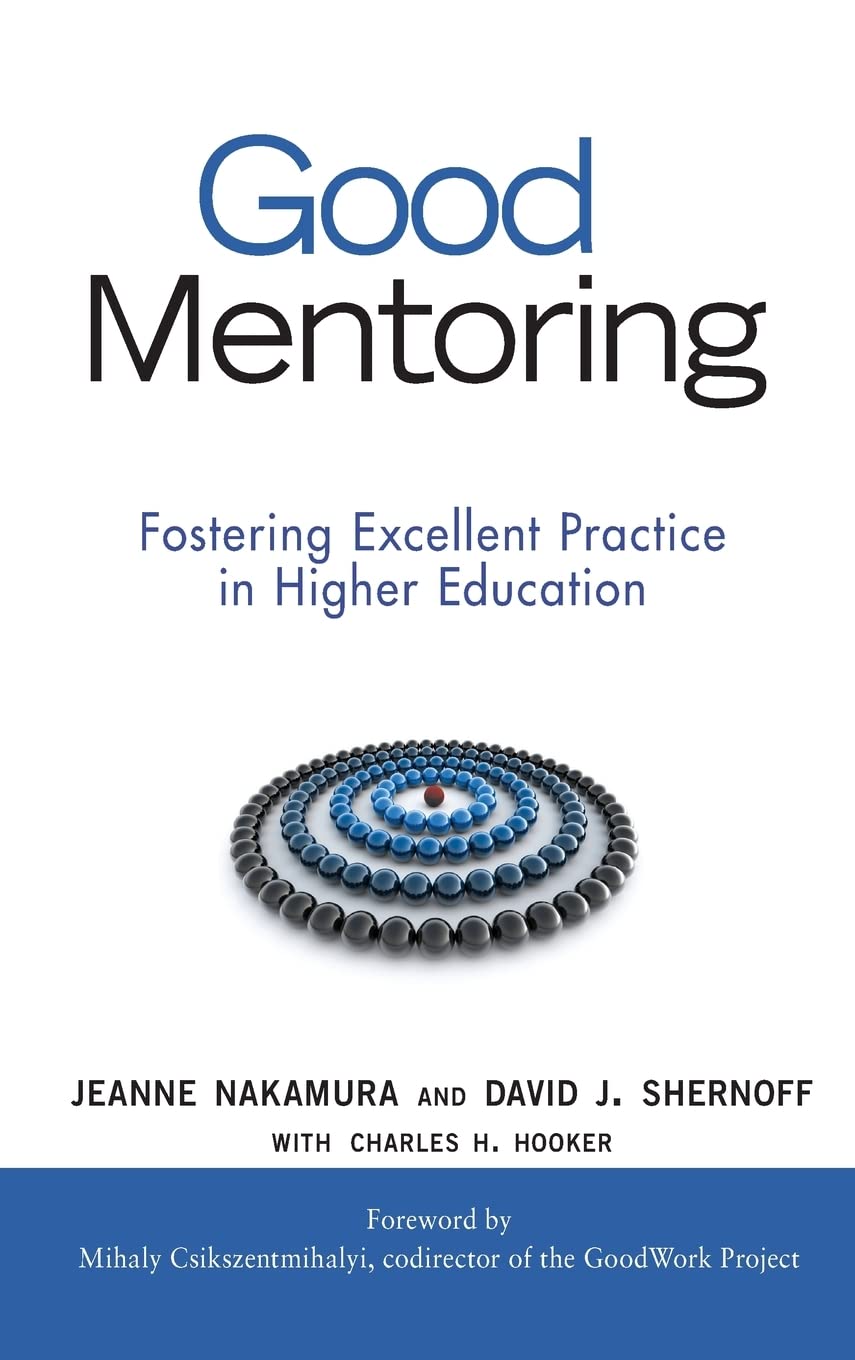



"We pass on our traits through our genes but our cherished values, beliefs, and practices are transmitted through those units of meaning called memes. This remarkable book provides an authoritative account of how 'good work' endures in the sciencesand has profound implications for the quality of work across the professional landscape." Howard Gardner, editor, Responsibility at Work, and Hobbs Professor of Cognition and Education, Harvard University "This book should sow the seeds of greatness for protégés and mentors alike, and well beyond the discipline of science. Mentoring lineages are the hallmark of disciplines that endure and have impact, a reality that the authors powerfully communicate." Carol A. Mullen, editor, Mentoring & Tutoring: Partnership in Learning, and professor and chair, Department of Educational Leadership and Cultural Foundations, University of North Carolina at Greensboro "Good Mentoring is a landmark study with implications for the continued vibrancy of any discipline. This is a fresh, eye-opening perspective on the social transmission of professional lineages." Daniel Goleman, author, Emotional Intelligence and Social Intelligence “Having a mentor can be a great experience or it can be disappointing. As advisors, we know why it is important that students have a great mentoring experience, but often how to cultivate a great experience is not addressed. Jeanne Nakamura and David Shernoff, in their new book Good Mentoring , strive to define good mentoring and offer details on how it can be achieved. To reach this goal, the authors conducted a research study to determine the practices that make mentors effective and what kind of relationships support good mentoring. Though the authors conducted their research in the field of science, the results can be applied to many fields. Readers…will find good suggestions for anyone striving to become a good mentor.” ― NACADA Journal , Issue 30(1) (Spring 2010) For a society to endure, it is necessary to preserve the knowledge, beliefs, and ways of living that give shape to the identity of a group what anthropologists call culture. One of the oldest and most effective ways to keep what has been learned from being forgotten is through face-to-face interaction between older and younger members of a community. Good Mentoring offers a detailed analysis of the way mentors transmit not only knowledge and skills, but guiding values that support good work work that is excellent in quality, socially responsible, and meaningful to its practitioners. In doing so, mentors foster the professional integrity that benefits society as a whole, as well as the practitioners themselves and the fields in which they work. Drawing on a first-of-its-kind study by the GoodWork Project a cooperative enterprise by Harvard, Stanford, and Claremont Graduate University the authors show how the cultivation of professional ethics and excellence depends on teachers and mentors and the learning environments they foster. In profiles of three lineages of scientists who passed their professional skills, values, and practices down through generations, the book reveals what constitutes successful mentoring in science and beyond. The authors identify six key dimensions of supportive mentoring: A balance between intellectual freedom and guidance - Consistent availability and involvement - An atmosphere and resources for fostering development - Positive feedback that is specific and encouraging - Treatment of graduate students as respected collaborators - Individualized attention to the student Good Mentoring includes practical advice to mentors, mentees, and institutions where graduate and professional education occurs, and suggestions for future directions for researchers. "We pass on our traits through our genes but our cherished values, beliefs, and practices are transmitted through those units of meaning called memes. This remarkable book provides an authoritative account of how 'good work' endures in the sciences and has profound implications for the quality of work across the professional landscape." Howard Gardner, editor, Responsibility at Work, and Hobbs Professor of Cognition and Education, Harvard University "This book should sow the seeds of greatness for protégés and mentors alike, and well beyond the discipline of science. Mentoring lineages are the hallmark of disciplines that endure and have impact, a reality that the authors powerfully communicate." Carol A. Mullen, editor, Mentoring & Tutoring: Partnership in Learning, and professor and chair, Department of Educational Leadership and Cultural Foundations, University of North Carolina at Greensboro "Good Mentoring is a landmark study with implications for the continued vibrancy of any discipline. This is a fresh, eye-opening perspective on the social transmission of professional lineages." Daniel Goleman, author, Emotional Intelligence and Social Intelligence Jeanne Nakamura is assistant professor in the School of