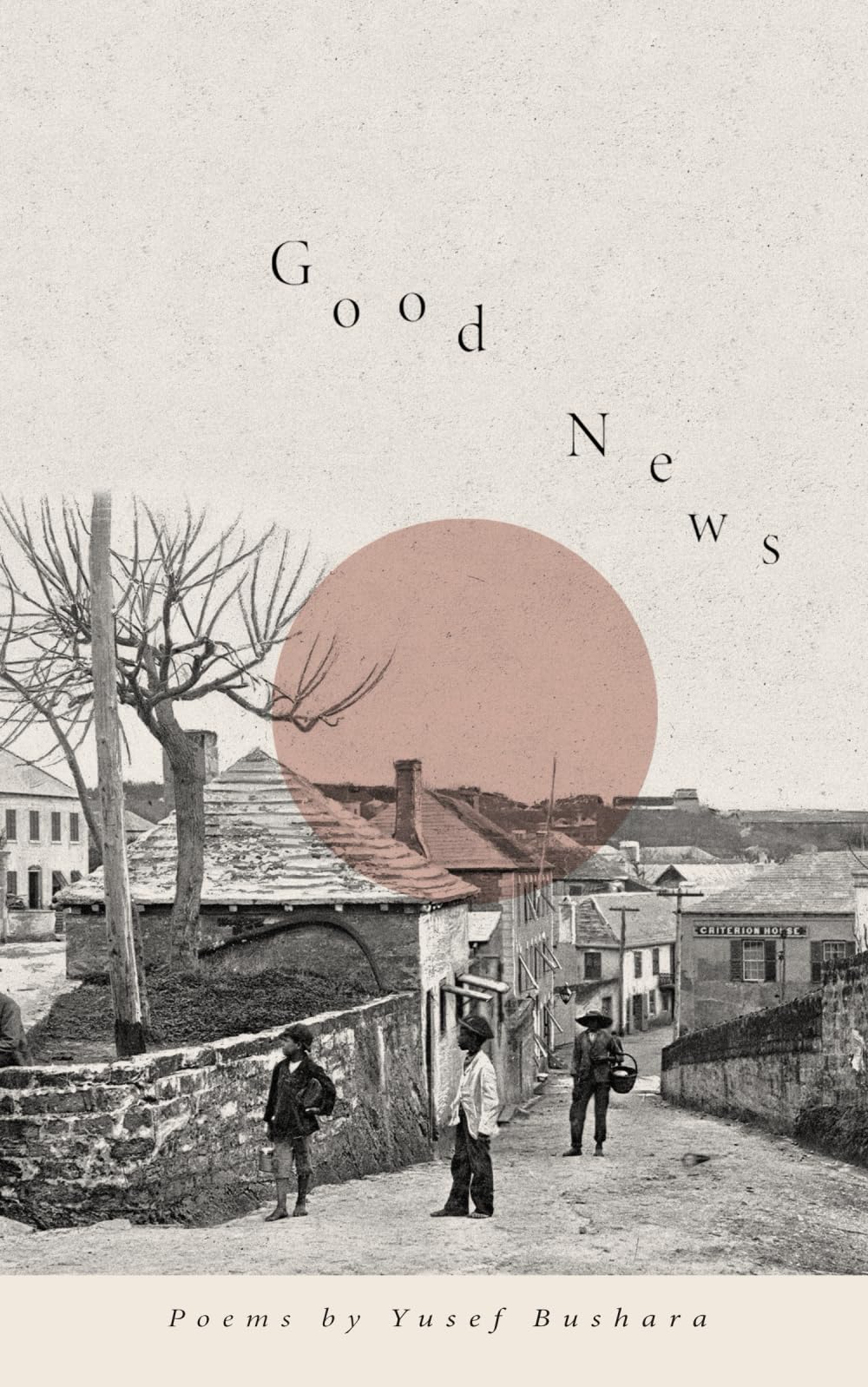



Good News is the debut poetry collection of Yusef Bushara—its title a translation of his last name (بشرى) from Quranic Arabic. At once personal offering and collective invocation, Good News responds to the fate Bushara sees written in his family name: to gather and preserve shrines of delight, love, hope, and promise, and to root these intimately in his Sudanese-Bermudian identity. Blending poetry and vignette, the collection moves beside idyllic tropes of island life but never settles in their comfort, instead offering a living, breathing Bermuda—one limned in limestone, tender memory, and everyday resistance. These are love letters to the people who shaped him, and to the Bermuda that is and could be. These themes travel with Bushara through the other places he has called home. Written with clarity, care, and a belief in beauty as resistance, Good News invites readers to whisper their own observations about what is worth remembering, and to find in the mundane a joy worth writing toward. Review by Bermudian poet and performer, Sion Symonds: Yusef Bushara’s Good News is a patient and considered love letter to all that Bushara himself maintains the patience and care to take notice of. Bushara meticulously illustrates a breathing world through his meditations on community, partnership, culture and identity. With a focus on his own Bermudian-ness, Bushara sings life into his island with celebratory articulations of the nuance and complexity of Bermuda and Bermudian culture as one of his many homes. Beginning this book with a nod to one of the most endearing pieces of language in the Bermudian lexicon, Beloved, Bushara tenderly opens the space maintaining that every analysis, challenge and meditation begins with the loving act of observing. As with his redefinition of the term, Good News insists that what is seen is to be loved and saturated with light. Readers are asked to sit with contemplations on belonging and one’s relationship with cultural identity even when removed, be it physically or linguistically. With due romanticism, as with good news subtly imparted only to be later recognised as such, Bushara encourages us to slow down and sit still on stone docks, at public golf courses, atop skyscrapers wedged between bamboo stalks, and take notice of the chilling mortality implied, the pink of passing taxi drivers, the gold of Black skin soaked in sun, the orange of Sudanese sand, fleeting sun and hibiscus flowers soaked in swizzle hues. Good News is Yusef Bushara’s latest triumph as he holds space to question, consider, guide and define. Good News consistently reminds us that good news and good fortune are not only on their way but they have long since arrived; we need merely take notice.