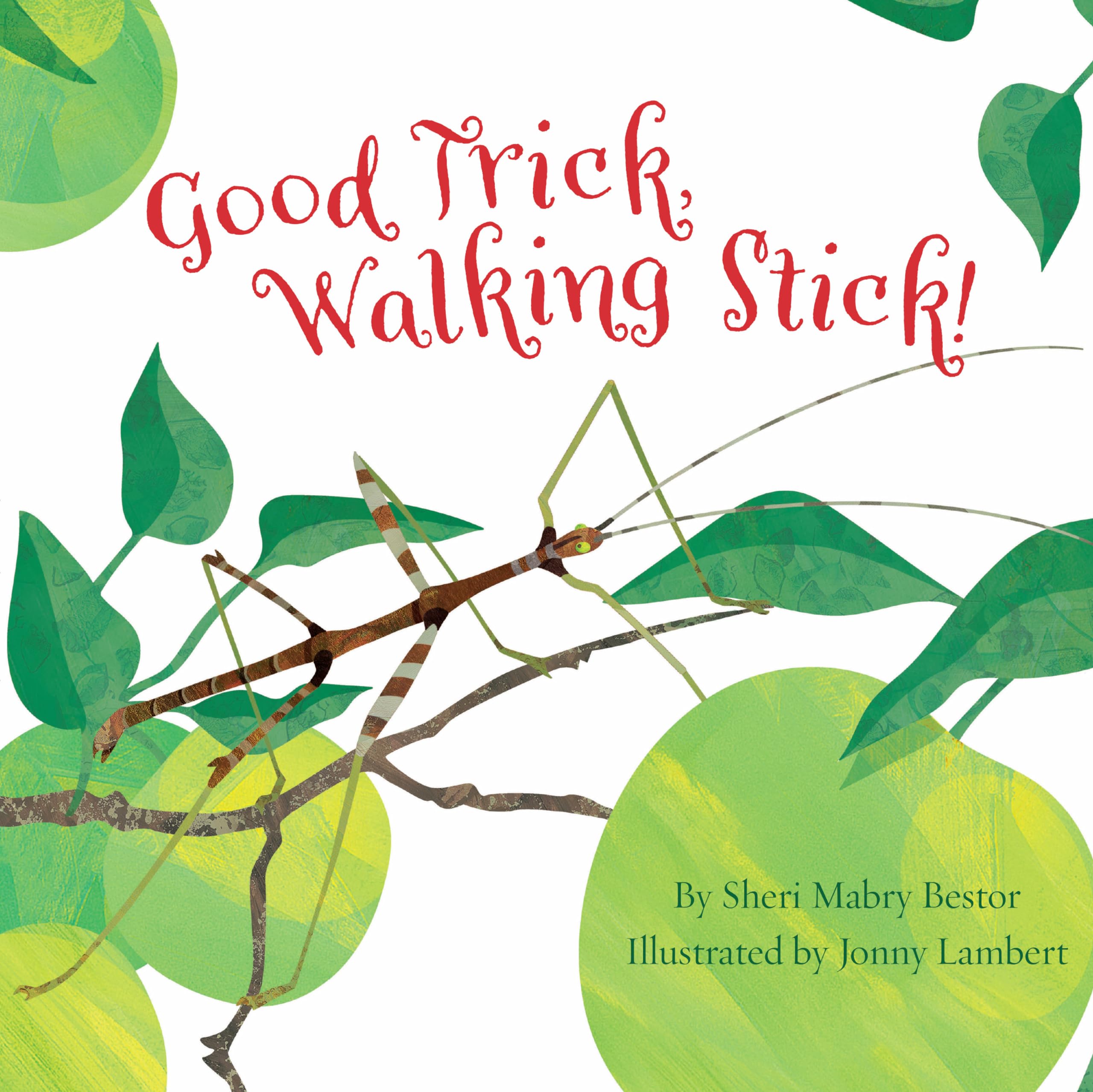



Walking sticks are among the world's most fascinating insects. And one many children can find right in their backyards! With a simple story, perfect for read-alouds, and colorful illustrations, this scientific look at a walking stick's life-cycle will captivate budding entomologists. Informative sidebars are included that let children learn even more about these wild insects. K-Gr 3—This delightful story explains the life cycle of a walking stick bug from egg stage through adulthood. Many characteristics of various species are explored as "tricks" that these insects perform. The life cycle and "tricks" are discussed in a narrative style, and each spread includes additional facts that expound on the bugs' abilities. This is especially useful for sharing this title with a variety of age groups; while the very young will enjoy the story, some children will love the additional facts provided. The illustrations are bright and bold and work well to enhance the story while providing visual cues for young readers. The collage style and organic colors evoke the natural world and help clarify the text, especially the camouflage characteristics of walking stick bugs. This title is likely to appeal to many readers who have interest in the world around them, and will also be useful for school assignments as titles on this strange insect are few and far between. VERDICT A fun, informative offering about a little-known insect that is sure to delight readers. Recommended for most collections.—Ellen Norton, Naperville Public Library, Naperville, IL Stick insects have tricks that make them highly successful creatures. Designed for reading aloud, Bestor's two-level text provides an overview of a walking stick's life. A simple, circular narrative begins in winter, with eggs hidden under the snow, and goes through spring hatching, a summer of community leaf-eating and predator evasion, and autumn egg laying (with or without fertilization); it ends with winter and spring again. Onomatopoeic phrases such as "Munch. Munch," "Drop, plop. Drop," and the titular refrain are printed in extra-large display type. Child readers are sometimes addressed directly in smaller-print paragraphs on each spread. These describe more complex events and use more specific language than the primary text: the way ants hide the eggs, mistaking them for seeds; the exoskeletons these insects shed (molt) as they grow; feet designed for climbing; and defense mechanisms, including camouflage, quaking, autotomy the loss and replacement of an appendage and even parthenogenesis. Though walking sticks are sold as exotic pets, the author helpfully suggests admiring them in the natural world instead. The stylish, probably computer-generated art resembles work done with cut paper; stylized images of the insects, the branches, leaves, berries, and flowers around them, and the ground below are set on a white background for each spread. Elements from these images make up the endpapers. A nice addition to the nature shelf. (Informational picture book. 4-7) --Kirkus Reviews Perhaps it s their talent for camouflage, but the oft-overlooked walking stick finally gets its due in this beautifully illustrated picture book. In a style reminiscent of Steve Jenkins, this book takes readers through the life of a stick insect, from the moment this slender bug hatches from its egg to the time it lays eggs itself. Varying fonts emphasize words like drip, wiggle, and munch, as well as the refrain, Good trick, walking stick! when a new ability is revealed. Aided by the vibrant collage-style illustrations, readers see the insect shed its exoskeleton and defend itself from a bird by detaching its leg (which it will later regrow) in a trick called autotomy. The intended audience for this book is adaptable, as the main text s narrative quality and tone seem appropriate for kindergartners, while the scientific asides are more advanced. However, most kids will find the walking stick s ability to change its color, tremble like a twig in the wind, and squirt smelly liquid at attackers fascinating at any age. Julia Smith --Booklist "[...] Burgeoning entomologists will thrill at the up-close-and-personal illustrations of baby walking sticks doing tricks that only walking sticks can do: changing colors to blend with the tree bark; regrowing limbs that have been plucked off by predators; and taking on the color of the night sky so that they can t be seen by any predator that might be wandering around in the dark. They will also appreciate Ms. Bestor s attention to time and seasons, as she cleverly opens the book in Fall, when the leaves cover the walking stick eggs, then the snow falls, then the spring comes...and she ends with the Fall coming once again. Artist Johnny Lambert s vibrant illustrations are kid-friendly and insect-creepy all at the same time. His lush and foresty colors will have bug-watchers itching to go on a backyard safari. Great for science or art classrooms or private collec