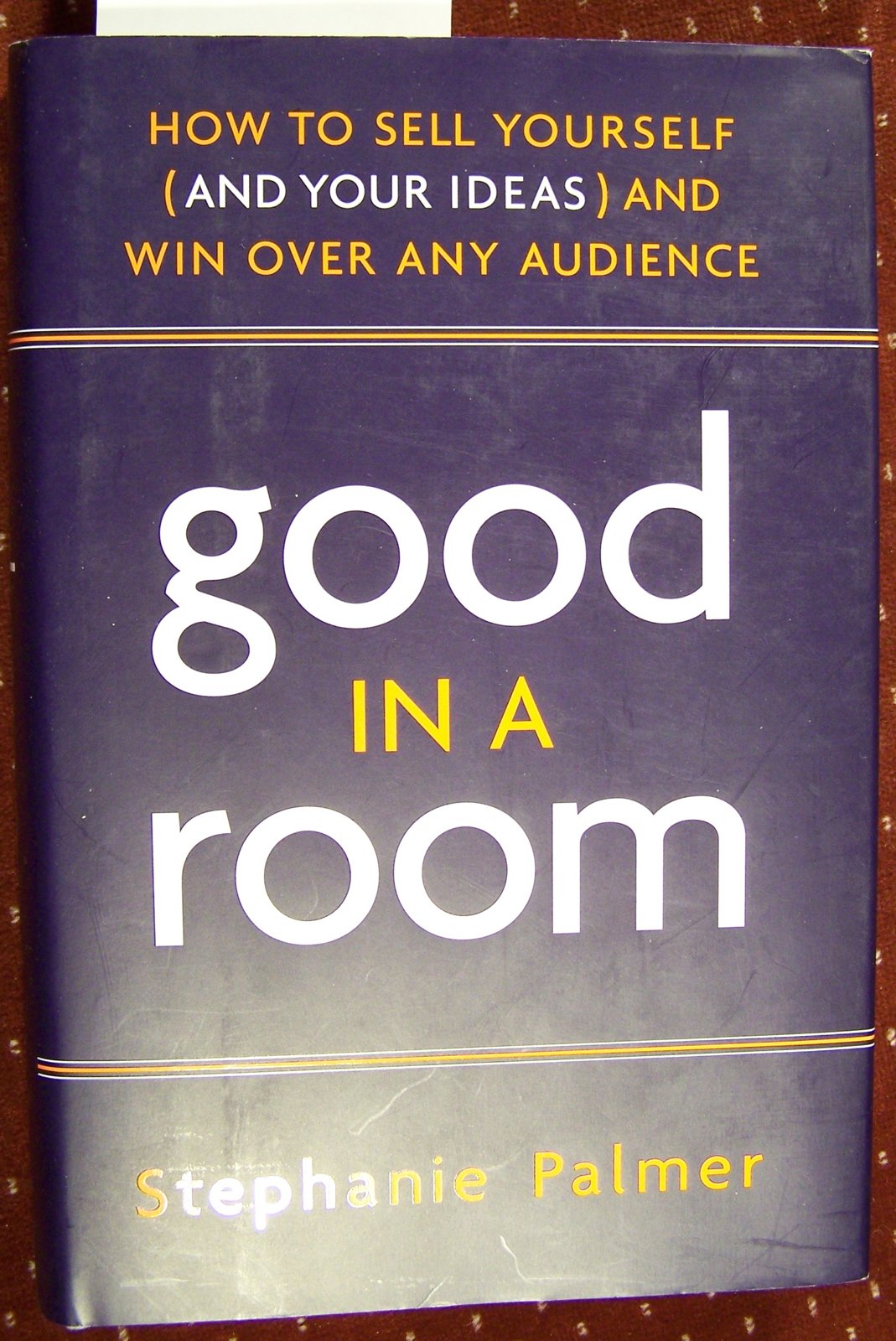
Good in a Room: How to Sell Yourself (and Your Ideas) and Win Over Any Audience
$19.06
by Stephanie Palmer



"Stephanie Palmer delivers clear, useful advice on how to successfully move the good idea in your head into the other heads in the room. It is hard to think of a more valuable skill." --Peter Kaufman, CEO, Glenair Inc. Former MGM Director of Creative Affairs Stephanie Palmer reveals the techniques used by Hollywood’s top writers, directors and producers to get financing for their projects and explains how you can apply these techniques to be more successful in your own high-stakes meetings. Because, as Palmer as found, the strategies used to sell yourself and your ideas in Hollywood Hollywood not only work in other businesses, they often work better . After taking over three thousand pitch meetings, Stephanie Palmer has seen what works, what doesn’t, and has developed a system for helping people with good ideas get the attention and financing they deserve. This is important because of how technology and globalization have created exponential growth in the marketplace for ideas. If you can communicate your ideas concisely and effectively, you will have the edge no matter what industry you are in. Whether you intend to ask for a raise, sign a potential client, promote a new business, secure financing for a creative project, get sponsors for your charity walk or even ask someone on a date, GOOD IN A ROOM shows you how to: -Master the five stages of the face-to-face meeting -Avoid the secret dealbreakers of the first ninety seconds -Be confident in high-pressure situations -Present yourself better and more effectively than you ever have before GOOD IN A ROOM is a step-by-step guide to improving your performance in high-stakes meetings as well as in other areas of your professional life. You’ll learn insider secrets, cutting-edge techniques, and how to construct winning presentations that persuade decision-makers. That’s what being good in a room is all about. Stephanie Palmer coaches business leaders and creative professionals in a wide range of industries to help them get their ideas the attention and financing they deserve. As part of MGM’s executive team for six years, she supervised twenty films with multimillion dollar budgets, including the international screen hit, Legally Blonde . She has been featured on NBC’s Today , CBS’s Early Show, The Los Angeles Times, Variety and NPR. CHAPTER 1 Why You Should Read This Book The reason you should read this book is because the strategies and tactics that people use to sell ideas in Hollywood work in the rest of the business world. I have worked with entrepreneurs, executives, and professionals in industries such as real estate, financial services, retail sales, law, advertising, marketing, video games, and more. The techniques used to sell ideas in Hollywood not only work in other industries, they often work better . As you already know, “good in a room” is a Hollywood term referring to creative people who excel at pitching in high-stakes meetings. I’ve had–literally–thousands of these meetings. During my time as a studio executive at MGM, I had over three thousand pitch meetings where writers, directors, stars, and producers would try to persuade me to buy their ideas. Most of the time, ideas are pitched poorly. However, there are some people who succeed all the time. Over a period of years, I paid attention to what worked and what didn’t. I identified the techniques that were being used in all of the successful meetings–regardless of who was pitching. I also found a considerable number of ways that the person pitching could break the deal, often without knowing it. Many studio executives, or “suits,” have backgrounds in sales, marketing, or finance. My degree is in theatrical directing from Carnegie Mellon. So when I started hearing pitches, I wasn’t just thinking about whether to say yes or no. I was seeing the meeting as a theatrical performance. Unfortunately, most writers, like most people, do not have a comprehensive strategy to deliver a great performance. When the time comes to pitch in a high-stakes situation, even someone experienced can stumble and ruin a golden opportunity without a solid meeting technique. When someone with a great idea doesn’t present it effectively, it not only hurts them, but all of us as well. Why? Because mediocre ideas will get purchased and produced if superior ideas aren’t pitched well enough. The fact is that when it comes to making a buying decision, buyers can more easily evaluate the information on the surface, i.e., the pitch. It’s harder to evaluate what’s inside. As you know, this is true beyond Hollywood. In a grocery aisle, success is determined more by the design and copywriting on the packaging than by the quality of the product. In job interviews, hiring decisions tend to look past differences in work experience and focus on how the candidates perform in the room. My point is not that pitching is everything. Rather, it’s that good products deserve good packaging and great ideas deserve a