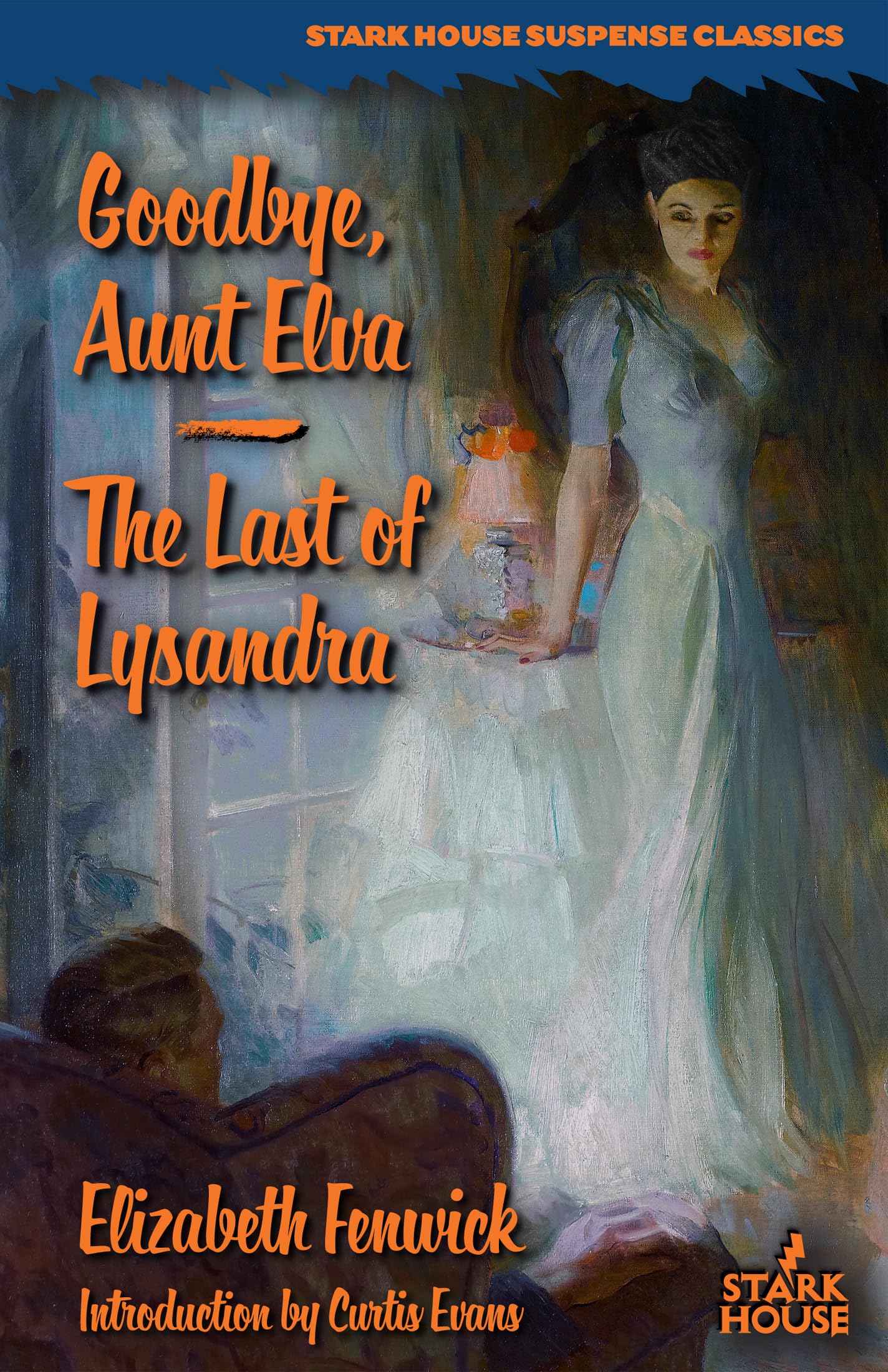



GOODBYE, AUNT ELVA Violet has a nice, new apartment next door to one of the older, run-down buildings in the neighborhood, where an elderly lady named Elva Ryan lives with her two companions, Mrs. Kay and her son Roddy. Violet doesn’t know her neighbors, but agrees to help out when Mrs. Kay asks her to visit Elva. But the doors quickly close behind her, and Violet finds out all too soon that Mrs. Kay has plans for her. The lawyers want to kick them all out, she tells Violet, and poor Elva can’t defend herself. So Violet must pretend to be Elva and tell the lawyers to go away. But what starts out as a reluctant act of mercy soon becomes a time of terror, because Mrs. Kay and Roddy have no intention of letting Violet go. They need an old lady to be “Elva,” and have decided that Violet is perfect for the job. THE LAST OF LYSANDRA When Winifred King is brought to Dr. Dickey with a knife wound in her arm, it’s Colonel Bagley’s job to follow up and see what happened at her home. A search of the family mansion turns up Winifred’s mother, Lysandra, dead from multiple stab wounds. But Winifred has no idea what happened. Nor do the neighbors across the street, who keep a close eye on the household. Lysandra and Winifred were the only ones staying there, but everyone agrees that absolutely no one wanted to deal with Lysandra. She had turned into a nasty drunk, prone to sudden rages, and everyone gave her a wide berth. But someone showed up at the house that day, someone who wasn’t as intimidated as the rest. And the only witness Bagley has is a fragile young girl who either doesn’t remember, or won’t talk. “The change from pipe dream into bad dream into horrifying nightmare is achieved with frightening precision.”—Anthony Price, Oxford Mail “A powerful little study in helplessness.”—Saturday Review “… full of quirky characters and dark secrets…”—London Observer Elizabeth Jane Phillips on April 5, 1916 in St. Louis, Missouri. After high school, she wrote poetry and an unpublished first novel which she destroyed when it was rejected by a publisher. She then enrolled in secretarial courses and became a French translator for two years. She adopted the pseudonym E. P. Fenwick in the early 1940s and resumed writing, publishing three detective mysteries with Farrar & Rinehart. After turning to mainstream writing for ten years as Elizabeth Fenwick, she returned to writing crime fiction with the suspense novel Poor Harriet. Fenwick married noted harpsichord maker, David Jacques Way, in 1950, and continued to publish more suspense novels until 1973. She died from Alzheimer’s Disease on November 20, 1996.