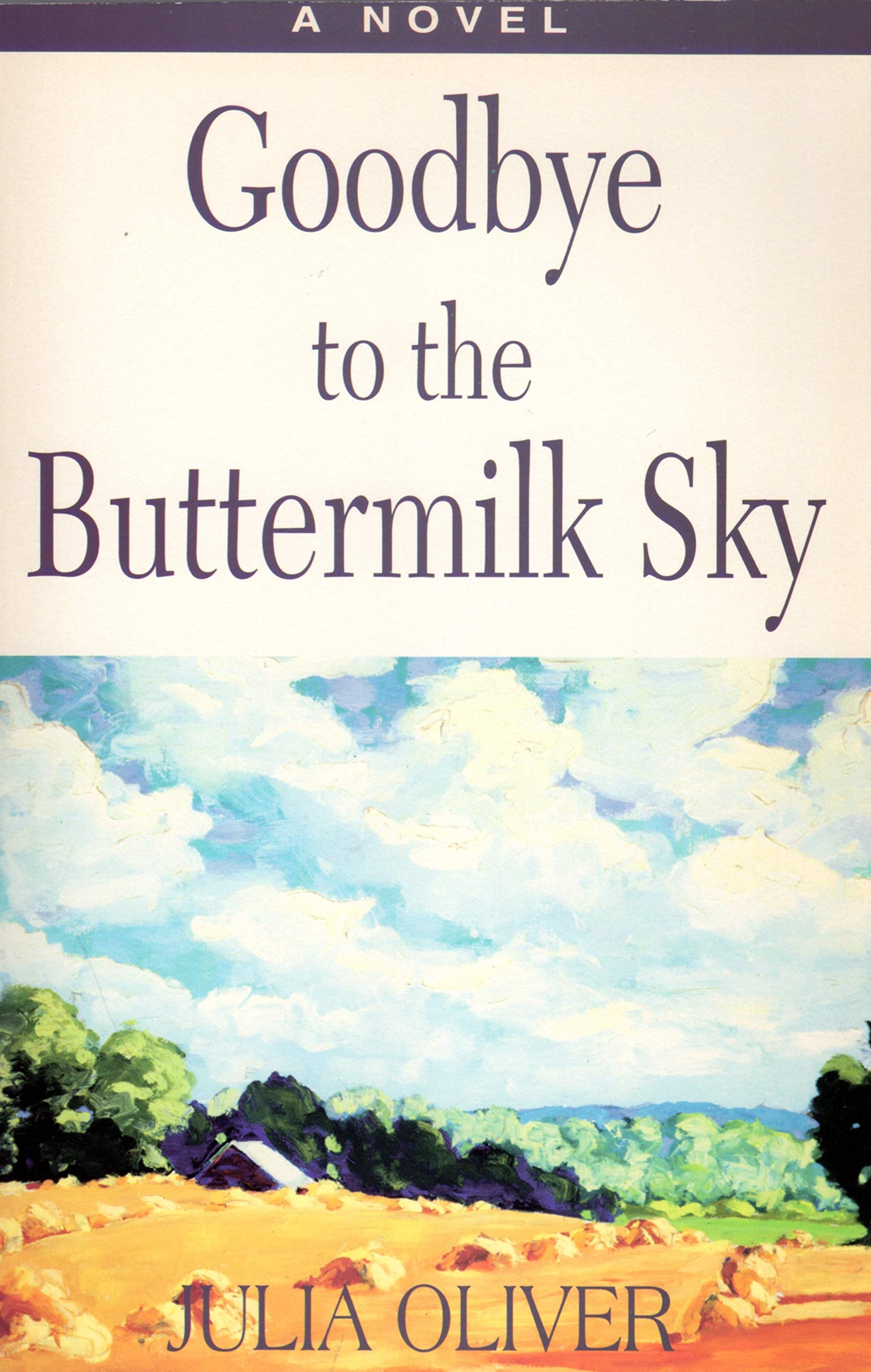



This highly praised first novel by fiction writer Julia Oliver is the story of one young woman's struggle with fidelity and identity in depression-era rural Alabama. A beautifully narrated novel of time and place, Goodbye to the Buttermilk Sky re-creates a southern summer when the depression and the boll weevil turned hopes to dust. With the extraordinary talent to make the reader see the Ball canning jars on the kitchen table, hear the clicks on the party line, and feel the bittersweet moments of 20-year-old Callie Tatum's first experiences with adult desire, Oliver portrays a young wife’s increasingly dangerous infidelity with cinematic precision and palpable suspense. Soon, with only her housekeeper as a confidant, Callie breaks society’s rules about race and class as well as her marriage vows. The result is a chain of events that will lead to tragedy and a woman’s stunning decision about love, passion, and the future of her life. Originally published in cloth in 1994, Goodbye to the Buttermilk Sky received considerable attention nationally and became a featured selection of the Quality Paperback Book Club. Its inclusion in the Deep South Books series from The University of Alabama Press will extend the book’s reach and its life, while offering new readers access to the enthralling story. The richly drawn, fully developed characters of Buttermilk Sky live on in the reader’s mind long after the book has been finished. Against the emotional and physical isolation of rural Alabama in 1938, the threads of family ties, whispered gossip, old secrets, and unfulfilled dreams weave a powerful, evocative story that captivates its reader until the very last word. Despite rather stiff early scenes and occasional lapses in its determinedly folkloric style, this first novel engages the reader as it gains momentum and refreshes a time-worn plot: city man seduces country girl. At 20, Callie Tatum is the wife of well-meaning but crude Russell, mother of an adored baby daughter, chief caretaker of her disabled father-in-law, and sincere practitioner of her husband's Baptist faith. An affair with a traveling insurance salesman, which generates both passion and deep guilt, is but the first of many staggering experiences that necessitate a wholesale redefinition of Callie's life and attitudes. Oliver's most successful passages achieve characterization through well-observed, detailed descriptions of rural life in Alabama during the Depression. Recommended for popular collections. Jane S. Bakerman, Indiana State Univ., Terre Haute Copyright 1994 Reed Business Information, Inc. A Bridges of Madison Countylike affair gone awry during the late Depression years. Oliver (Seventeen Times As High As the Moon, not reviewed) takes as her heroine 20-year-old Alabama housewife Callie Tatum--ripe for the picking, although not by her redneck husband, Russell, with whom she ``does it'' every night without satisfaction. When dapper Birminghamite Clifton Wade appears in his expensive car, Callie is sexually aroused and soon fulfilled. Although she talks about the deep understanding she has with Clifton, as far as the reader can tell it's just sex--against a wall, in a cheap motel, but mostly in the little house Russell built for her when they were first married. Callie feels no guilt or shame until events occur that suggest divine retribution: She miscarries Clifton's child, and his wife commits suicide. Callie ends the relationship, but the damage is done. Her ruined reputation leads to attempted rape, actual rape, and finally murder. The town proves itself to be parochial and mean-minded during a trial in which Callie is judged as harshly as the murderer. Even Callie's mother fails her when she advises Callie to continue her life after the trial as much as possible the way it was before. Callie's silent, unemotional father, however, surprises her by encouraging her to attempt more--which she does. This feminist twist gives little punch to a book in which punches are scarce, despite its racy and gruesome themes. Mixing matter-of-fact with overwrought, the tone certainly doesn't help: ``The train rumbled along as confidently as a marching hymn. The familiar countryside...flew by like pieces of dreams.'' Heavy on simile, light on substance, and ultimately forgettable. (Quality Paperback Book Club alternate selection; paperback rights to Plume) -- Copyright ©1994, Kirkus Associates, LP. All rights reserved. 1ST EDITION