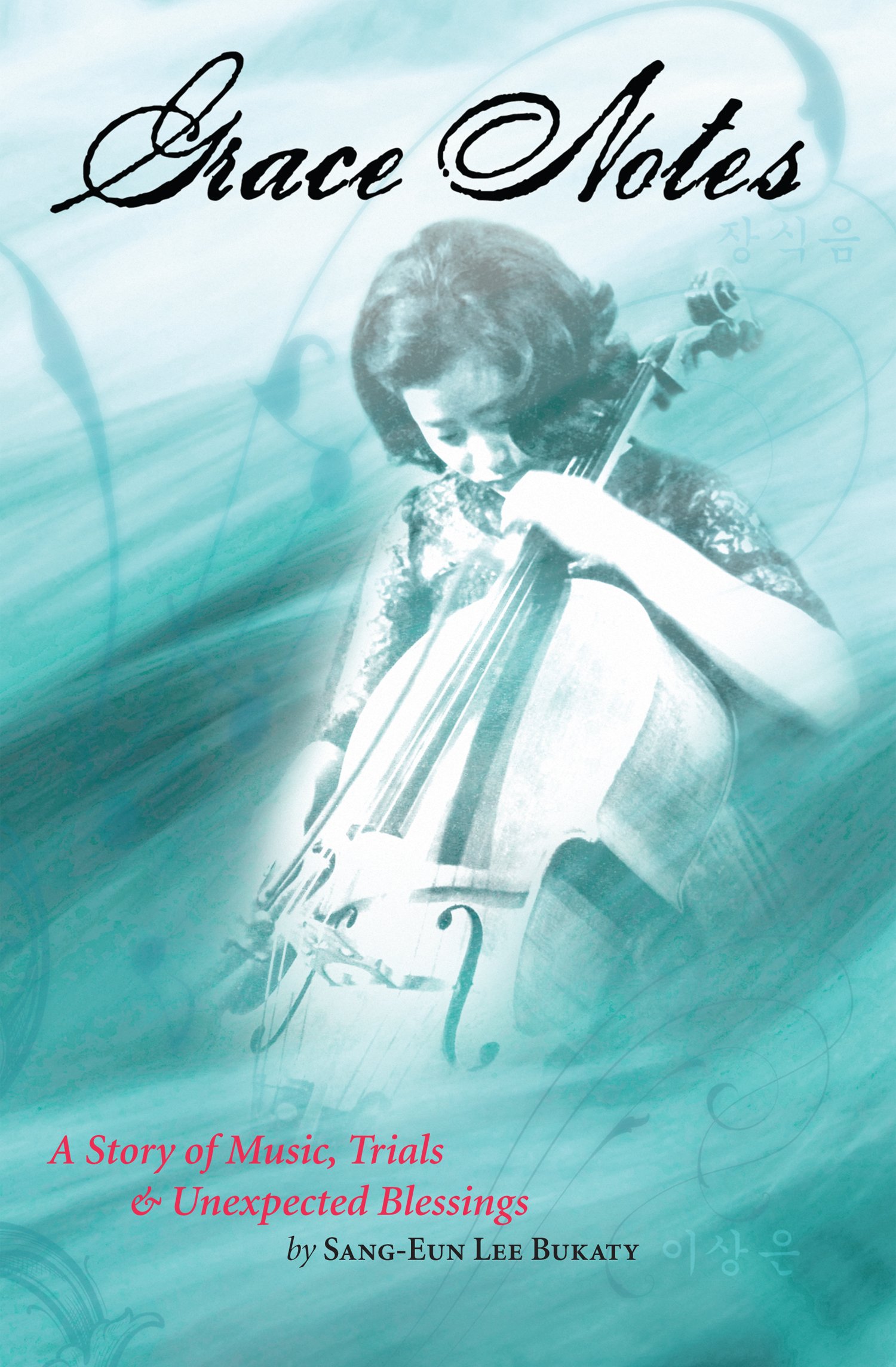
Grace Notes: A Story of Music, Trials and Unexpected Blessings
$14.95
by Sang-Eun Lee Bukaty



Grace notes are ornamental, but they heighten the characteristics of the music and complete the piece. Without them, the music wouldn't have soul, a music teacher once tells Sang-Eun. Sang-Eun is born the fifth child and youngest daughter of the wealthy politician's family in Seoul. From the beginning, she is destined for a purpose, because the misfortune of her birth during the Pacific war saves her family. When the Korean War breaks out, they escape again, as refugees in the southernmost part of Korea. When Sang-Eun finally returns to her beloved Seoul after the cease-fire, she faces her own personal war with a ruthlessly competitive academic-based society. Only when she takes up the cello does she find the path to national fame and recognition. But amid the performances and prizes, Sang-Eun still feels something is missing. She packs her bags for America to fulfill her dream of becoming a famous concert cellist. But along the way, she finds her true passion and learns unexpected lessons. Grace Notes is a timeless story that spans two cultures, two continents, and two languages as it speaks of the universal love connecting sister to sister, mother to daughter, and wife to husband. Dedication: This book is dedicated to my daughters, Terry, Kimmy and Michelle And all the Korean-American mothers and their second generation children Grace Notes is intelligent, heartbreaking and magnificently alive. Sang-Eun Lee Bukaty has an extraordinary gift for observation and language. Bukaty's memoir is a strong-willed, sensitive and deeply human tale of survival and true love. --Memoirs, Ink Sang Eun Lee s memoir, Grace Notes, is a fascinating text to introduce students to a genre of writing less read and a time period in the classroom often overlooked. The combination of historical events she experiences, her close attention to cultural elements of growing up in Korea and her career and immigrant experiences, can all be employed in fascinating ways in a literature, social studies or modern history course. The fact that Sang Eun Lee has a no-holds, honest barred approach to her own life and all her family and friends, engages the reader in ways fiction can not. The text begins with a very vivid account of her early years, tracing traditional events in a wealthy Korean family, and then graphically demonstrating the way the war tore apart families when Korea is divided. The vivid scenes could engage students who would otherwise just see the Korean War as another event to be memorized and recited for a test. Current students could relate to the challenges Sang Lee faces, especially her feelings of academic failure. Sang Eun Lee carefully develops the Confucian values at the core of the traditional family structure without ever coming out and directly addressing the sources. She also examines the way Christianity blends into their family life, both guiding and comforting her as the personal challenges grow for the narrator. Another timeless element of the piece is how gender plays such an important role in the lives of the various family members and expectations for Sang Eun Lee. The fact that she is one of the youngest girls and clearly in the shadows of her brother, highlights just how some elements of gender have changed since the 1950 s and others hold true, especially in the Korean family. The detailed preparation and failure at the school selection process is appealing to any reader, but Sang Eun Lee s ability to convey a sense of how the discovery of the Cello and the wonderful description of how the music transforms her sense of experiences, and eventual serves to drive her fate is something straight out of a good piece of literature. Another aspect of the memoir that could easily be employed to convey the universal nature of the similarities in cultures is her quest for a romantic partner. The emerging romance leads one to imagine where her life could go, had she actively pursued the relationship, choosing career over romance, a courageous choice for the time period. Sang Eun Lee is always discreet in her discussions of sexual behavior, making the text appropriate reading for the classroom discussion. Only at the very end of the tale, when she meets him later they have both establish very different lives, does the reader realize how many factors were at play in her youth. The dinner scene reminds any serious reader of literature of the end of Willa Cather s My Antonia in the heart- felt feeling and a sense of regret and confusion over their youthful actions and reactions. In a similar light, the details of how painful the immigrant experience is for Sang Eun Lee and how random events shape her life continue to reinforce what types of challenges each immigrant faces. Her ever-changing relationship with her sponsors, and their family, emerges to show how hard one must work to negotiate the unspoken cultural differences we meet in a multi cultural society- an essential lesson for today s students. Grace Notes chronic