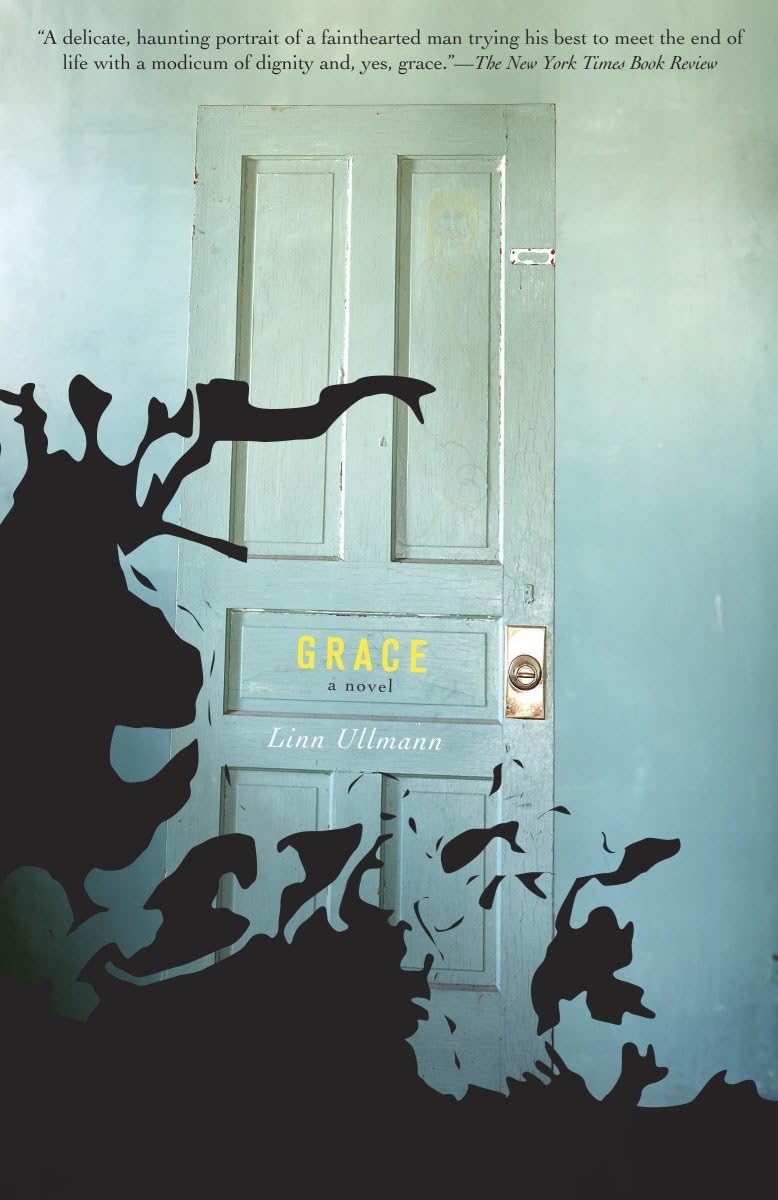



Morally intricate and full of sly humor, Grace is a touching and unexpectedly dramatic exploration of the territory between life and death. "Consistently absorbing . . . An elegant stylist with an original voice (and a top-notch translator, Barbara Haveland), Ullmann is especially good at capturing moments of poignancy, often with a trace of gallows humor.”– The New York Times Book Review When Johan was a boy, he bargained with Death, and in good time Death obligingly took his father. And when Johan was miserably married, Death kindly took his equine first wife, leaving him a tidy sum. But now, with the Reaper coming for him , Johan cries out for certainties, for control, for dignity. He enlists his adoring second wife, the grace of his otherwise mean existence, to be, “when he couldn’t fight any longer,” his reluctant angel of death. But as he drifts away into melancholic, hallucinatory recollection, the bonds of their mutual devotion gradually dissolve and the living and the dying begin their inevitable divergence. And as Johan, his wife beside him, slips under the solitary shadow he fears most, we are made to witness the muted tragedy of the Scandinavian way–now more and more our own way–of dying. Linn Ullmann has written a haunting meditation on mortality that nonetheless pulses with the aching beauty of life. “Slim but by no means slight . . . A delicate, haunting portrait . . . Consistently absorbing . . . An elegant stylist with an original voice (and a top-notch translator, Barbara Haveland), Ullmann is especially good at capturing moments of poignancy, often with a trace of gallows humor.” –Bruce Bawer, The New York Times Book Review “A powerful affirmation of the haunting beauty of ordinary human life and death.” – Washington Post Book World “Provocative . . . immensely compelling. Ullmann has an extraordinary talent for exploring relationships between people in love.” — The Baltimore Sun “A work of stunning emotional magnitude . . . Ullmann writes with a wondrously light, deft touch . . . Her pared-down portraits result in real characters who carry all the true-life weight of self-doubt and inner purpose . . . Very moving.”– Kirkus Reviews “Wonderful and chilling . . . Wrenching in its straight-ahead simplicity, lucid in its smooth, elegant translation, Ullmann’s novel resonates with a reader’s inner, subliminal fears of deterioration in the face of death.”– Booklist “Ullmann’s novel is brief, and her style sparse, but the tale is weighty and compelling.”– Library Journal When Johan was a boy, he bargained with Death, and in good time Death obligingly took his father. And when Johan was miserably married, Death kindly took his equine first wife, leaving him a tidy sum. But now, with the Reaper coming for "him, Johan cries out for certainties, for control, for dignity. He enlists his adoring second wife, the grace of his otherwise mean existence, to be, "when he couldn't fight any longer," his reluctant angel of death. But as he drifts away into melancholic, hallucinatory recollection, the bonds of their mutual devotion gradually dissolve and the living and the dying begin their inevitable divergence. And as Johan, his wife beside him, slips under the solitary shadow he fears most, we are made to witness the muted tragedy of the Scandinavian way-now more and more our own way-of dying. Linn Ullmann has written a haunting meditation on mortality that nonetheless pulses with the aching beauty of life. "From the Hardcover edition. Linn Ullmann is a graduate of New York University, where she studied English literature and began work on a Ph.D. She returned to her native Oslo in 1990 to pursue a career in journalism. A prominent literary critic, she also writes a column for Norway’s leading morning newspaper. She lives in Oslo with her husband and their children. Linn Ullmann’s Stella Descending is available in Anchor paperback. Translated from the Norwegian by Barbara Haveland. When, after an awkward pause, the young doctor delivered the latest diagnosis and began somewhat perfunctorily to describe the various treatment options, never really attempting to hide his certainty that this miserable thing would ultimately kill my friend Johan Sletten, Johan closed his eyes and thought of Mai's hair. The doctor was a fair-haired young man and could scarcely help it if his violet eyes would have looked better on a woman. He never spoke the word death. The word he used was alarming. "Johan!" the doctor said, trying to get Johan's attention. "Are you listening?" Johan resented being addressed so familiarly. Not to mention the doctor's shrill voice--you would think it had never finished breaking, or perhaps he'd been castrated by parents hopeful of some future for him as a eunuch. Johan had a good mind to make a point about first names and surnames, especially in light of the difference in their ages. The doctor was younger than Johan's son, to whom he hadn't spoken for eight years. But it w