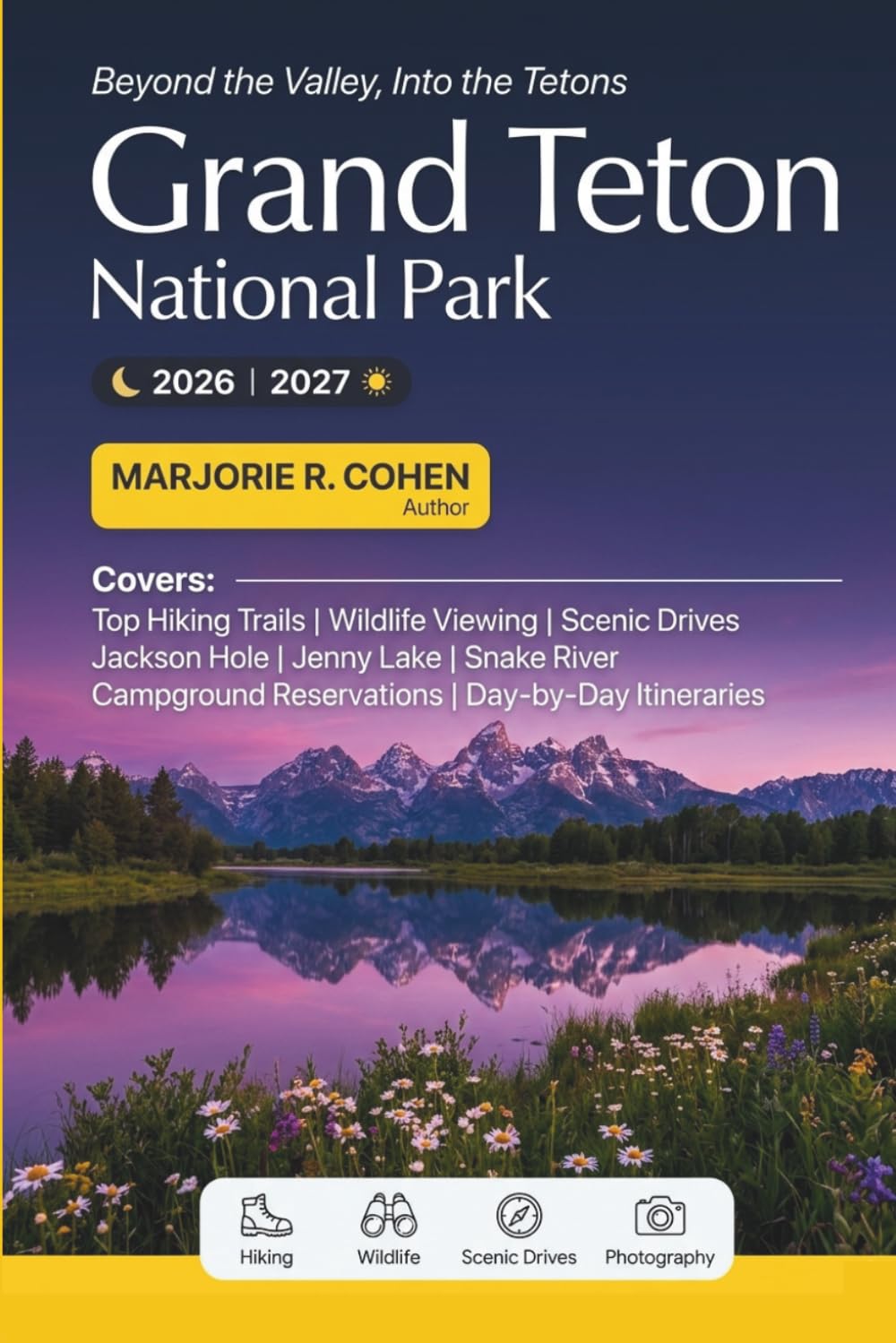
Grand Teton National Park Travel Guide 2026/2027: Plan the Perfect Wyoming Adventure with Top Hiking Trails, Wildlife Viewing, Scenic Drives, Jackson
$14.00
by Marjorie R. Cohen



Grand Teton National Park contains one of the most dramatic landscapes in North America. The Teton Range rises abruptly from the flat Jackson Hole valley floor with no foothills, a sheer wall of jagged granite peaks reaching 13,770 feet at the summit of Grand Teton itself. The park covers 310,000 acres of Wyoming wilderness and sits directly south of Yellowstone, making it one of the most visited and most wildlife-rich destinations in the national park system. This guide covers everything needed to plan and experience the park fully. WHAT THIS GUIDE COVERS: The guide opens with a complete introduction to Grand Teton National Park including its geology, history, and the wildlife corridors that connect it to the Greater Yellowstone Ecosystem. A dedicated highlights chapter covers the must-see experiences, from the Snake River Overlook at sunrise and the boat ferry to Hidden Falls and Inspiration Point at Jenny Lake to the wildlife viewing at Oxbow Bend and the historic Mormon Row barns with the Teton Range as a backdrop. EXPLORING THE PARK SECTION BY SECTION: Three dedicated chapters divide the park into northern, central, and southern sections. The northern section covers Jackson Lake, Colter Bay Village, Jackson Lake Lodge, Signal Mountain, Oxbow Bend, and Willow Flats. The central section covers the Jenny Lake area including String Lake, Leigh Lake, Cascade Canyon, and the Cathedral Group of peaks. The southern section covers the Moose area including the Craig Thomas Visitor Center, Chapel of the Transfiguration, Menor's Ferry Historic District, Taggart Lake, Bradley Lake, and the Moose-Wilson Road corridor. JACKSON, WYOMING: A dedicated chapter covers the town of Jackson immediately south of the park, the gateway town with the famous antler arch town square, dining, lodging, nightlife, the National Museum of Wildlife Art, and the National Elk Refuge winter sleigh rides. ACTIVITIES AND ADVENTURES: The activities chapter covers hiking, wildlife watching, boating and kayaking on Jackson Lake and Jenny Lake, fishing, cycling, horseback riding, guided climbing on Grand Teton, float trips on the Snake River, stargazing, and winter activities including cross-country skiing and snowshoeing. A complete hiking reference chapter covers every major trail in the park with distance, elevation gain, difficulty rating, water availability, and practical notes for each route. PLANNING TOOLS: The planning chapter covers the campground reservation system, entrance fees, annual passes, seasonal road openings and closures, shuttle services, and the logistics of combining Grand Teton with a Yellowstone visit. Day trips and excursions cover Yellowstone National Park to the north, the Bridger-Teton National Forest, Gros Ventre Wilderness, and the Wind River Range. Suggested itineraries cover one day, two days, three days, and one week for different travel styles including families, wildlife watchers, hikers, and photographers. The budget planning chapter covers all costs from entrance fees and campgrounds to lodging categories and activity pricing. A dedicated packing chapter covers every season from summer hiking to winter snowshoeing. THIS GUIDE IS FOR: First-time visitors planning their first Grand Teton trip. Families with children navigating the park safely. Wildlife photographers seeking the best locations and timing. Hikers planning everything from easy lake walks to strenuous backcountry routes. Visitors combining Grand Teton with Yellowstone on a single Wyoming trip. NOTE: Campground availability, trail conditions, road access, entrance fees, and wildlife activity are managed by the National Park Service and subject to change. Verify current conditions before you leave ALL INFORMATION WERE VERIFIED IN MARCH 2026