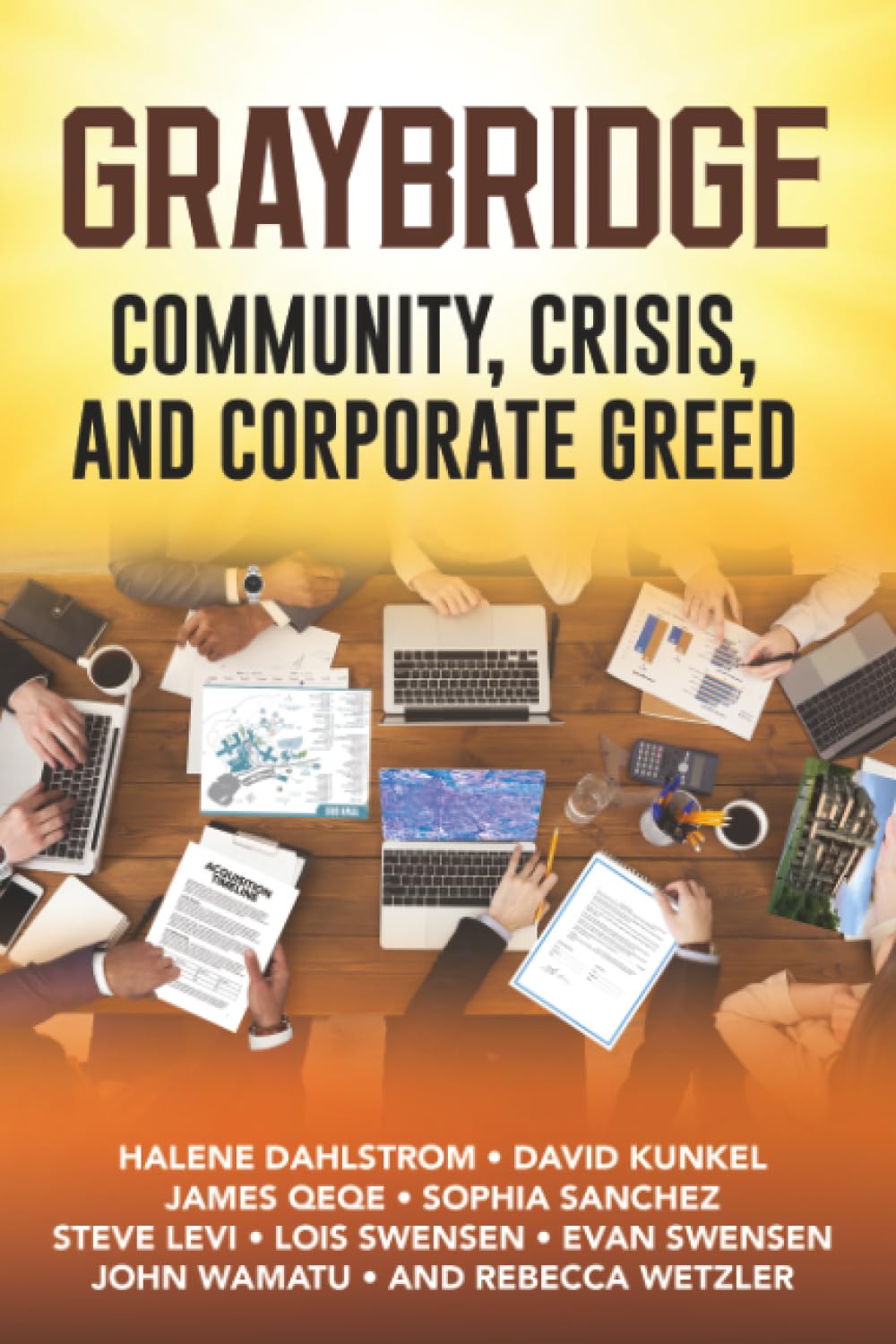



Mary Jensen is up before dawn, calculating which bills to pay. Mathias Greenlee stares at 200 termination files, weighing quarterly earnings against his grandfather's legacy. Carlos and Leila, rebuilding after fleeing Beirut, recognize patterns Americans haven't learned to see. Brad Delaney has maintained the factory equipment for thirty years and wonders if his skills matter to anyone. Tony Castillo studies for a contractor's license he can't afford to use. And Matilda Moore, seventy-six years old, has spent fifty years building community infrastructure that fire and fraud now threaten to destroy. When wildfire forces an evacuation, these strangers discover what connects them: the same corporation has been extracting wealth from their community for years, and the crisis is no accident. Behind the flames lies a web of shell companies, manufactured debt, and a scheme to liquidate an entire town's future. But exposing the truth is only the beginning. Building something to replace what's been taken—a worker-owned cooperative, a democratic alternative to extraction—proves harder than resistance. Democracy is slower than hierarchy. Collective decisions are messier than executive orders. And survival is uncertain when the whole economic system is designed to make alternatives fail. Graybridge is a novel about what happens when ordinary people stop waiting for someone else to fix things—and discover that the work of building together is harder, slower, and more worthwhile than anything they could do alone.