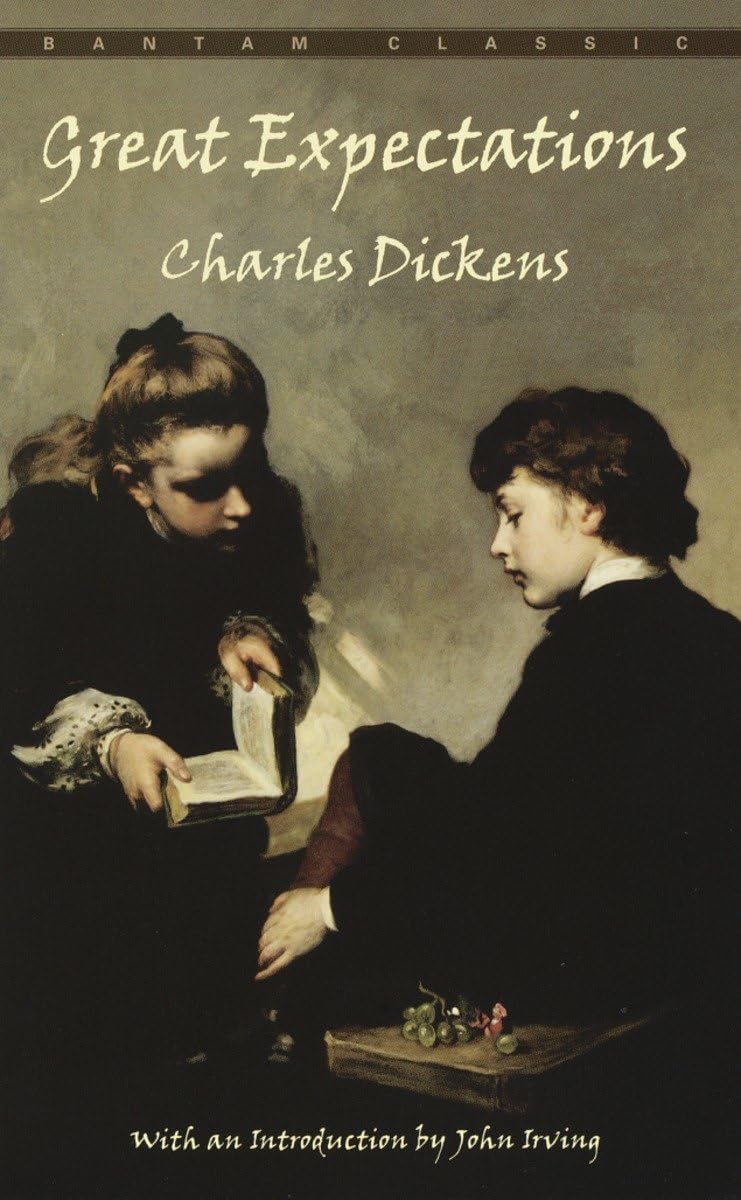



Introduction by John Irving • Nominated as one of America’s best-loved novels by PBS’s The Great American Read Pip, a poor orphan being raised by a cruel sister, does not have much in the way of great expectations—until he is inexplicably elevated to wealth by an anonymous benefactor. Full of unforgettable characters—including a terrifying convict named Magwitch, the eccentric Miss Havisham, and her beautiful but manipulative niece, Estella, Great Expectations is a tale of intrigue, unattainable love, and all of the happiness money can’t buy. “ Great Expectations has the most wonderful and most perfectly worked-out plot for a novel in the English language,” according to John Irving, and J. Hillis Miller declares, “ Great Expectations is the most unified and concentrated expression of Dickens’s abiding sense of the world, and Pip might be called the archetypal Dickens hero.” "No story in the first person was ever better told." In the marshy mists of a village churchyard, a tiny orphan boy named Pip is suddenly terrified by a shivering, limping convict on the run. Years later, a supremely arrogant young Pip boards the coach to London where, by the grace of a mysterious benefactor, he will join the ranks of the idle rich and "become a gentleman." Finally, in the luminous mists of the village at evening, Pip the man meets Estella, his dazzingly beautiful tormentor, in a ruined garden--and lays to rest all the heartaches and illusions that his "great expectations" have brought upon him. Dickens's biographer, Edgar H. Johnson, has said that--except for the author's last-minute tampering with his original ending-- Great Expectations is "the most perfectly constructed and perfectly written of all Dickens's works." In John Irving's Introduction to this edition, the novelist takes the view that Dickens's revised ending is "far more that mirror of the quality of trust in the novel as a whole." Both versions of the ending are printed here. In the marshy mists of a village churchyard, atiny orphan boy named Pip is suddenly terrified by ashivering, limping convict on the run. Yearslater, a supremely arrogant young Pip boards the coachto London where, by the grace of a mysteriousbenefactor, he will join the ranks of the idle richand "become a gentleman." Finally, in theluminous mists of the village at evening, Pip theman meets Estella, his dazzingly beautifultormentor, in a ruined garden--and lays to rest all theheartaches and illusions that his "greatexpectations" have brought upon him. Dickens'sbiographer, Edgar H. Johnson, has said that--exceptfor the author's last-minute tampering with hisoriginal ending-- Great Expectations is "the most perfectly constructed andperfectly written of all Dickens's works." In JohnIrving's Introduction to this edition, thenovelist takes the view that Dickens's revised ending is"far more that mirror of the quality of trust inthe novel as a whole." Both versions of theending are printed here. In the marshy mists of a village churchyard, a tiny orphan boy named Pip is suddenly terrified by a shivering, limping convict on the run. Years later, a supremely arrogant young Pip boards the coach to London where, by the grace of a mysterious benefactor, he will join the ranks of the idle rich and "become a gentleman." Finally, in the luminous mists of the village at evening, Pip the man meets Estella, his dazzingly beautiful tormentor, in a ruined garden--and lays to rest all the heartaches and illusions that his "great expectations" have brought upon him. Dickens's biographer, Edgar H. Johnson, has said that--except for the author's last-minute tampering with his original ending--"Great Expectations is "the most perfectly constructed and perfectly written of all Dickens's works." In John Irving's Introduction to this edition, the novelist takes the view that Dickens's revised ending is "far more that mirror of the quality of trust in the novel as a whole." Both versions of the ending are printed here. George Bernard Shaw (1856–1950) was a leading playwright of the twentieth century. His plays include Man and Superman (1905), Major Barbara (1905), Pygmalion (1913), and Saint Joan (1923). Chapter I. My father's family name being Pirrip, and my christian name Philip, my infant tongue could make of both names nothing longer or more explicit than Pip. So, I called myself Pip, and came to be called Pip. I give Pirrip as my father's family name, on the authority of his tombstone and my sister – Mrs. Joe Gargery, who married the blacksmith. As I never saw my father or my mother, and never saw any likeness of either of them (for their days were long before the days of photographs), my first fancies regarding what they were like, were unreasonably derived from their tombstones. The shape of the letters on my father's, gave me an odd idea that he was a square, stout, dark man, with curly black hair. From the character and turn of the inscription, "Also Georgiana Wife of the Above," I dr