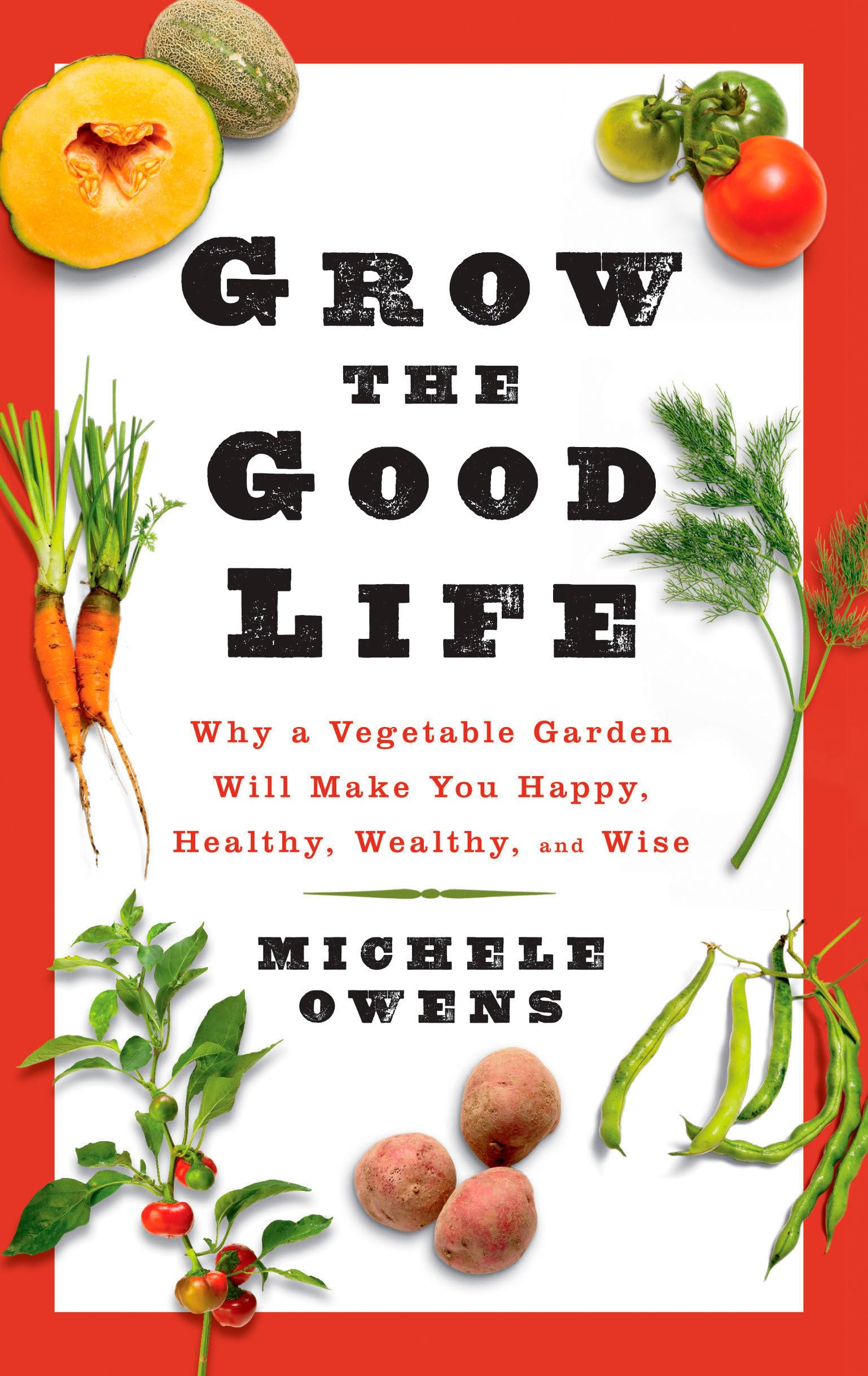
Grow the Good Life: Why a Vegetable Garden Will Make You Happy, Healthy, Wealthy, and Wise
$14.99
by Michele Owens



A lively, passionate argument for the backyard vegetable garden, drawing on science, history, and stories from the author's garden. Our parents saw supermarkets and processed foods as the height of convenience. But nothing is more convenient than grocery shopping in the backyard. A vegetable garden offers the best defense against rising food prices, the most environmentally sound way to eat, and better exercise than any gym. It will turn anyone into a wonderful cook, since nothing tastes more vibrant than homegrown. And it can take less time every week than a trip to the supermarket. In Grow the Good Life, Michele Owens, an amateur gardener for almost two decades, makes an entertaining and persuasive case for vegetable gardens. She starts with two simple but radical ideas: Growing food on a small scale is easy, and it is absurdly rewarding. With her wry, funny, and accessible approach, Owens helps beginning gardeners overcome obstacles that keep them from planting a few seedlings every spring. She explains why dirt isn't dirty; the health benefits of growing one's own food; and that vegetable gardens are not antithetical to the frantic pace of modern life, but simple and undemanding if intelligently managed. Grow the Good Life is not just another how-to. Instead, it will teach you the true fundamentals of vegetable growing: how to fit a garden into your life and why it's worth the trouble. “Breezy, cantankerous and funny . . . O wens's warm, enthusiastic, bossy-boots tone will make you want to swipe your credit card in soil.” — New York Times Book Review “Every once in a while, it's good for the human spirit to bump into someone whose passions are undeniable, even indefatigable. Owens . . . is that indefatigably passionate someone.” — Chicago Tribune MICHELE OWENS is a cofounder of Garden Rant, one of the most popular and influential gardening blogs. She lives in Saratoga Springs and Salem, NY. ONE Why Don't Americans Garden? On March 20, 2009, the First Lady of the United States did something unprecedented in post-World War II America. She picked up a spade and broke ground for a vegetable garden at the White House. Clearly, this was more of a cultural statement than a physical challenge she'd be taking on personally. Mrs. Obama's attire for the groundbreaking--what appeared to be a dry-clean-only wool sweater and wool pants tucked into fashiony motorcycle boots--was so inappropriate for shovel-work, it made gardeners everywhere smile. But as a statement, that White House garden is just superb. Somebody has to say it: Growing vegetables is a perfectly sensible part of running a household, even a household as elegant as the Obamas'. This is something that clearly has not occurred to most of our countrymen. In fact, I almost never go for a walk or for a drive without being struck by how many big, sunny yards I see and how very few vegetables I see in them. This is true in rural Washington County, New York, where I lived for a dozen years and where I now have a small weekend house and a big vegetable garden. It's certainly true in the small, lively city of Saratoga Springs, New York, where I lead my weekday existence. And it's trebly true in suburban Bergen County in the Garden State of New Jersey, where I grew up. Drive down Franklin Turnpike from Ramsey to Allendale on a sunny day in early May, and you will be assaulted by an insane exuberance of lilacs, ornamental cherries, magnolias, and crabapples in bloom--not to mention the cheerfully clashing colors of their flowers. The suburban yards there are lush; the bushes, trees, and grass all green and healthy; the soil clearly excellent; yet in many years of visiting my family, I have stumbled across only two vegetable gardens. The first was a small one next to an unkempt old house that suggested both an elderly occupant and economic necessity; the second, also small, is maintained by my sister-in-law Na, who is Thai and a professional cook. Unlike her fellow suburbanites, Na comes from a gardening culture, knows it's no big deal to stick a few of her kids' favorite vegetables into the ground, and knows they taste better than what you can buy even in the fanciest supermarket. For years, she worked for organic grocer Whole Foods, but preferred her own vegetables even to what she could buy at a discount there. Strangely enough, if you want to see vegetable gardens, you might do better in a big city like Detroit or Washington or Boston, where there are real grow-your-own-food movements in neighborhoods largely ignored by supermarket chains and activists who use community gardens to erase urban blight, as well as lots of hip young people who understand the glamour of working the soil. The United States Department of Agriculture confirms how little backyard farming really occurs in America. It has records dating back to 1869 that consider the dollar value of homegrown food compared to total expenditures on food eaten at home. The last time the n