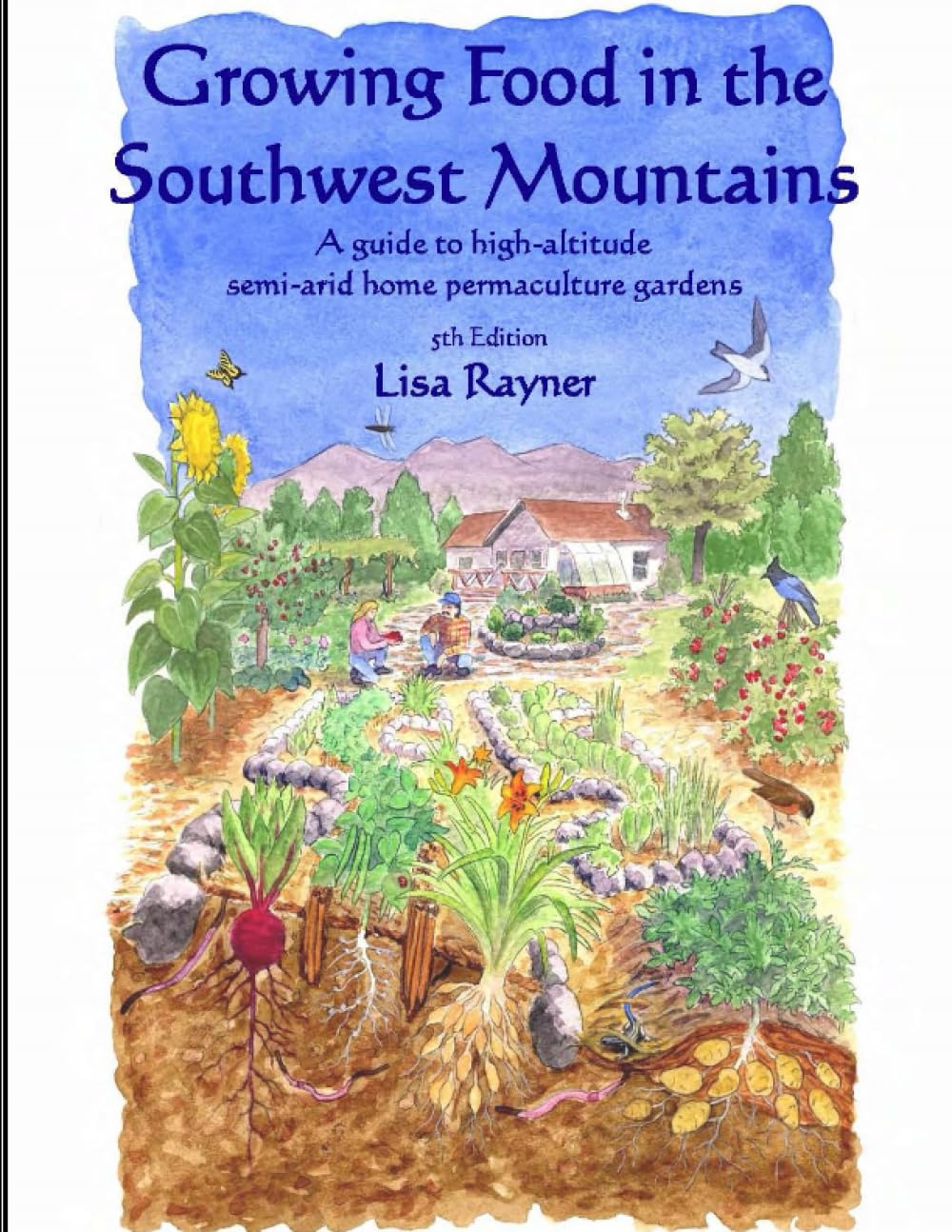
Growing Food in the Southwest Mountains: A guide to high altitude, semi-arid home permaculture gardens
$32.95
by Lisa Rayner



FIFTH edition © 2023, Lisa Rayner Books, 261 pages, 8.5 inches x 11 inches in size. NEW information. Lisa Rayner has lived gardening experience in both Santa Fe, New Mexico and Flagstaff, Arizona. Both cities are at 7,000 feet elevation, but have different temperatures, precipitation, soils, and ecozones. Permaculture works with the inherent characteristics of plants, animals and the soil microbiome to create self-sustaining garden ecosystems. This book helps you grow food under challenging conditions. Growing Food in the Southwest Mountains provides solutions for dry weather, high winds, intense sunlight, shade, seasonal and day/night high temperature fluctuations, poor soil, insect pests, weeds and other gardening challenges in the high-elevation Southwest. An expanded list of fruit, herbs, vegetables, beans, grains, nuts and seeds. Detailed planting information with water, sun and soil needs, USDA zones, pollination requirements and more. - A 2023 look at how climate change is altering gardening at high elevations in the Southwest. - Why we need to recreate local food systems in an era of climate change and resource depletion. - A description of permaculture garden design for our bioregion including a chapter on creating plant guild ecosystems in harmony with local wild ecosystems and wildlife. Learn to attract native pollinators and other beneficial insects and birds to your garden while keeping out garden pests. - Chapters on improving local soils, rainwater harvesting, greywater reuse, xeriscaping and other efficient garden watering methods, cold climate gardening in the semi-arid Southwest, gardening in sunny, shady and windy conditions, planting windbreaks, protecting plants from hail, fireproofing your yard, dealing with garden pests and diseases in an ecological manner, choosing seeds and seedlings, detailed seedling-raising information, seed saving and more. - A brief history of Southwestern gathering, horticultural, agricultural and food traditions of Native Americans and European-American settlers. Creating a new bioregional cuisine from these traditions and traditions from similar ecosystems around the world such as the Andes Mountains and Tibetan Plateau. - Appendices include a detailed food plant glossary, recipe ingredient substitutions with foods grown locally, and a large resource section of books, seed catalogs, botanical gardens, arboretums and permaculture institutes with updated links for 2023. - A comprehensive index. This book will be most useful to you if you live in the pinyon-juniper or ponderosa pine/Jeffrey pine forests between 6,500-8,500 feet in Arizona, New Mexico, Colorado, Utah, Nevada and California. Most of the information is useful to gardeners living below 6,500 feet in the desert or in the aspen-spruce-fir ecozone. "Lisa Rayner’s book removes much mystery and guesswork involved in the endeavor of growing food in these harsh and, at times, unforgiving climates. Lisa draws from her extensive background in ecology and permaculture to create a holistic approach to gardening. The book contains critical information on microclimates and soils and on selecting appropriate species and varieties that are adapted to high elevations and short growing seasons. She also incorporates helpful information on the history of growing food in the Southwest, describes guilds of species that create thriving forest gardens, and recommends appropriate times to plant your seeds and starts. The appendices, which include a list of food substitutes, a glossary of food crops, and several pages of additional resources are well worth the price of the book. I highly recommend this book for anyone in the Southwest Mountains who is serious about growing their own food." — Judith D. Springer Co-editor of Field Guide to Forest & Mountain Plants of Northern Arizona