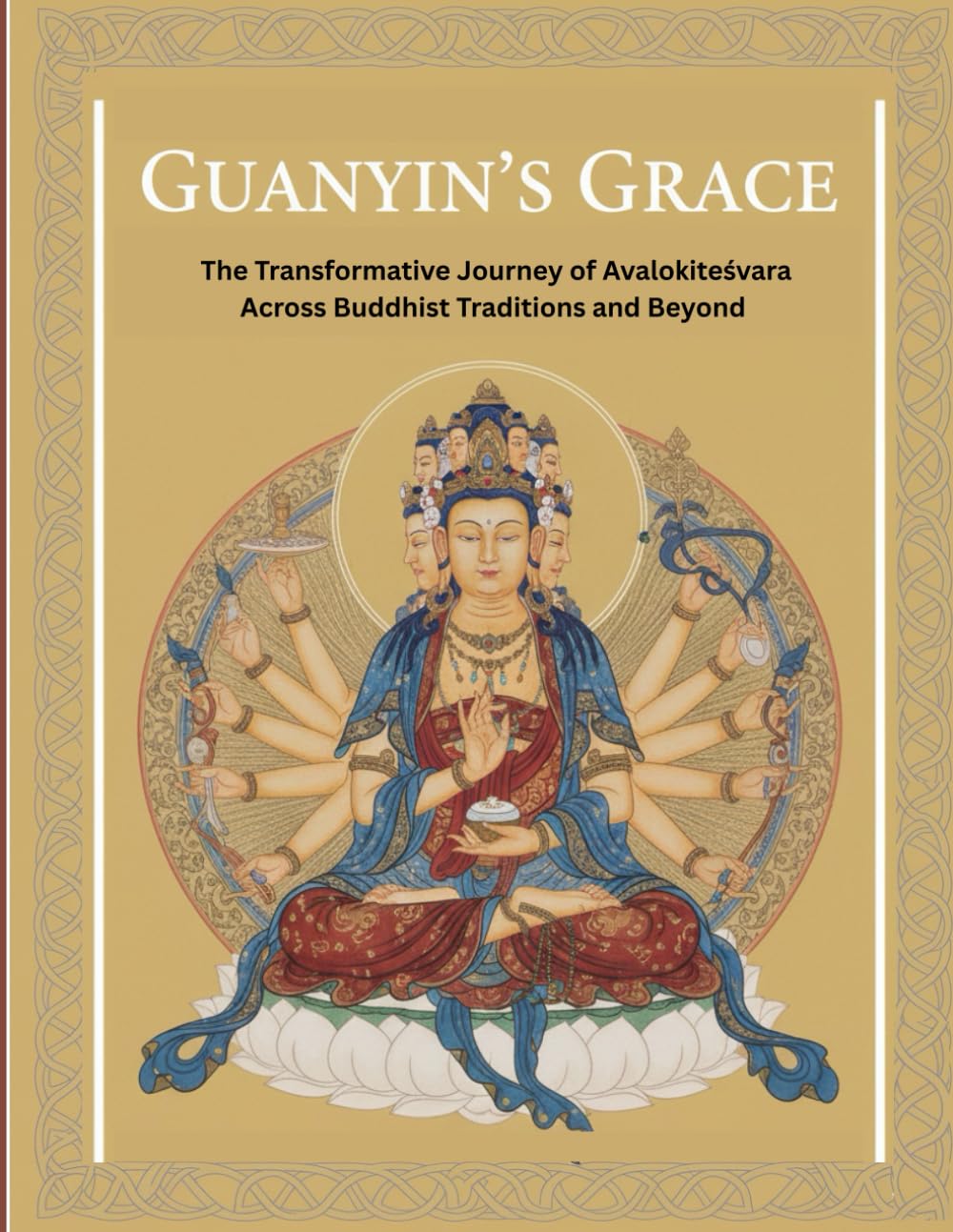
Guanyin’s Grace: The Transformative Journey of Avalokiteśvara Across Buddhist Traditions and Beyond
$12.99
by Mohan Chandra Uprety



Guanyin’s Grace: The Transformative Journey of Avalokiteśvara Across Buddhist Traditions and Beyond offers a profound exploration into the evolution and enduring significance of Avalokiteśvara, one of Buddhism’s most beloved Bodhisattvas. Known for her boundless compassion and grace, Avalokiteśvara’s journey from ancient Buddhist texts to her transformation into Guanyin is the focus of this book. By tracing the deity's evolution across time, cultures, and spiritual traditions, the book invites readers to witness the unfolding of her wisdom and healing presence, both in mythological and real-world contexts. The narrative begins with Avalokiteśvara’s early representations in the Pali Canon, where the Bodhisattva of Compassion first takes form. From there, the book delves into the gradual evolution of Avalokiteśvara within Mahayana Buddhism, where she begins to take on various forms, each symbolizing a different aspect of compassion. The book pays special attention to the Lotus Sutra, one of the central texts of Mahayana Buddhism, where Avalokiteśvara’s role as the embodiment of mercy and compassion is solidified. The exploration of the "33 Manifestations" of Avalokiteśvara highlights her versatile ability to appear in different forms to aid all sentient beings. As the book moves toward her transformation into Guanyin in Chinese Buddhism, it uncovers the intricate merging of local deities and folk beliefs with Buddhist teachings, leading to a deep re-imagining of Avalokiteśvara as a maternal, protective figure. Guanyin, depicted as a compassionate, often feminine presence, resonates strongly within Chinese spirituality, where she is regarded as both a protector and a healer. The text illuminates her role in shaping Chinese culture, particularly in devotional practices and the ritualistic offerings made to her in temples across the country. The journey continues as the book explores Guanyin’s adaptation in Japan and Korea, where she is revered under the names Kannon and Kwanseum. In Japan, the Bodhisattva’s role evolves further, blending with Shinto beliefs and becoming a source of compassion for all beings, while in Korea, Guanyin is seen as an essential figure in both Buddhist and local traditions. Each region’s unique interpretations of Guanyin’s role serve as a testament to her universal appeal and enduring grace. The book also explores Guanyin’s significant presence in Tibetan Buddhism, where she manifests as Chenrezig, the deity whose mantra, “Om Mani Padme Hum,” is one of the most widely chanted mantras in the Buddhist world. Through this examination, readers learn how Guanyin’s image continues to evolve within Tibetan spiritual practices, where her compassion becomes a guiding force for those seeking liberation from suffering. Moving beyond Buddhism, the book examines Guanyin’s impact on East Asian folk traditions, where she transcends Buddhist doctrine and becomes a widely venerated symbol of feminine divinity. Her widespread influence is also reflected in the growing presence of her image in the Western world, where Guanyin is embraced not only as a spiritual figure but as a symbol of contemporary feminism and compassion. Ultimately, Guanyin’s Grace is a compelling narrative that not only traces the historical and mythological roots of Avalokiteśvara and Guanyin but also invites readers to reflect on how her compassion continues to inspire and guide spiritual seekers worldwide. This book offers a rich, immersive journey into the heart of one of the most cherished figures in Buddhist traditions, providing readers with deep spiritual insights, meditative practices, and the transformative power of Guanyin’s grace.