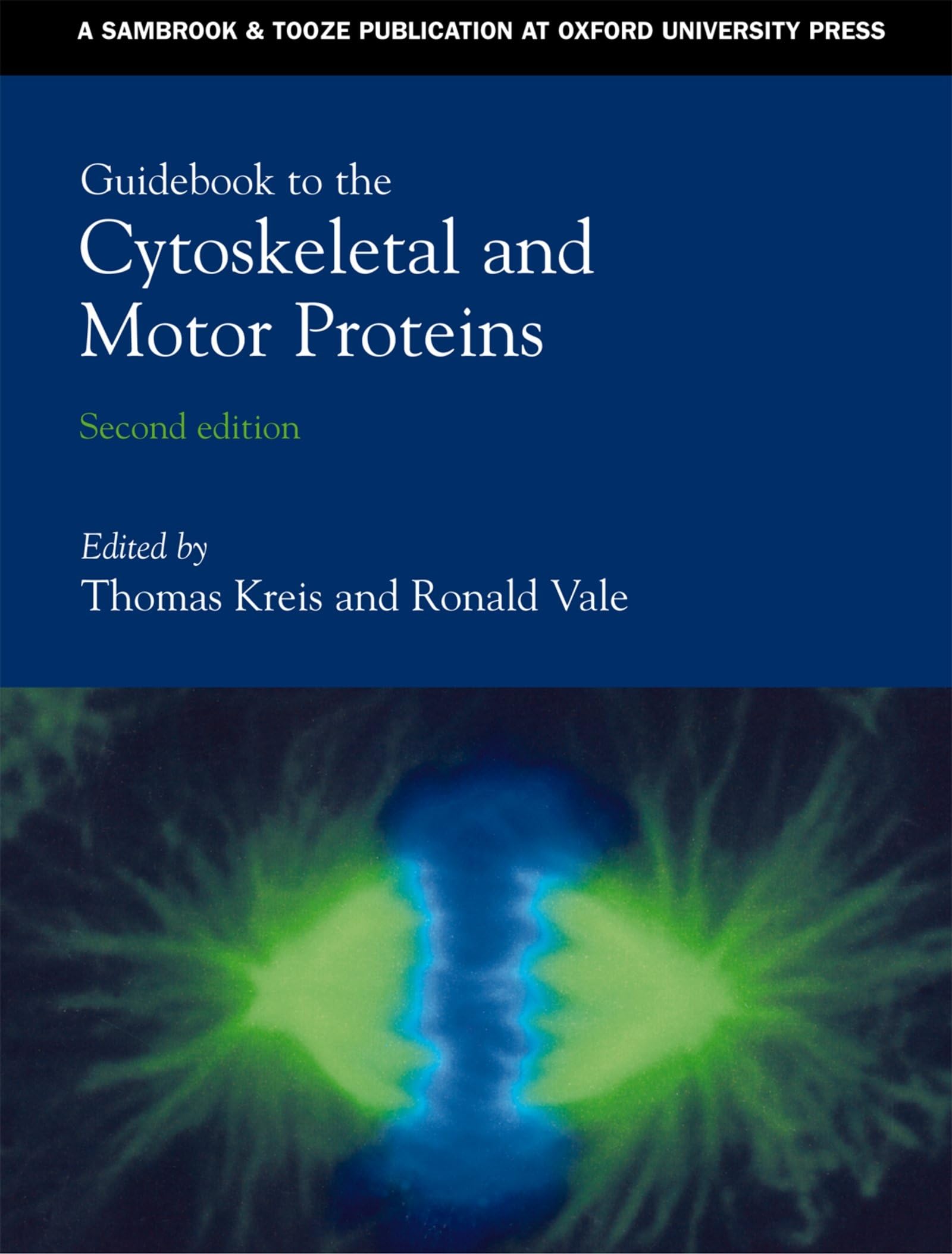



Since the first edition of Guidebook to Cytoskeletal and Motor Proteins , many new and important discoveries have been made on the structure and function of proteins involved in the microfilament, microtubule and intermediate filament systems in cells. This book collects much of the recent information on this diverse range of eukaryotic proteins, their genes, and the roles they play in cell structure, motor function, and signaling. Like other guidebooks in this series, this volume provides precise and up-to-date information on an important class of biological molecules, enabling both newcomers and specialists to gain access to unfamiliar work. The book begins with a comprehensive look at the structure and function of cytoskeletal actin, tubulin, and intermediate filaments and their associated proteins and continues with coverage of proteins that are involved in new filament systems. A section on molecular motors and associated proteins details all that is currently known about the major motor protein families and associated proteins in the motor complex. As well, a section on organelle structural proteins carefully describes the roles these proteins have in efficient intracellular communication and function. This book is perfect for graduate students and researchers in biochemistry, cell biology and biomedical sciences and will prove itself a useful tool to nonprofessionals interested in molecular biology. "The book is essentially a concise encyclopedia of these proteins. The chapters have a tight and similar organization; all are short and informative. Each related group of proteins is introduced by a brief and well thought out chapter. This is an excellent book that would be of use to a researcher or anyone who wished to find definitions, or learn about cellular localizations, possible functions, systems studied in, etc., regarding the very large number of cytoskeletal and motor proteins in dozens of species, systems, and cell types. To pack all this information into a single volume is an admirable achievement. The book is reasonably priced and is worth having on the bookshelf of any cell or molecular biologist." -- Doody's Kreis died September 1998.