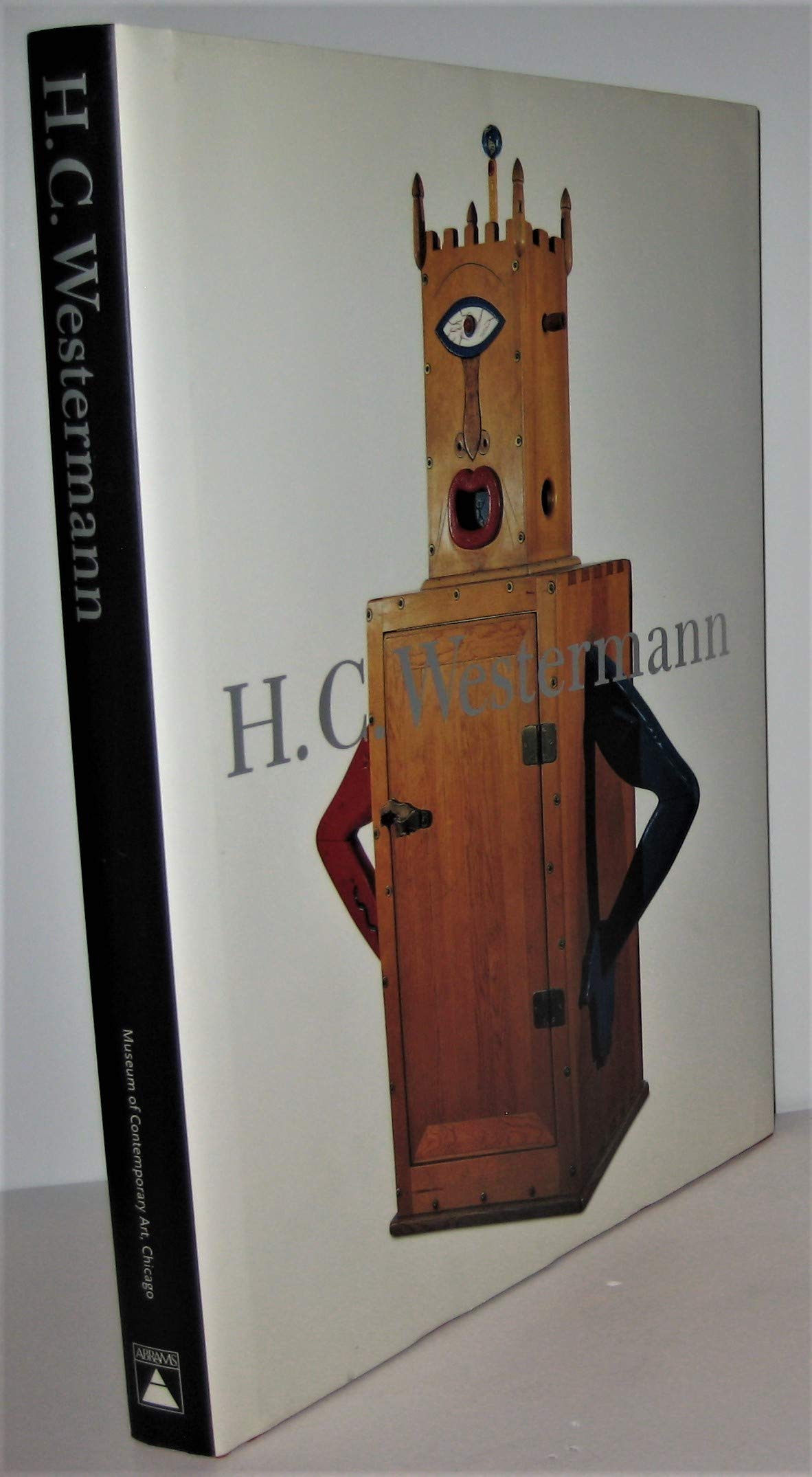



The irony and antic sense of humor that animate the work of H. C. Westermann (19221981) and make it so accessible are evident on every page of this volume, the first comprehensive study of the artist in over 20 years. Published to accompany a major traveling exhibition of Westermanns sculpture, the book looks at how defining themes central to 20th-century Americathe horror and disillusionment of war, the mythology of the American utopia, and Hollywood and mass mediashaped his thought and his art. Magnificent color illustrations accompany essays by Robert Storr, who evaluates Westermann in the context of 20th-century art; Lynne Warren, who looks at his years in Chicago in the 1950s; Dennis Adrian, a longtime friend, who surveys the artists entire oeuvre; and Michael Rooks, who examines his most elaborate achievement, the house and studio in Connecticut that the artist designed and built by hand from 1969 to 1981. H.C. Westermann's sculptures and constructions follow no models and are unique in modern American art. Direct, simple objects that achieve great sophistication and subtlety, they make profound comments on society and the human condition without being overtly burdened by theory. Westermann grew up in L.A., "great city of the vernacular," where Hollywood films had a larger impact on him than fine arts. One of the authors describes him as an "American everyman." Idiosyncratic, a loner in his work though not his personal life, he trained in Chicago, then settled in rural Connecticut rather than self-conscious New York (where in 1959 his first show was deflated by the critics). Besides being the catalog of an exhibition of Westermann's work organized by the Museum of Contemporary Art in Chicago, H.C. Westermann is the best monograph on the artist to date. Four lively essays describe his career and analyze his work. One of his defining experiences, witnessing the loss of a ship with 2,000 lives as a marine in WWII, resulted in a series of sculptures that he titled Death Ships , meticulously conceived in a variety of materials, from dollar bills to ebony. He exorcized his demons and was a fine friend, neighbor, and husband. Happily married and a consummate craftsman, he came to "equate the strength and beauty of a dovetail joint with the foundation of a good home and a good life." The integrity of the man and significance of his work are well served by this attractively produced study. --John Stevenson Twenty years after his death, Westermann, a great if not yet fully appreciated American sculptor, is accorded a major traveling exhibition and this pioneering and handsomely illustrated overview. Curator Storr and his distinguished contributors, including art critic Dennis Adrian, neatly combine biographical and critical perspectives to illuminate the artist's masterfully crafted and psychologically acute creations. Storr reflects on the tremendous impact Westermann's combat duty as a marine had on his worldview and work, which are characterized by a sharp sense of paradox and sardonic humor. Built with tender regard for his materials, especially wood (a reflection of his love of nature), Westermann's death ships, mystery houses, secret-filled boxes, and machinelike variations on the human form embrace both our quest for security and refuge and the unavoidable precariousness and absurdity of life. Vital, mischievous, and down-to-earth, Westermann believed in hard work, possessed a keen aesthetic, and succeeded brilliantly in transmuting deep emotion into a folksy surrealism that draws viewers in with its quirky charm and then ambushes them with its provocative powers. Donna Seaman Copyright © American Library Association. All rights reserved Dennis Adrian is an art critic, historian, and independent curator living in Chicago. Michael Rooks is assistant curator at the Museum of Contemporary Art in Chicago. Robert Storr is senior curator at the Museum of Modern Art in New York. Lynne Warren is curator at the Museum of Contemporary Art in Chicago. Used Book in Good Condition