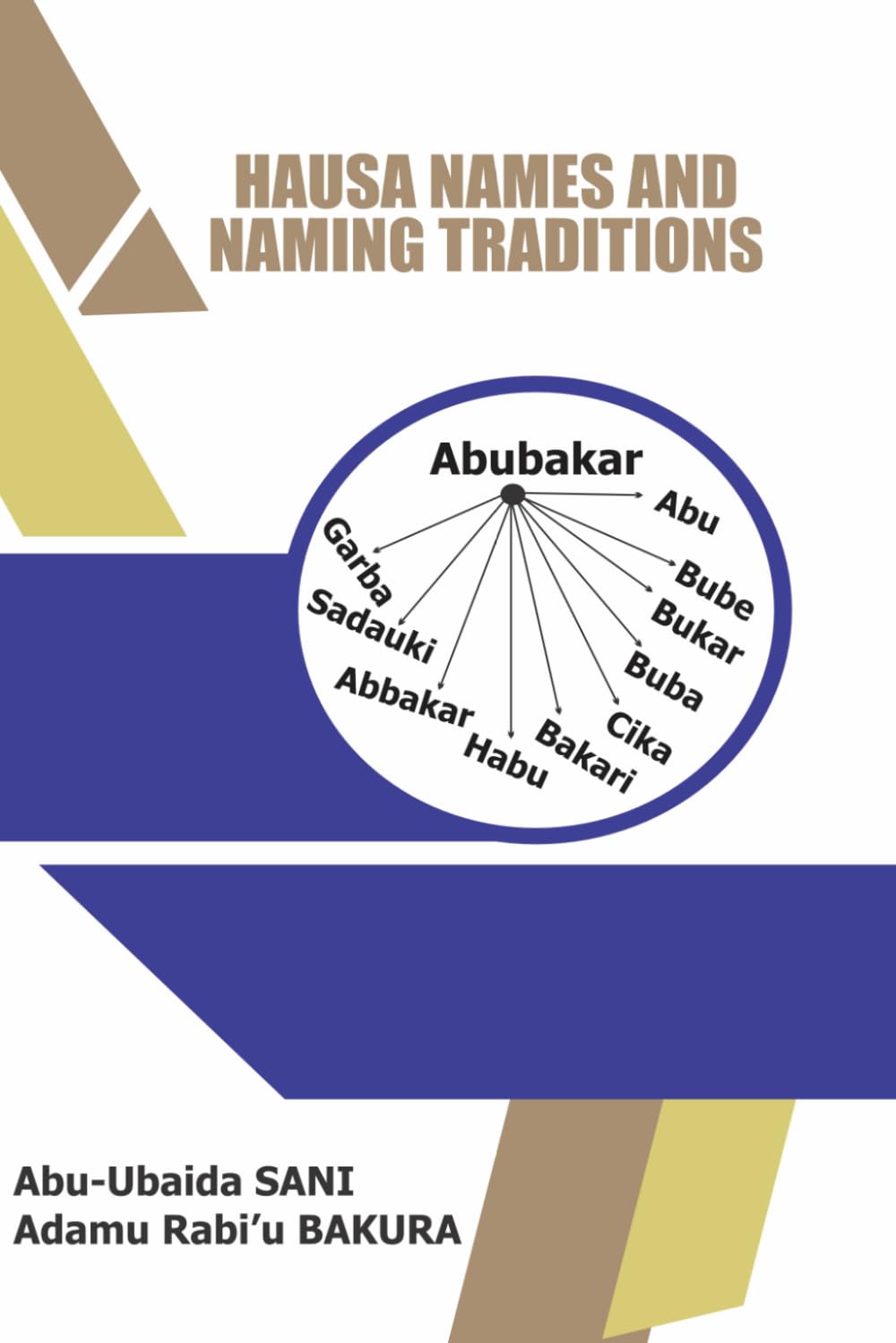



Hausa Names and Naming Traditions presents an anthropological and linguistic study of naming systems among the Hausa, one of West Africa’s most influential cultural groups. Rather than simply listing names, the book explores how naming practices preserve cultural memory, social values, and historical experiences. Names are shown to be deeply connected to identity, belief systems, and social relationships. Although the focus is on Hausa traditions, the study also examines the interactions between Hausa, Arabic, Kanuri, and Fulani naming systems, reflecting centuries of cultural exchange across the Sahel through trade, migration, and Islamic scholarship. The book contains six chapters, each addressing a different aspect of naming and its cultural meaning. Chapter One introduces key concepts such as suunaa (name) and bunƙasa (development). It explains that in Hausa society names are more than simple labels; they express identity, heritage, and social expectations. A name may reflect family background, circumstances of birth, or the hopes and values of the community. Chapters Two and Three examine the historical development of Hausa naming traditions, particularly the changes that occurred with the spread of Islam. Before Islam became widespread, Hausa names were often connected to nature, birth events, family ties, and local spiritual traditions such as bori. With the arrival of Islam, new naming patterns emerged, including names that praised God or referred to religious ideas and occasions. Instead of replacing earlier traditions, Islamic influences blended with existing Hausa practices, producing a mixed system that reflects both indigenous and Islamic cultural meanings. Chapter Four focuses on Kanuri naming traditions and shows how their pastoral and Saharan environment shaped names drawn from animals, plants, and ecological relationships. It also demonstrates how Kanuri and Hausa cultures influenced one another through long-standing contact and trade. Chapter Five extends this comparison to Fulani naming practices. The rise of the nineteenth-century Sokoto Caliphate strengthened ties between the Fulani and Hausa peoples through religious scholarship, political alliances, and intermarriage. As a result, some Fulani honorifics and pastoral-inspired names entered Hausa usage, illustrating the cultural exchanges within the region. The final chapter explores modern developments in Hausa naming traditions. Urbanization, migration, and globalization have encouraged new forms of creativity in naming. Processes such as shortening longer names or combining words to form new ones show how naming practices continue to evolve while maintaining cultural continuity. Overall, the book is both an academic study and a tribute to Hausa cultural heritage. By tracing naming practices from the precolonial period influenced by bori beliefs, through the spread of Islam, and into the modern era, it demonstrates how names reflect history, faith, and identity. The work highlights naming traditions as an important way to understand African identity, linguistic interaction, and cultural exchange across the Sahel, showing that names serve as living records of a people’s past and present.