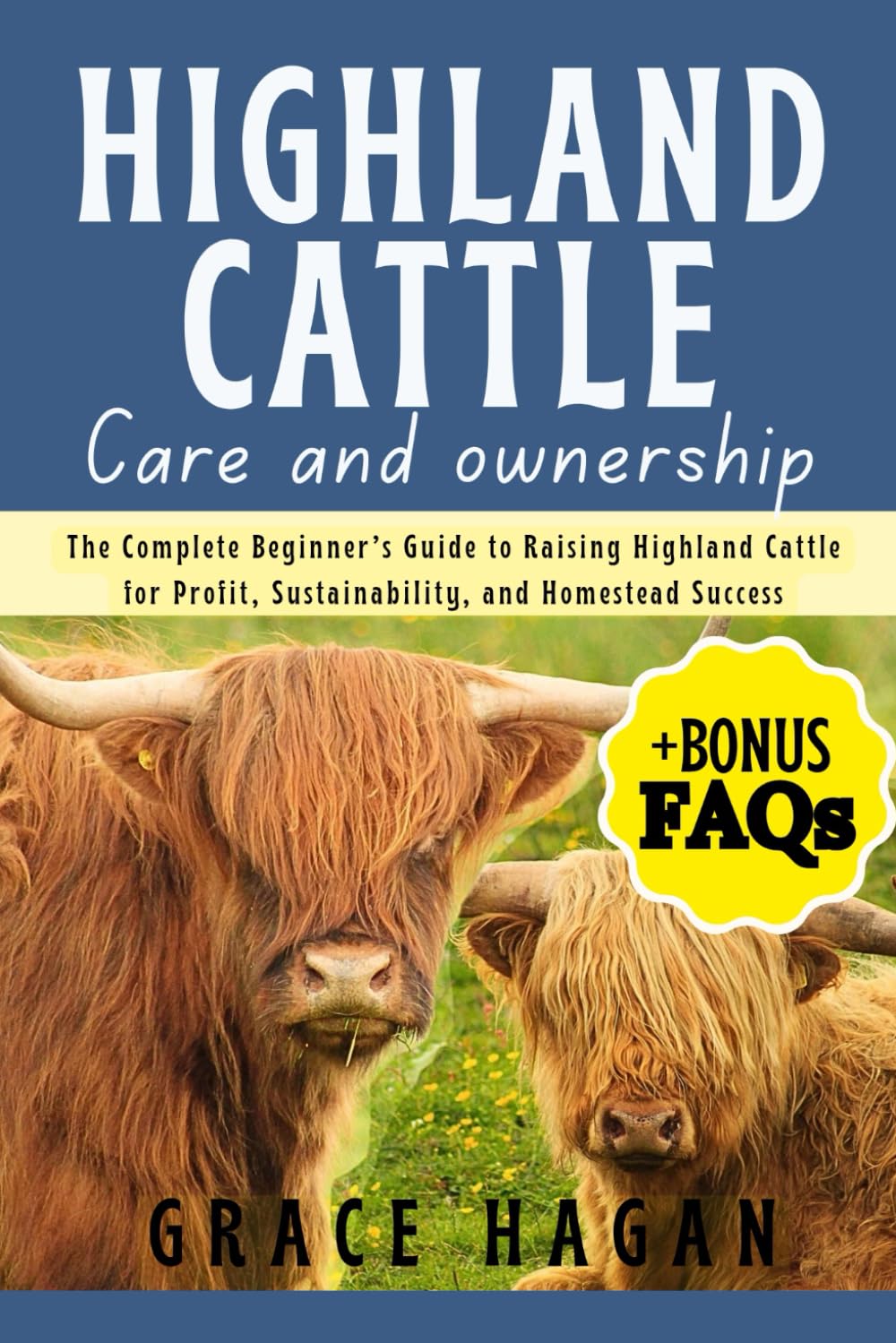
HIGHLAND CATTLE CARE AND OWNERSHIP: The Complete Beginner’s Guide To Raising Highland Cattle For Profit, Sustainability, And Homestead Success
$15.99
by GRACE HAGAN



Highland cattle are among the oldest and most distinctive cattle breeds in the world, with roots tracing back over a thousand years to the rugged Highlands and Western Isles of Scotland. The breed developed in one of the harshest climates in Europe, where only the hardiest livestock could survive. Their ancestry includes both black and red strains, historically referred to as the Kyloe (smaller island cattle) and the larger mainland Highlander, though today all are considered part of the same breed. The breed was formally recorded in the 1880s with the founding of the Highland Cattle Society in Scotland. Since then, Highland cattle have been exported across the globe, from North America to Australia, admired not only for their resilience but also for their striking appearance and beef quality. Highland cattle are deeply woven into Scottish culture, appearing in folklore, paintings, and even as mascots. Today, they are raised for both commercial purposes and conservation grazing, maintaining their legendary reputation for hardiness and adaptability. Unique Characteristics and Temperament Appearance: Highland cattle are instantly recognizable by their long, shaggy double coat and majestic, sweeping horns. Their coat, which comes in colors such as red, black, yellow, dun, and brindle, provides insulation against cold and wet weather. This allows them to thrive outdoors year-round in climates where other breeds might require shelter. Their large horns serve multiple purposes: for defense, foraging through snow in search of food, and establishing herd hierarchy. Horn shape and size vary by gender and genetics. Size and Growth: Highland cattle are medium-sized. Mature cows typically weigh between 1,100–1,300 pounds (500–600 kg), and bulls can reach up to 1,800–2,000 pounds (800–900 kg). Despite their size, Highlands are known for having a slower growth rate compared to commercial breeds, which contributes to their exceptionally flavorful, lean beef. Temperament: Highland cattle are renowned for their docile, calm nature. Though they can appear intimidating due to their horns, they are generally gentle and intelligent animals that respond well to respectful, consistent handling. Their calm disposition makes them ideal for small farms, family operations, and beginner cattle owners. However, as with any breed, bulls and mothers with calves should be treated with caution and handled with livestock experience and awareness. Highlands also tend to be more independent than other breeds, capable of foraging over wide areas and managing well in rough terrain. Why Choose Highland Cattle? 1. Adaptability and Hardiness Highland cattle are built for survival in extreme conditions. Their dense coat insulates them from cold and wind, allowing them to remain outside during harsh winters. Their low-maintenance nature makes them an ideal choice for colder or mountainous regions and for owners who prefer a pasture-based system with minimal intervention. 2. Foraging Efficiency Highlands are exceptional foragers. They can thrive on poor-quality forage that many other cattle breeds would reject. This makes them ideal for managing marginal land, rough terrain, or conservation grazing programs. They are excellent at browsing and will even eat brush, weeds, and coarse grasses, helping manage landscapes naturally. 3. Beef Quality Though not as fast-growing as commercial breeds, Highland cattle produce premium beef that is lean, well-marbled, and rich in flavor. Their meat has a fine texture, low cholesterol levels, and excellent nutritional properties. It is increasingly sought after by chefs and consumers looking for high-quality, grass-fed beef.