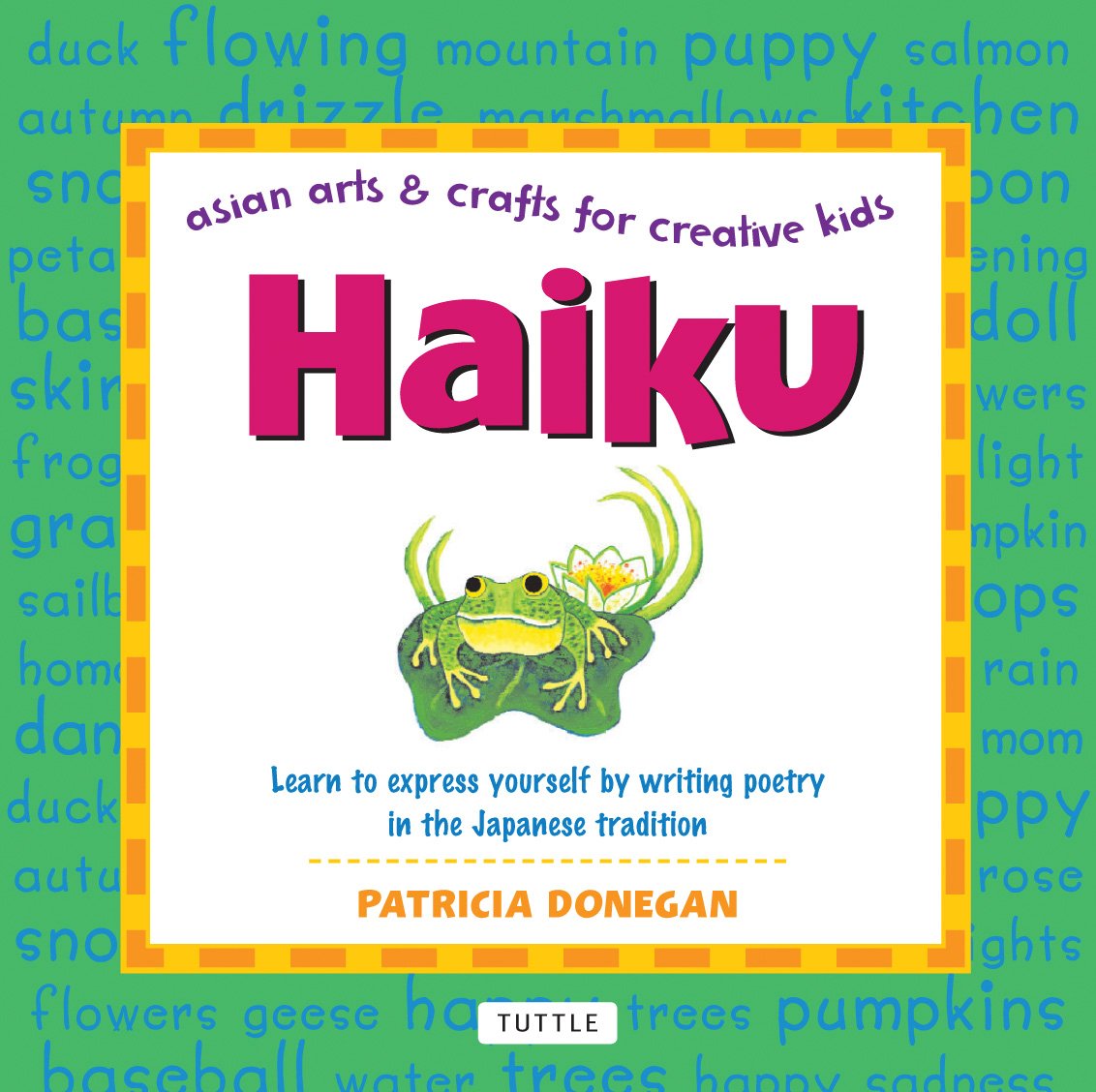
Haiku: Learn to express yourself by writing poetry in the Japanese tradition (Asian Arts and Crafts For Creative Kids)
$25.07
by Patricia Donegan



In this multicultural children's book, readers will learn to create haiku—elegant and simple Japanese poems. Haiku uses images from nature to make a statement or capture a moment. Haiku are short, but powerful expressions—making them easy and fun to write and share with your friends. The activities in this book will show the seven keys to creating your own haiku and will help you to get started, think up memorable words and images, and write the three short lines that make up a great haiku. With clear expressions and many examples, this is a great way to have fun while you explore the fascinating aspect of Japanese culture. Kids will learn to write: Their first haiku - Haiku about nature - Haibun—haiku with a short story - Haiga—haiku with a drawing - Renga—haiku written to friends. About the Series: The Asian Arts & Crafts for Creative Kids series is the first series, aimed at readers ages 7-12, that provides a fun and educational introduction to Asian culture and art. Through hands-on projects, readers will explore each art—engaging in activities to gain a better understanding of each form. Gr. 4-8. Although this looks like a picture book for young readers, it is actually a comprehensive introduction to haiku that poetry students of many ages can enjoy. Donegan, a poet who lives in Japan, begins by explaining basic concepts (what it means to "look though haiku eyes") before she goes on to describe the seven elements of traditional haiku. The remainder of the book offers haiku projects and exercises, accompanied by lengthy explanations, hints, and even word charts to help children create poems. The somewhat stilted color illustrations may put off older readers, and some exercises contain fill-in-the-blank sections, a format that's not ideal for library circulation. But Donegan presents a great deal of information clearly and with authority, and her enthusiasm for her subject is contagious, particularly when she describes what writing haiku encourages us to do: "see and appreciate the world around us more." A glossary and a haiku resource guide round out this excellent choice for children as well as teachers seeking fresh materials for poetry units. Gillian Engberg Copyright © American Library Association. All rights reserved "A glossary and a haiku resource guide round out this excellent choice for children as well as teachers seeking fresh materials for poetry units." — Booklist Patricia Donegan served on the faculty of East-West poetics at Naropa University under Allen Ginsberg and Chogyam Trungpa Rinpoche was a student of haiku master Seishi Yamaguchi, and a Fulbright scholar to Japan. She is a meditation teacher, previous poetry editor for Kyoto Journal , and a longtime member of the Haiku Society of America. Her haiku works include Love Haiku: Japanese Poems of Yearning, Passion & Remembrance (co-translated with Yoshie Ishibashi), Haiku Mind: 108 Poems to Cultivate Awareness and Open Your Heart, Haiku: Asian Arts for Creative Kids , and Chiyo-ni Woman Haiku Master (co-translated with Yoshie Ishibashi). Her poetry collections include: Hot Haiku, Bone Poems, Without Warning, Heralding the Milk Light , and haiku selections in various anthologies. She won first prize in the 1998 Mainichi International Haiku Contest and won a Merit Book Award for translation from the Haiku Society of America for her book on Chiyo-ni, also in 1998. Her books on haiku have combined scholarship and insight in reaching young and old to inspire and sustain a lifelong interesting in haiku poetry, in both Japanese and English.