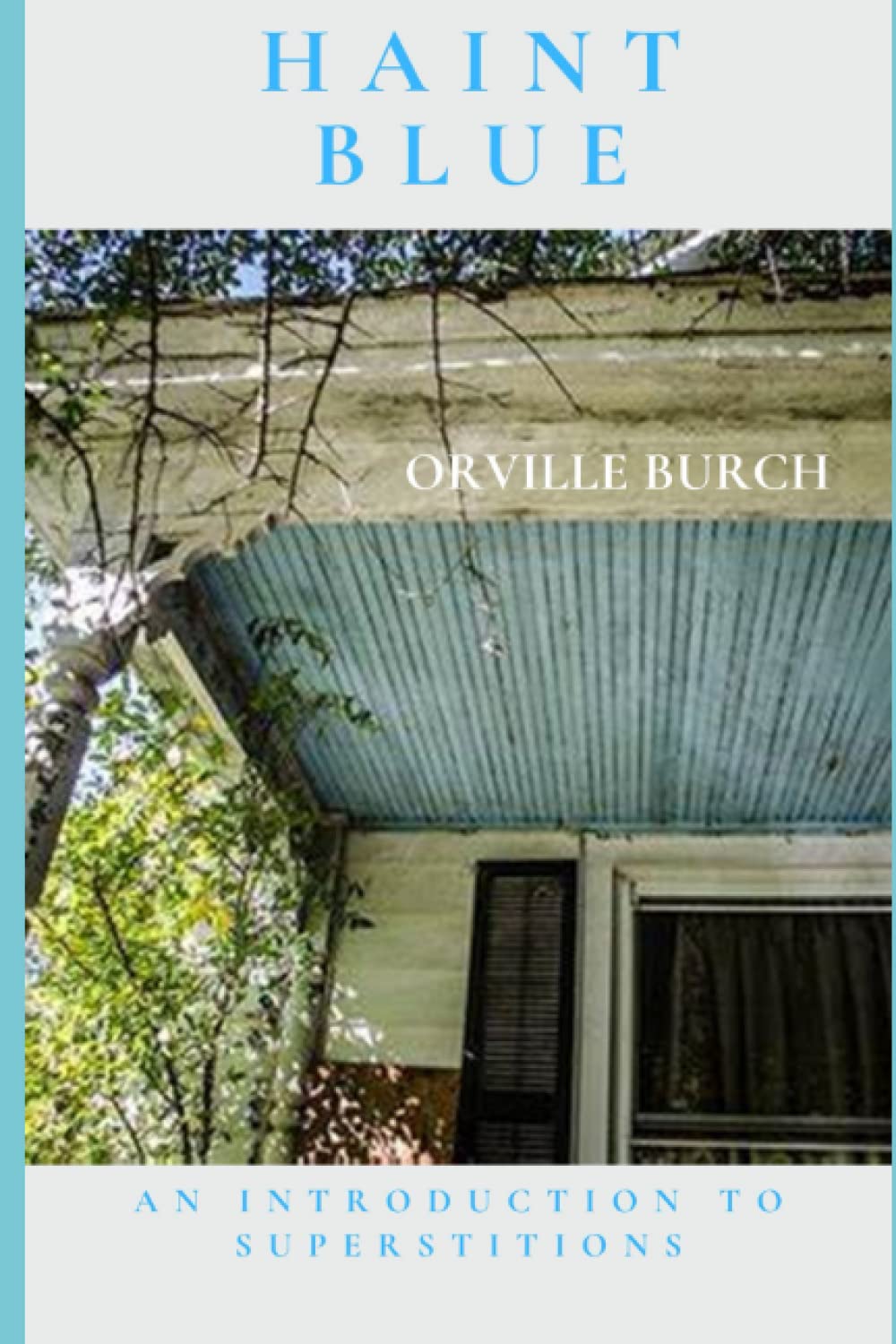



I was born and raised on a self-sufficient farm in the Appalachian Mountains. Appalachian kids cut their teeth on folklore, and superstitions. While I don't believe in superstitions, they are part of me. I draw from them in my writings and even in much of my daily life. The front door to my home is painted Haint-blue. I have a witch's ball hanging at each of my windows. HAINT BLUE is my life and a reference/guide about superstitions. Writers research almost as much as they write. In fact, thousands of writers, thousands of times a day, track down some of the exotic concepts, along with many mundane facts. When I started the Rachel Law Paranormal Realism series, I already had logged months of research on the paranormal. One aspect that caught my attention was superstitions. People have been superstitious for as long as there have been people. So, as a writer, it would make sense that some of your own characters will bring to your story their superstitious beliefs. It gives you a way to increase the depth and richness of your characters with easy reference to many things that your reader has heard of and is familiar with. Maybe even relatable attributes. I grew up surrounded by superstitions. I studied science in College and graduate school and seemed to be on a mission to discredit the old sayings, but as I grew older my interests changed. Now, I no longer seek to disprove. I seek to collect and understand a way of thinking so foreign to my own as to be from a different planet, or even a fantasy land far in the future. My renewed interest lead me on a journey of research and conversations about all sorts of beliefs. I found the richness and vastness overwhelming. In my writing, all of my characters have superstitions, deal with people who do, or have to find answers to superstitions paranormal. In my Rachel Law Paranormal Realism series, the main character, Rachel Law, lives in a valley that was founded by a relative over 200 years ago. The valley is full of her family and the roots run deep, so do the old superstitions and folklore. Rachel grew up surrounded by family that included some who were devout in traditional religion, while others ran the alternative gamut from pagans, herbal witches, agnostics, and atheists. While superstitions are not the primary aspect of my writing, they blend in to form the characters and minor characters. Even ghosts may have retained their own superstitions. In DESIRE, Rachel hunts for a child-killer, one assumed to have been dead for twenty-years. It is not lucky to talk about the dead or walk among their grave without your fingers crossed. To flush out a serial killer, Rachel will break many superstitions. In DEAD MAN’S WATCH, Rachel deals with the aspect of the undead when a young man, who was resuscitated after being shocked on a power line. He believes he is some kind of zombie and seeks help because his own ghost is haunting him. Rachel must face, among other things, that it is unlucky to help a wandering spirit. In VIGILANTE SECRETS, Rachel learns that sharing a terrible secret with an ancestor, who took secrets to his grave, was beyond superstition, as a vigilante ghost returns to avenge her. I hope this little book helps you flesh out some nuisances of your characters, or even understand some of your own.